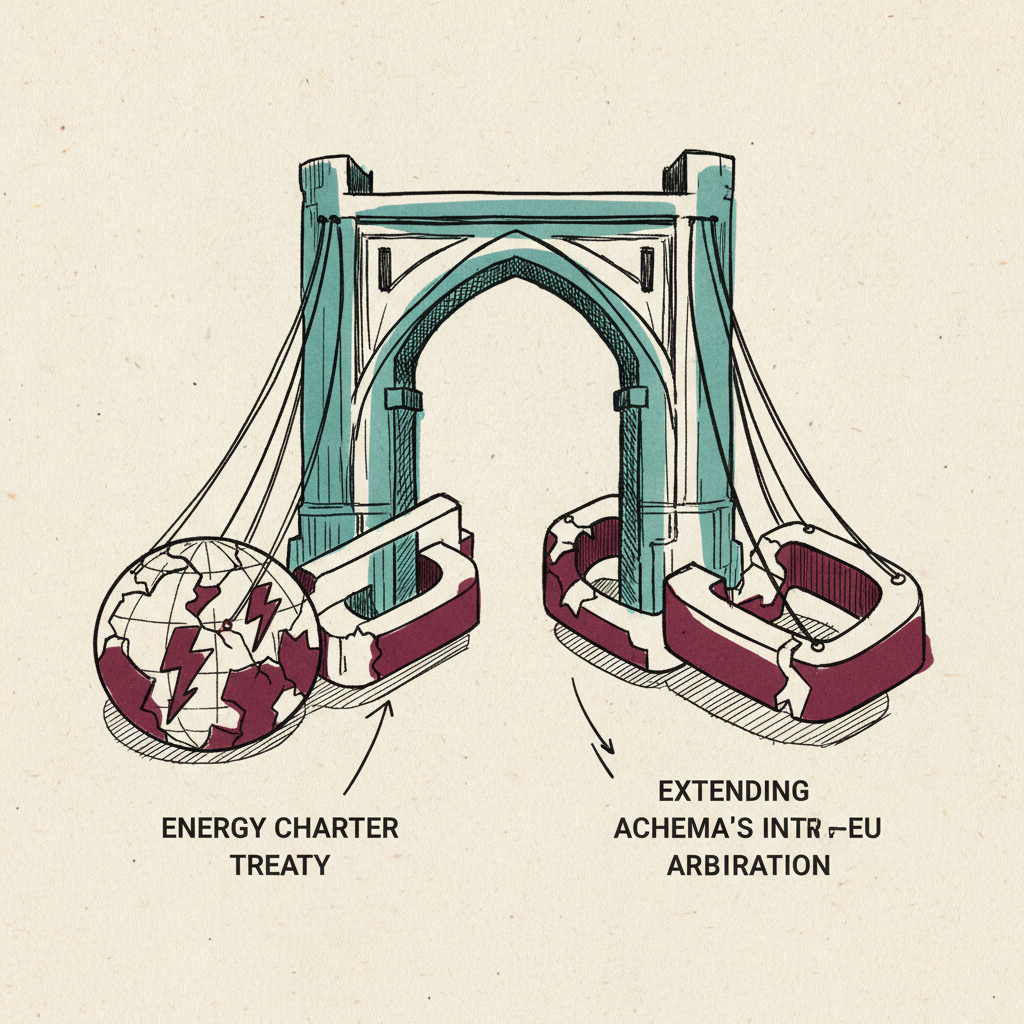
After Komstroy closed the ECT route, how is MOL still pursuing its arbitration claim?
Timeline for Komstroy
Hungary infringed over MOL ECT arbitration
European Energy MarketsBackground
Komstroy refers to the 2021 Court of Justice of the European Union ruling in Republic of Moldova v Energoalians/Komstroy (Case C-741/19), which extended the reasoning of the Achmea judgment to the Energy Charter Treaty (ECT), holding that the ECT's investor-state dispute settlement mechanism in Article 26 is incompatible with EU law for intra-EU disputes. The ruling closed the principal remaining arbitration route that EU-based energy investors had used to challenge member state regulatory decisions after Achmea invalidated bilateral investment treaties.
The case originated outside the EU: Energoalians, a Ukrainian company, had filed an ECT arbitration claim against Moldova over electricity supply contracts. The CJEU nonetheless ruled on the broader question of whether EU law precludes application of the ECT's Article 26 arbitration mechanism to intra-EU disputes and, given that the ECT operates as an international agreement the EU is party to, held that its intra-EU application was incompatible with EU autonomy principles.
In the April 2026 infringement context, Komstroy is the direct legal authority for the Commission's position that Hungary's involvement in MOL's ECT Article 26 claim is a treaty violation. Together, Achmea and Komstroy form the two-ruling architecture that the Commission uses to pursue member states that tolerate or facilitate intra-EU investment arbitration in the energy sector.