Fractl
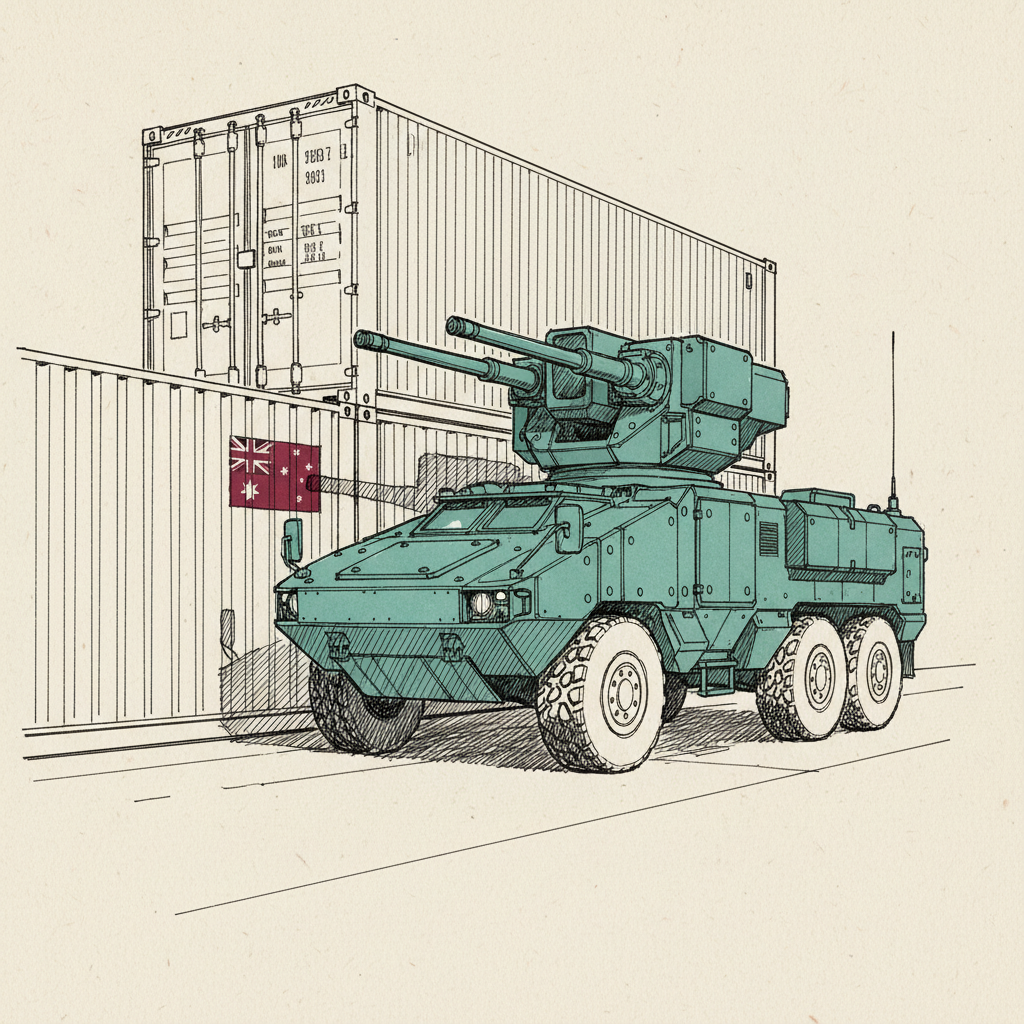
AIM Defence high-powered laser counter-drone system contracted under Australia's ASCA Mission Syracuse programme for integration into the ADF Land 156 network.
Last refreshed: 30 April 2026 · Appears in 1 active topic
How effective is Fractl's laser against the Shahed-class drone swarms that drove Australia's A$7 billion commitment?
Timeline for Fractl
Contracted under ASCA Mission Syracuse for integration into ADF Land 156 network
Drones: Industry & Defence: Australia commits A$7bn to counter-drones over decadeBackground
Fractl is a high-powered laser counter-drone system developed by AIM Defence, an Australian defence technology company. On 21 April 2026 AIM Defence received an A$21.3 million contract under the Australian Government's ASCA Mission Syracuse programme to develop and deliver Fractl for integration into the Australian Defence Force's Land 156 battle management network. The contract is the first tranche of the A$7 billion counter-drone investment announced by Defence Industry Minister Pat Conroy as part of the 2026 Integrated Investment Program.
Fractl is a directed-energy counter-drone weapon that uses a high-powered laser to defeat unmanned aerial systems. Unlike kinetic interceptors that consume a physical round or munition on each engagement, directed-energy systems can in principle re-engage targets repeatedly while the laser power source is recharged. This places Fractl in the same capability category as the US LOCUST X3 ($5 per engagement) and the UK's Dragonfire, both of which address the cost-per-engagement problem central to C-UAS economics at swarm scale.
The Land 156 integration requirement means Fractl will need to receive targeting data from ADF's network-centric battle management layer and share engagement data back to the same system. This positions Fractl as an effector within a broader integrated C-UAS architecture rather than a standalone system, which has procurement implications for how future tranches of the A$7 billion envelope will be structured.
What is the Fractl laser and who makes it?
How does Fractl compare to other counter-drone laser systems?
Is Australia building its own counter-drone weapons?






