Fleet Problem
US Navy fleet exercises of the 1920s and 1930s
The Fleet Problems were the US Navy's large annual exercises from 1923 to 1940, testing new weapons at SEA; in Fleet Problem IX, on 26 January 1929, Saratoga's aircraft struck the Panama Canal locks by surprise, a format REPMUS26 now echoes.
Last refreshed: 7 October 2026
Timeline for Fleet Problem
Mentioned in: Arquimea fires a Q-Slam 40 from a USV
Autonomous Systems: Land & SeaBackground
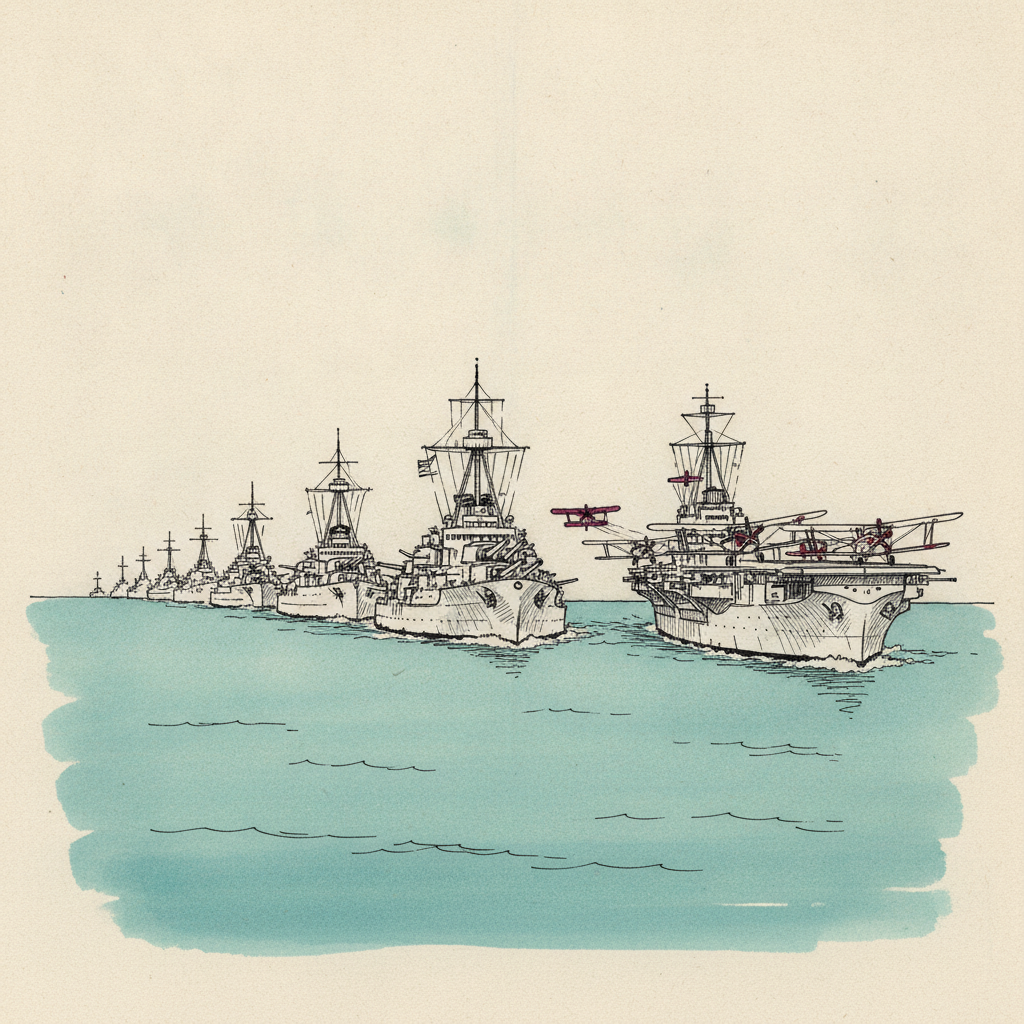
The Fleet Problems were the US Navy's interwar exercises for testing untried weapons and tactics against its own command systems at SEA. The navy ran them as large annual exercises from 1923 to 1940. They often used every carrier and well over half the battleships, cruisers and destroyers in the fleet, and tested new platforms such as submarines and aircraft.
Fleet Problem IX, in January 1929, is the best known. On 26 January 1929 the carrier Saratoga launched 70 aircraft from 140 miles south of the Panama Canal and struck its locks by surprise. The result established the carrier as an Independent strike platform.
Writers at CIMSEC have urged a return to the format, arguing that uncrewed vessels and aircraft will force new tactics. REPMUS26, NATO's uncrewed-systems exercise in Portugal, fills a similar role today; at the 2026 edition a Spanish Navy robot boat served as the launch pad for Arquimea's Q-Slam 40. REPMUS differs in one way: it mixes firms and navies, so it proves interfaces rather than settling one navy's doctrine. NATO's Task Force X-Arctic follows a similar trial-at-SEA pattern.