FAA Part 108
Proposed US BVLOS drone rule; spring 2026 deadline missed, blocked by contested right-of-way provision.
Last refreshed: 25 June 2026 · Appears in 1 active topic
How much longer will the FAA's BVLOS delay suppress US commercial drone scaling?
Timeline for FAA Part 108
Missed spring 2026 deadline; blocked by contested right-of-way provision
Drones: Industry & Defence: US drone rules frozen at both endsproposed BVLOS drone regulation still in review
Drones: Industry & Defence: FAA Misses Its Own BVLOS Rule DeadlineProposed rule establishing standardised BVLOS drone operations in US airspace; approaching publication
Drones: Industry & Defence: Mentioned in: FAA BVLOS rule targets March-April 2026Background
FAA Part 108 is the US Federal Aviation Administration's proposed regulatory framework for beyond-visual-line-of-sight (BVLOS) drone operations, covering unmanned aircraft weighing up to 1,320 pounds. It would create standardised operating permits and type certificates replacing the current waiver-by-waiver system under Part 107, under which each BVLOS operator must seek individual FAA approval for each flight corridor. The rule is foundational for commercial drone scaling: without it, companies like Zipline, medical delivery operators, and infrastructure inspection services cannot expand routes at national pace.
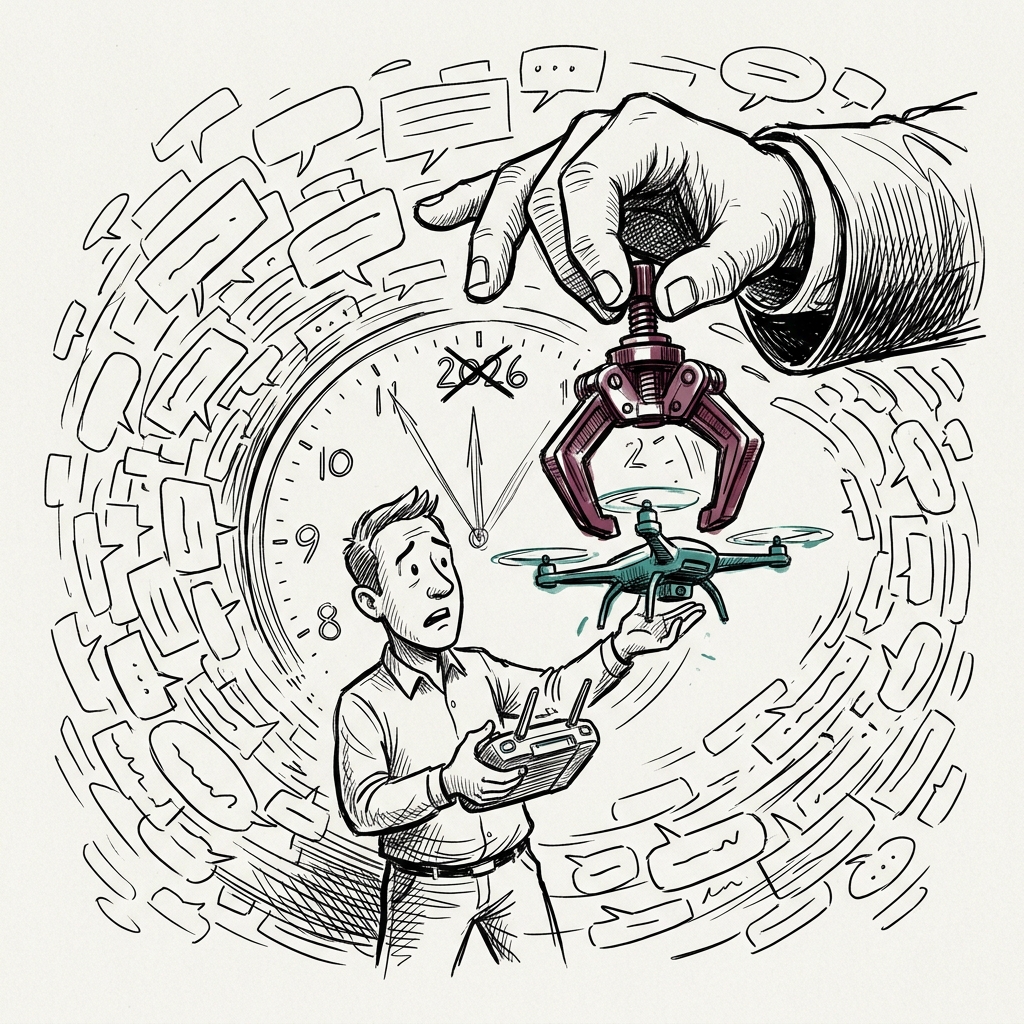
As of 18 June 2026, the FAA has missed its spring 2026 final-rule deadline with no revised publication date announced. The specific blocker is a contested right-of-way provision: under the proposed rule, crewed aircraft not broadcasting electronic position must yield to a BVLOS drone, reversing traditional right-of-way hierarchy. That single provision drew more than 50% of the 3,100+ public comments received, and remains unresolved. The rule had already slipped from its original March, April 2026 executive-order target after the FAA reopened the comment period in January 2026, adding months to the timeline and closing on 11 February.
Every week of delay extends the waiver bottleneck. Operators with pending route applications face growing backlogs; investors in commercial drone businesses face regulatory uncertainty that suppresses capital deployment. The rule's eventual publication will be the single most consequential US regulatory event for the commercial drone sector since the original Part 107 framework in 2016.
What is FAA Part 108?
Can drones fly beyond line of sight?
Why is Part 108 taking so long?
What is the difference between Part 107 and Part 108?
When will drone deliveries be legal everywhere?
What is the FAA Part 108 BVLOS drone rule?
Why has the FAA Part 108 drone rule been delayed?
When will the FAA publish the Part 108 BVLOS final rule?
How does Part 108 differ from Part 107 for drone operators?

Written with AI from Lowdown's published reporting. Not individually reviewed by an editor. Updated 25 June 2026. Editorial standards.