Euro NCAP
European crash-test body that has scored emergency braking since 2014.
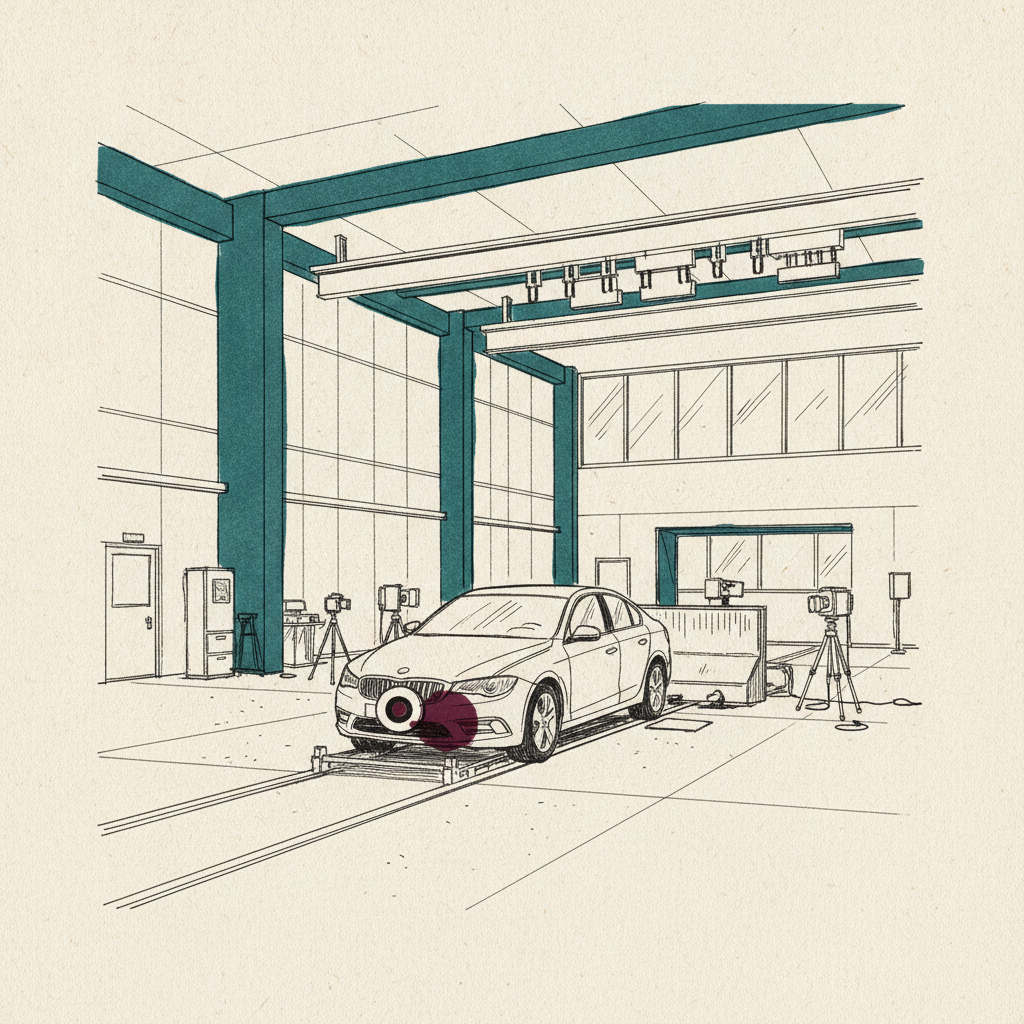
Euro NCAP has given credit for automatic emergency braking in its European safety ratings since January 2014, while the US date for making it compulsory slid to September 2031 in an NHTSA proposal of 27 November 2026.
Last refreshed: 27 November 2026
How does Europe test whether a new car can brake by itself?
Timeline for Euro NCAP
Mentioned in: NHTSA plans to push braking rule to 2031
Autonomous Systems: Land & SeaBackground
Euro NCAP scores the safety of new cars sold in Europe, and its ratings have rewarded automatic emergency braking since January 2014. American buyers face a longer wait for the same kit to become mandatory: NHTSA's 2024 final rule set 1 September 2029 for new US light vehicles, and the agency now proposes September 2031, in a notice published on 27 November 2026.
Euro NCAP calls itself Independent: neither a government agency nor part of the car industry. A consortium of European governments, motoring clubs, consumer organisations and insurance bodies backs it from a base in Leuven, Belgium. Its first ratings appeared in 1997.
For 2026 the ratings were rebuilt around four stages of a crash: safe driving, crash avoidance, crash protection and post-crash safety. The BMW iX3 and the ZEEKR 7GT were the first cars to earn five STARs under the new tests, Euro NCAP said on 8 July 2026.
Does Euro NCAP test automatic emergency braking?
How does the new Euro NCAP star rating work?
Who runs Euro NCAP?
Written with AI from Lowdown's published reporting. Not individually reviewed by an editor. Updated 27 November 2026. Editorial standards.