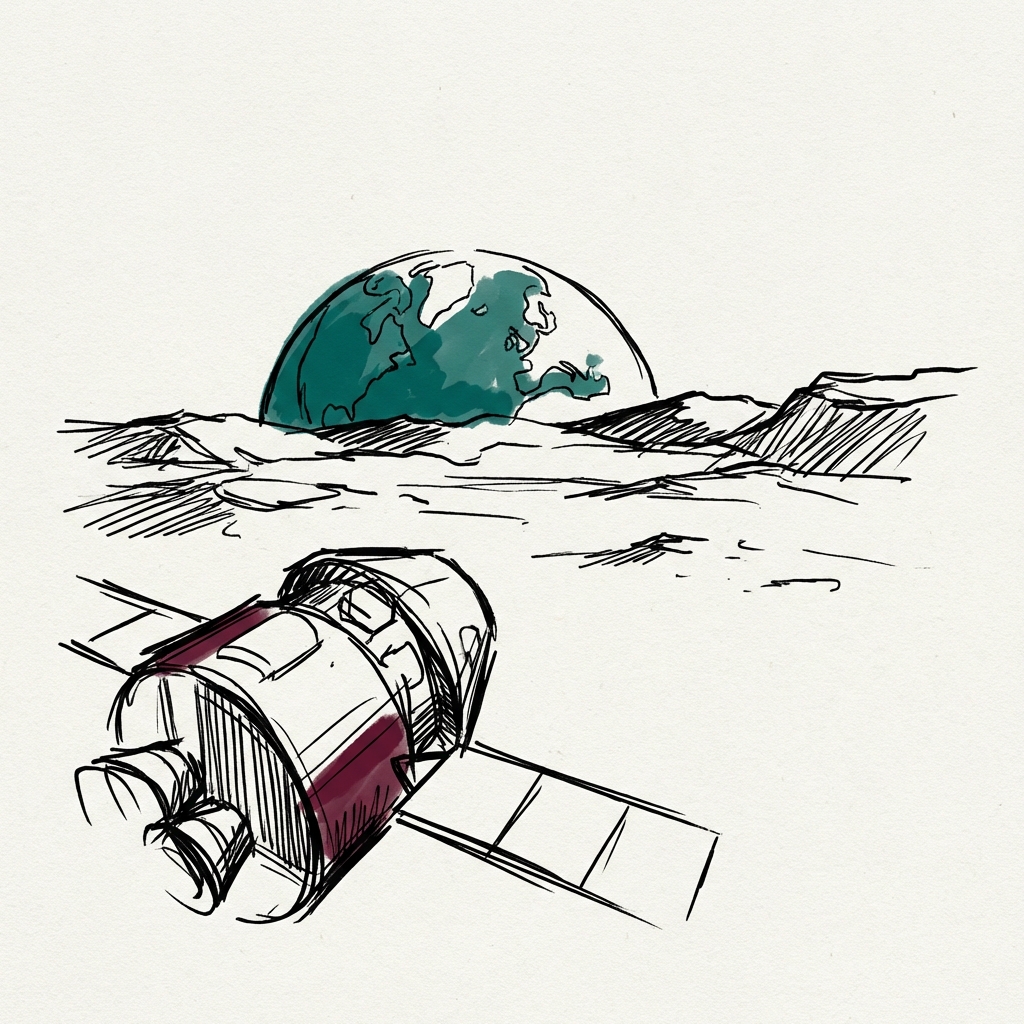
Earthrise
The moment Earth reappears above the lunar horizon as seen from a spacecraft, famously photographed by Apollo 8 in 1968.
Last refreshed: 23 July 2026
Apollo 8 photographed Earthrise 57 years ago. What did Artemis II see?
Timeline for Earthrise
Mentioned in: Farthest Humans From Earth, Behind the Moon
Artemis II Moon MissionMentioned in: Earth Vanishes From Sky for 40 Minutes
Artemis II Moon MissionBackground
Earthrise is the moment Earth reappears above the lunar horizon as seen from a spacecraft, most famously captured in a photograph taken by Apollo 8 astronaut William Anders on 24 December 1968, which became one of the most reproduced images in history. On 6 April 2026, the Artemis II crew experienced Earthrise at 7:25 PM EDT after a 40-minute window in which Earth had been completely absent from their sky.
The 1968 Apollo 8 Earthrise photograph showed Earth as a fragile blue marble rising over the barren lunar surface, a perspective that shaped the modern environmental movement and remains a defining image of the 20th century. Apollo 8 also captured the first human experience of the Earth-Moon transit; Artemis II repeated it more than half a century later with a larger crew at greater distance.
The Artemis II Earthrise followed Earthset at 6:45 PM EDT in a paired 40-minute sequence that coincided with the mission's communications blackout. The crew could not see or contact Earth simultaneously, an experience of isolation without precedent in human history.