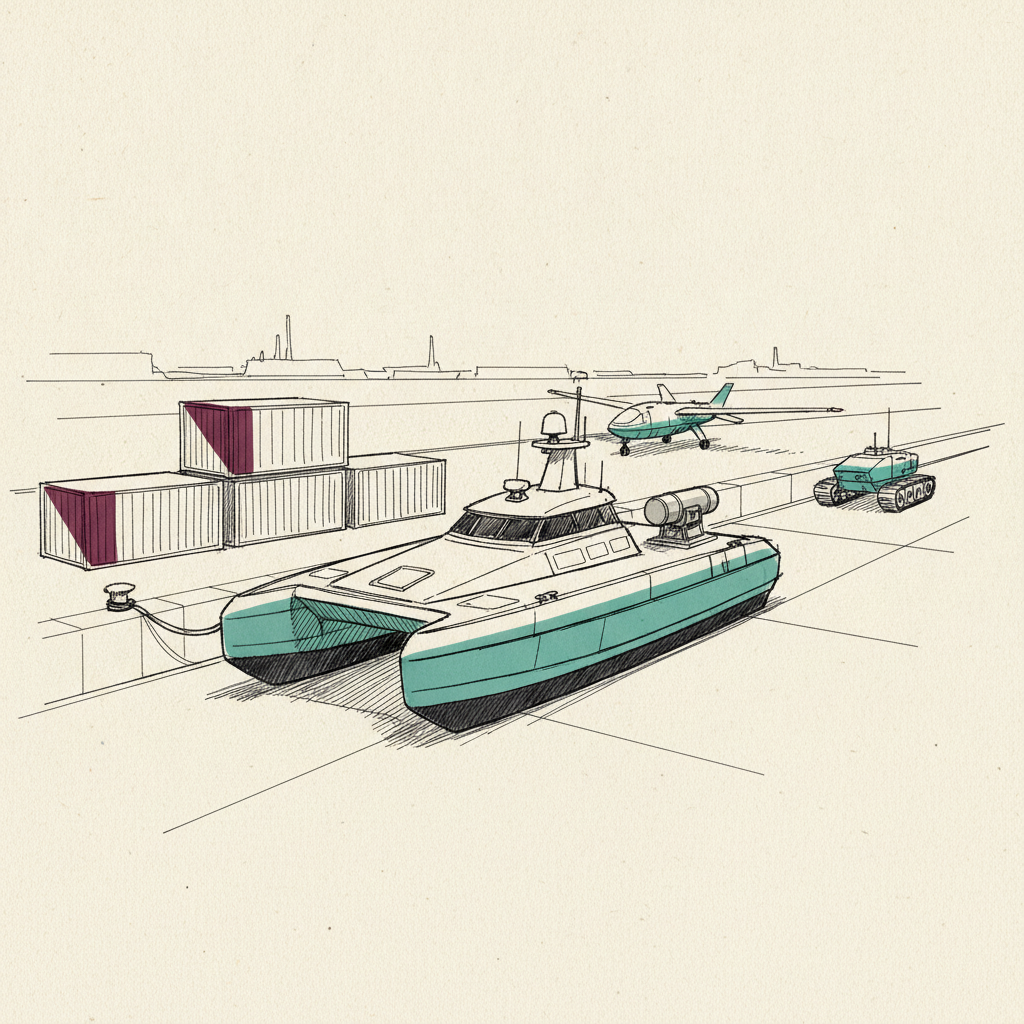
DriX O-16
Exail's uncrewed surface vessel used for hydrographic survey and third-party payload integration trials.
DriX O-16 is Exail's uncrewed surface vessel for hydrographic survey and patrol. In mid-July 2026 it completed sea trials flying a tethered drone and an infrared camera, extending its sensor horizon without a crewed aircraft.
Last refreshed: 24 July 2026 · Appears in 1 active topic
How far can a robot boat see once it's flying its own drone?
Timeline for DriX O-16
OMS Group orders a second DriX vessel
Autonomous Systems: Land & SeaMentioned in: A Maltese university buys a survey boat
Autonomous Systems: Land & SeaCompleted sea trials integrating third-party sensor payloads
Autonomous Systems: Land & Sea: Tethered drone flies from robot boatBackground
DriX is Exail's family of compact, containerised uncrewed surface vessels, built for hydrographic survey, patrol and mine-countermeasures support. The O-16 variant is designed to operate autonomously for extended periods and to carry interchangeable sonar, camera and communications payloads.
That payload flexibility is the design's defining feature: rather than a fixed sensor fit, DriX hulls are built to accept equipment from multiple manufacturers, letting operators tailor one vessel to survey, patrol or surveillance missions as needed.
The O-16 sits within Exail's wider undersea-autonomy product range, now owned by Thales following its €3.9 billion acquisition of Exail agreed in July 2026.
DriX O-16 flies its own drone
DriX O-16 spent mid-July 2026 proving it could launch and fly its own aerial payload, an Elistair Khronos Tether carrying a Safran-built infrared camera, without a crewed aircraft anywhere near its crewless hull.
Flying a tethered drone from its own deck extends the vessel's sensor horizon well beyond mast height without adding a crewed aircraft, letting the single autonomous hull cover survey, patrol and surveillance tasks that would otherwise need separate platforms. The trial previews a third-party payload model that lets a DriX-class vessel take on interchangeable sonar, camera and communications equipment from other manufacturers rather than only its own systems.
What is the Exail DriX O-16?
Why did the DriX O-16 test a tethered drone?
Who makes the DriX uncrewed surface vessel?


Written with AI from Lowdown's published reporting. Not individually reviewed by an editor. Updated 24 July 2026. Editorial standards.