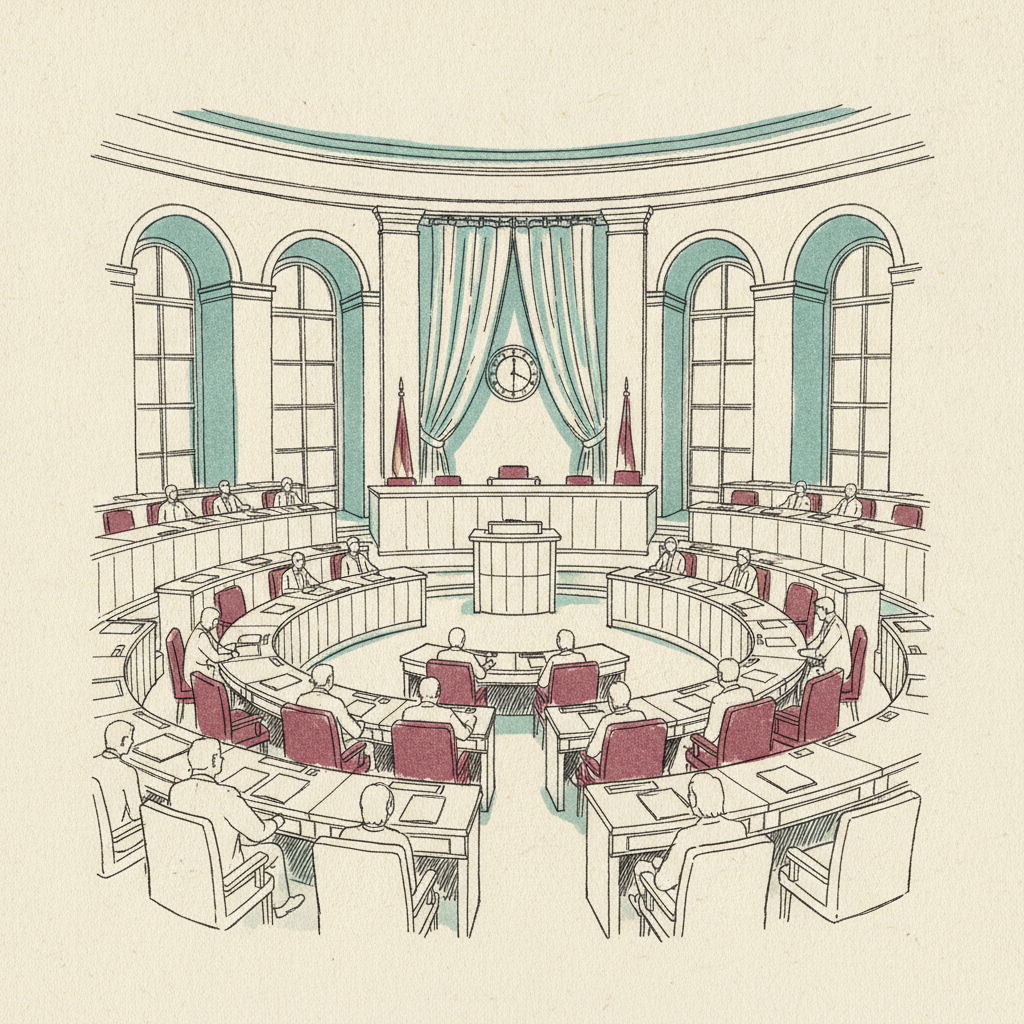
Bundesrat
Germany's Federal Council, the states' Upper Chamber; approved The National AI Act enforcement law on 10 July 2026.
The Bundesrat approved Germany's national implementing law for the EU AI Regulation on 10 July 2026, becoming the first to name enforcement authorities and penalties for the Act's workplace AI rules, ahead of the 2 December 2027 Deadline.
Last refreshed: 22 September 2026 · Appears in 1 active topic
Timeline for Bundesrat
Mentioned in: ver.di bargains over jobs, not pay-offs
AI: Jobs, Power & MoneyApproved Germany's national AI Act enforcement law ahead of the EU deadline
AI: Jobs, Power & Money: A Spanish court opens the algorithmApproved Germany's national AI Act implementing law on 10 July
AI: Jobs, Power & Money: Germany names the AI Act's enforcersBackground
The Bundesrat is Germany's Federal Council, the upper legislative chamber through which the country's 16 states exercise a formal check on federal law. Its 69 votes are allocated to the states by population, and its members are serving state Minister-Presidents and ministers, appointed by their state governments rather than elected directly.
That composition makes it structurally distinct from the Bundestag, Germany's directly elected lower house, and from the unrelated Swiss Federal Council, which is Switzerland's collective head of state and government rather than a chamber of Parliament.
Because EU regulations apply directly but leave enforcement to member states, the Bundesrat is the body that turns the EU AI Regulation's workplace rules into enforceable German law, naming the authorities and penalties that apply from the Act's December 2027 employment deadline.
Germany names its AI Act enforcers
The Bundesrat approved Germany's national implementing law for the EU AI Regulation on 10 July 2026, naming the enforcement authorities and penalties that will police high-risk workplace AI ahead of the Act's 2 December 2027 employment Deadline. EU regulations apply directly across member states, but enforcement bodies are left to each one to designate, making the Bundesrat, rather than the EU itself, the body doing the naming.
The move landed inside a wider push across European workplaces to get ahead of AI-driven job cuts. Days earlier, Spain's Audiencia Nacional had sanctioned an employer for hiding how a scheduling algorithm worked, using a 2021 national transparency law rather than the still-delayed EU AI Act employment rules.
What is Germany's Bundesrat?
Did the Bundesrat approve Germany's AI Act law?
Is the Bundesrat the same as the Bundestag?
How many votes does the Bundesrat have?

