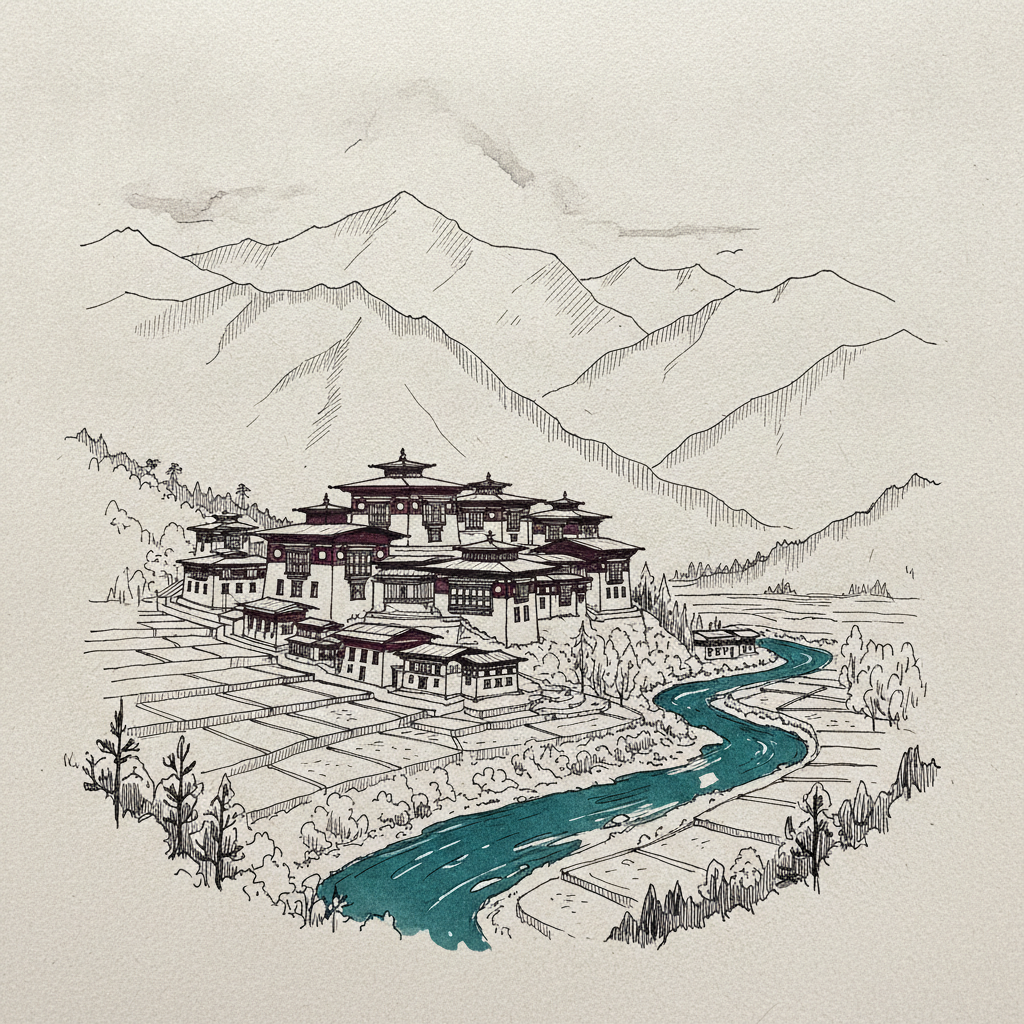
Bhutan
Himalayan kingdom using a nightly visitor levy to fund development and conservation.
Open to international tourism since 1974, Bhutan links visits to a national development levy. The Himalayan kingdom, known locally as Drukyul, combines tourism with protection of its natural and cultural Heritage.
Last refreshed: 22 October 2026 · Appears in 1 active topic
Will Bhutan retain its lower visitor levy when the current incentive ends?
Timeline for Bhutan
Named in event analysis
Nomads & Communities: Mentioned in: Mexico deputies give defence 57% of feeBackground
Bhutan is a Himalayan kingdom known locally as Drukyul, the Land of the Thunder Dragon. Its terrain rises from subtropical valleys to forests and high mountain peaks. English is used in education. Buddhist traditions, archery and inherited arts and crafts remain prominent in the country's cultural life. [The tourism department's country introduction](https://Bhutan.travel/about) describes this geographic and cultural setting.
Tourism has formed part of Bhutan's economy since the country opened to international visitors in 1974. The Sustainable Development Fee channels visitor contributions through The National exchequer. The government says it supports education, healthcare, infrastructure and environmental and cultural conservation. Travellers must use approved accommodation or campsites, although they can arrange bookings independently. The fee excludes visa processing charges. [Official visitor guidance](https://Bhutan.travel/faqs) explains these arrangements.
Reference
What does Bhutan's Sustainable Development Fee fund?
Why did Bhutan reduce its visitor fee?
When does Bhutan's reduced visitor-fee incentive end?
How much is Bhutan's nightly visitor fee?




Written with AI from Lowdown's published reporting. Not individually reviewed by an editor. Updated 22 October 2026. Editorial standards.