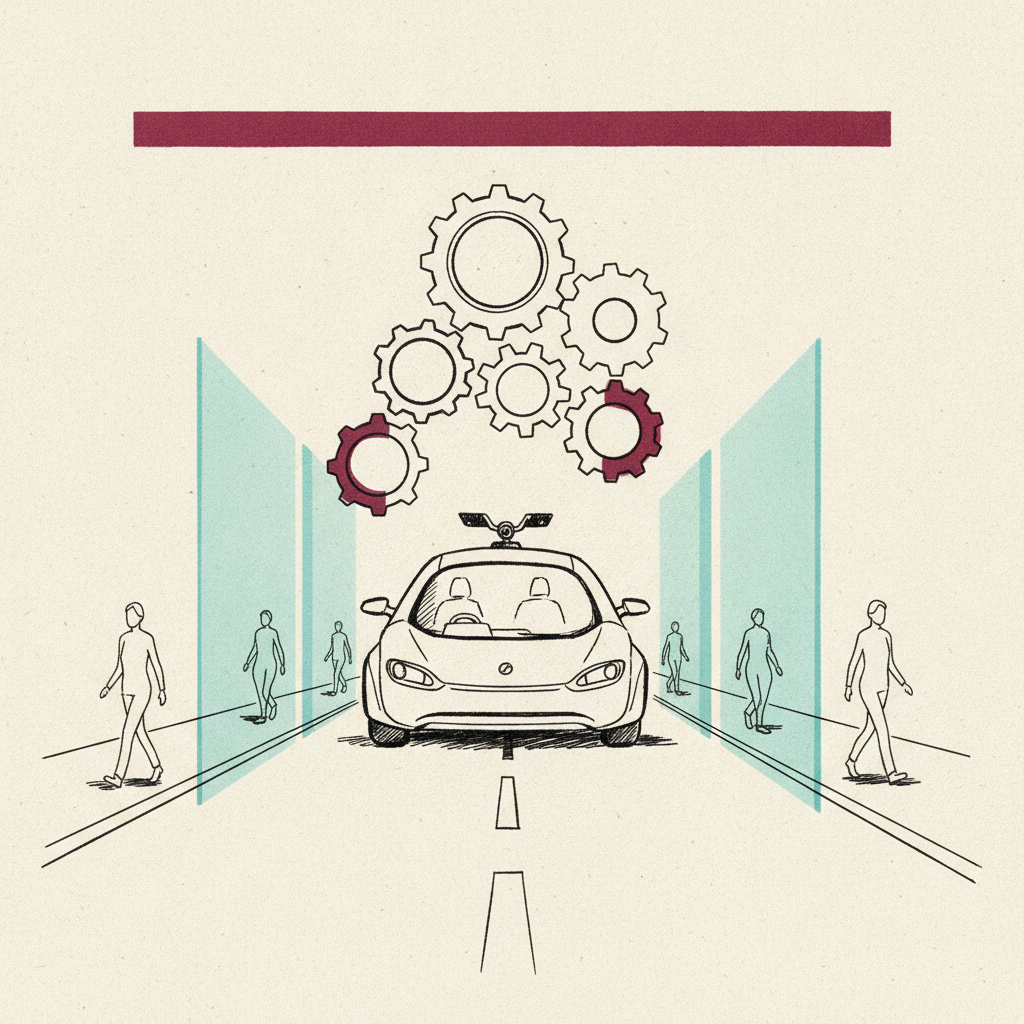
Autonomous Driving Act
German 2021 law letting Level 4 driverless vehicles run on public roads in approved areas.
Tesla's Berlin plant director said on 16 November 2026 that Grünheide will build Cybercabs from 2029, under a German law that already lets driverless cars run in approved operating areas while EU type approval stays capped at small series.
Last refreshed: 27 November 2026
Can Germany's driverless-car law carry Tesla's Cybercab?
Timeline for Autonomous Driving Act
Mentioned in: Tesla plans Cybercab line at Grünheide
Autonomous Systems: Land & SeaBackground
Germany's Autonomous Driving Act gives driverless vehicles a legal path that most of Europe still lacks. That path drew attention on 16 November 2026, when Andre Thierig, director of Tesla's Grünheide plant near Berlin, announced a Cybercab production building there, with output from 2029.
The law, formally the Gesetz zum autonomen Fahren, is dated 12 July 2021 and took effect on 28 July 2021, according to Germany's transport ministry. It amended the Road Traffic Act (StVG). A vehicle with an autonomous driving function may run without a driver inside a defined operating area that the authorities approve, under a technical supervisor: a natural person able to deactivate the vehicle and release manoeuvres. The Federal Motor Transport Authority (KBA) grants the operating permit.
The Act governs operation, not volume. EU type approval of fully automated vehicles under Regulation 2022/1426 is limited to small series of about 1,500 per type per year, far below the up to 1 million cars a year that Thierig said on 16 November 2026 he hoped Grünheide would reach.
Are driverless cars legal in Germany?
What is a technical supervisor under German autonomous driving law?
Who approves autonomous vehicles in Germany?
Why does Tesla's Grünheide Cybercab plan face EU limits?
Written with AI from Lowdown's published reporting. Not individually reviewed by an editor. Updated 27 November 2026. Editorial standards.