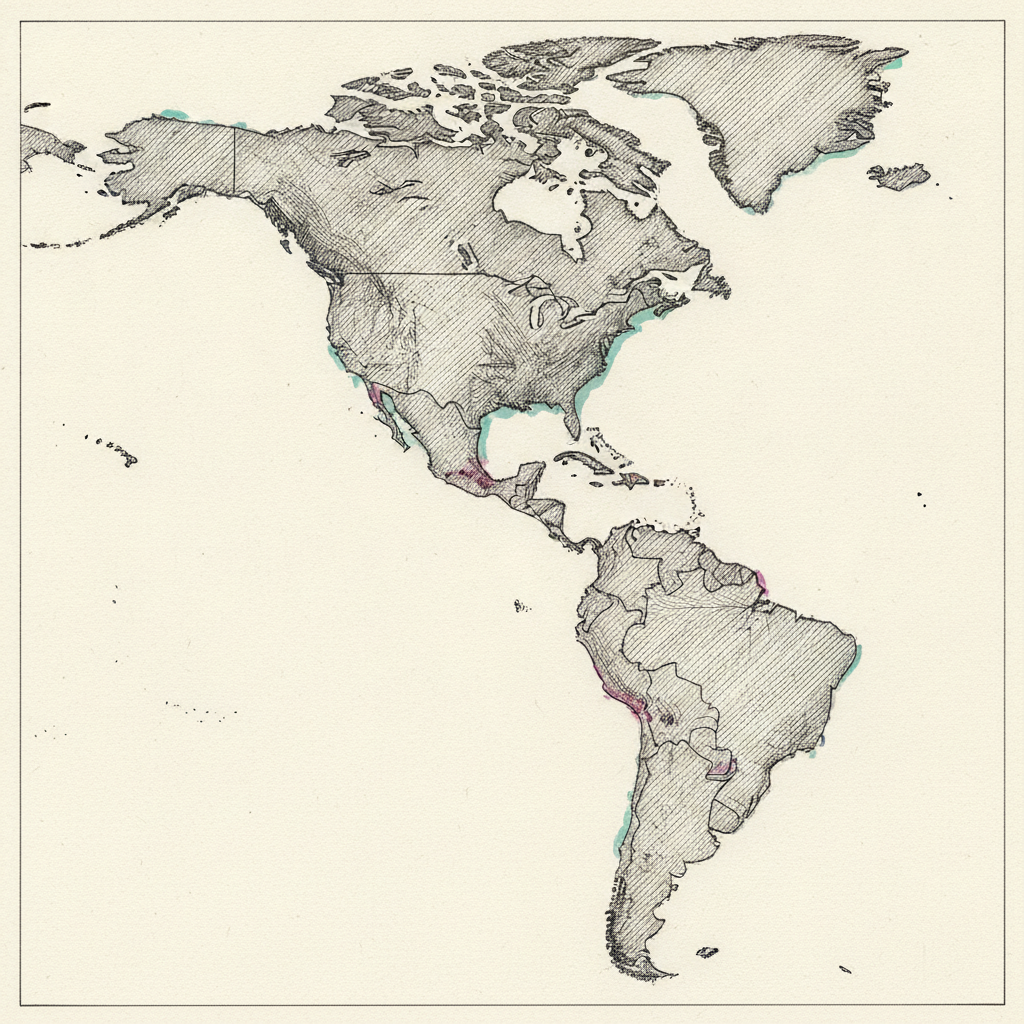
Americas
North, Central and South America and the Caribbean together.
the Americas counted 53,957 confirmed measles cases and 68 deaths by 19 September 2026, 3.8 times the same point of 2025, PAHO said, ten months after the region lost its measles elimination status.
Last refreshed: 4 October 2026
Timeline for Americas
Mentioned in: Cambodia confirms sixth human H5N1 case
Pandemics and BiosecurityMentioned in: Peru overtakes Guatemala on new measles
Pandemics and BiosecurityMentioned in: Screwworm cases in Mexico rise fivefold
Pandemics and BiosecurityMentioned in: Bangladesh: 1,030 die of measles in 2026
Pandemics and BiosecurityBackground
the Americas are North, Central and South America and the Caribbean, the area covered by the Pan American Health Organization (PAHO), WHO's regional office. PAHO ran the only WHO region ever to eliminate measles.
The region's other disease threats in 2026 cross its internal borders. New World screwworm, a parasite eradicated from the United States in the 1960s and from Mexico by 1991, has been moving north since 2023, when it broke through the sterile-fly line held at the Darién Gap on the Panama-Colombia border. Mexico recorded 575 human cases in 2026 to 18 September.
Human H5 bird flu cases have receded. PAHO reports no human H5 case in the Americas in 2026, and mammal outbreaks fell 64.8% year on year to mid-July. Poultry outbreaks resumed in Canada in September.
Measles cases have nearly quadrupled
PAHO's situation report of 24 September 2026 put the region's confirmed measles toll at 53,957, with 68 deaths across 17 countries and territories, nearly four times the count a year earlier. Of those cases, Guatemala holds 33,866, Mexico 12,943 and the United States 3,471. Peru and the US now ADD more new cases each fortnight than Guatemala.
PAHO's region is losing a record it once owned. It kept measles out from 2002 with routine two-dose cover and follow-up campaigns every four to five years, and PAHO certified it measles-free in 2016. That status went in November 2025, after Canada's outbreak ran more than 12 months. PAHO's verification Commission has since visited Mexico, Bolivia and Peru, and it flags Peru's October festivities and a papal visit in November as transmission risks.