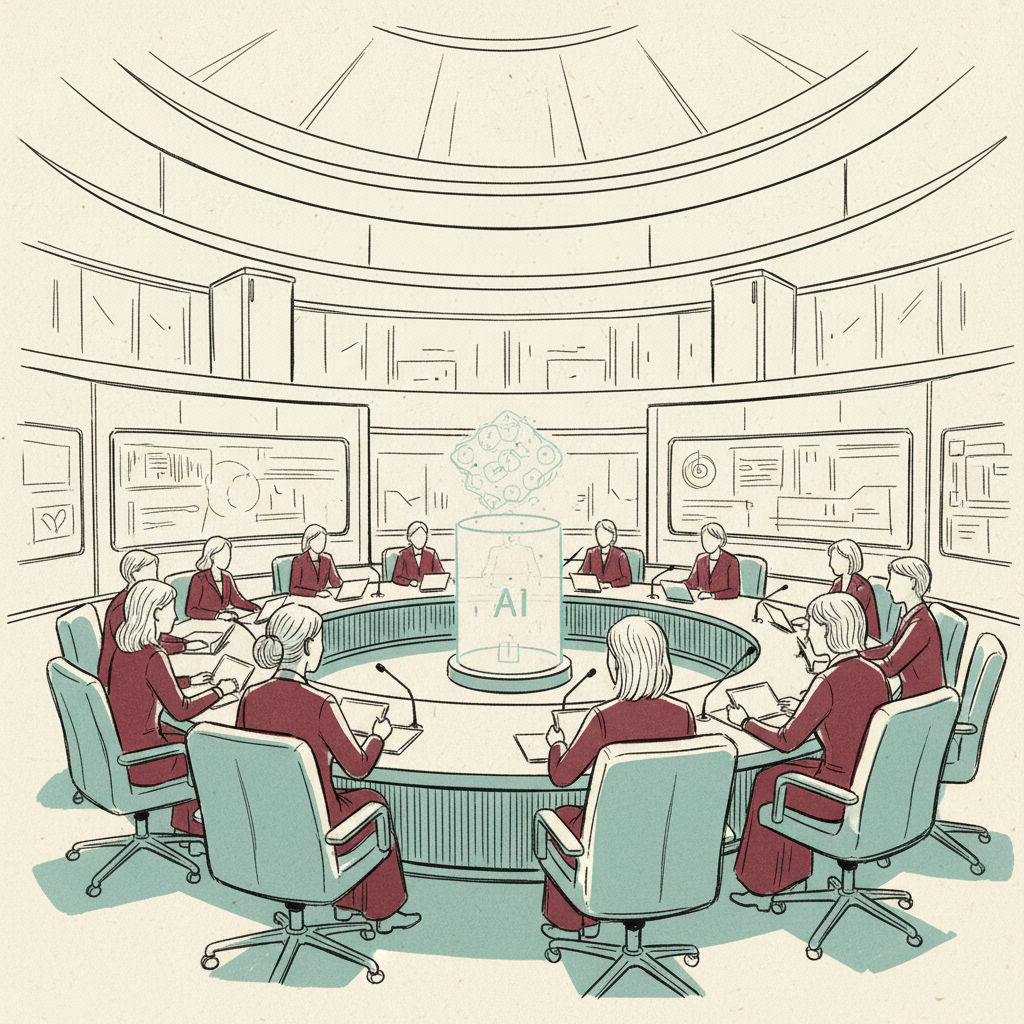
AI and Future of Work Unit
DSIT cross-government unit announced May 2026 to upskill 10 million workers on AI by 2030.
Last refreshed: 23 July 2026 · Appears in 1 active topic
Does a new government unit help workers adapt to AI, or is Multiverse already doing this faster commercially?
Timeline for AI and Future of Work Unit
Mentioned in: Multiverse hits $2.1bn on first cash quarter
UK Startups and InnovationBackground
The AI and Future of Work Unit was announced by Work and Pensions Secretary Liz Kendall at the Institute for the Future of Work (IFOW) conference on 18 May 2026, bringing together officials from DWP, DfE, BEIS and HM Treasury inside DSIT with a target to upskill 10 million people across the UK workforce by 2030, with SMEs as the priority cohort. The cross-government structure is designed to coordinate AI skills policy across departments that previously operated separate workforce programmes.
The unit was announced three days after AI upskilling platform Multiverse closed a $70m Series E at a $2.1bn valuation, suggesting a deliberate sequencing intended to frame the government's skills infrastructure around commercially validated demand. The 10 million target is consistent with estimates of the UK working-age population likely to require significant reskilling as AI automation displaces task-heavy roles in administration, logistics, and financial services. DSIT's choice to house the unit reflects the government's framing of AI workforce disruption as an innovation-policy question rather than a welfare-policy question.
The unit's practical authority is unclear at launch. Cross-government units sitting inside DSIT have a mixed track record: without dedicated funding lines and shared ministerial accountability across DWP, DfE and BEIS, coordination mechanisms tend to dissolve into existing departmental priorities within 12-18 months. The 10 million target has no intermediate milestones published. Multiverse's commercial success, revenue up 50% year-on-year with a first cash-positive quarter in Q1 2026, provides an Independent benchmark against which the unit's progress can be measured: if commercial platforms can grow AI skills delivery at 50% per year, the question is what the unit adds beyond convening power and SME subsidy.