Adidas Trionda
The Adidas Trionda is the official match ball of the 2026 FIFA World Cup, cited by goalkeepers and analysts for flight characteristics contributing to the record goal rate.
Last refreshed: 25 June 2026 · Appears in 1 active topic
Is the Adidas Trionda ball the real reason goalkeepers are struggling at the 2026 World Cup?
Timeline for Adidas Trionda
Mentioned in: World Cup sets a goal-scoring record
2026 FIFA World CupBackground
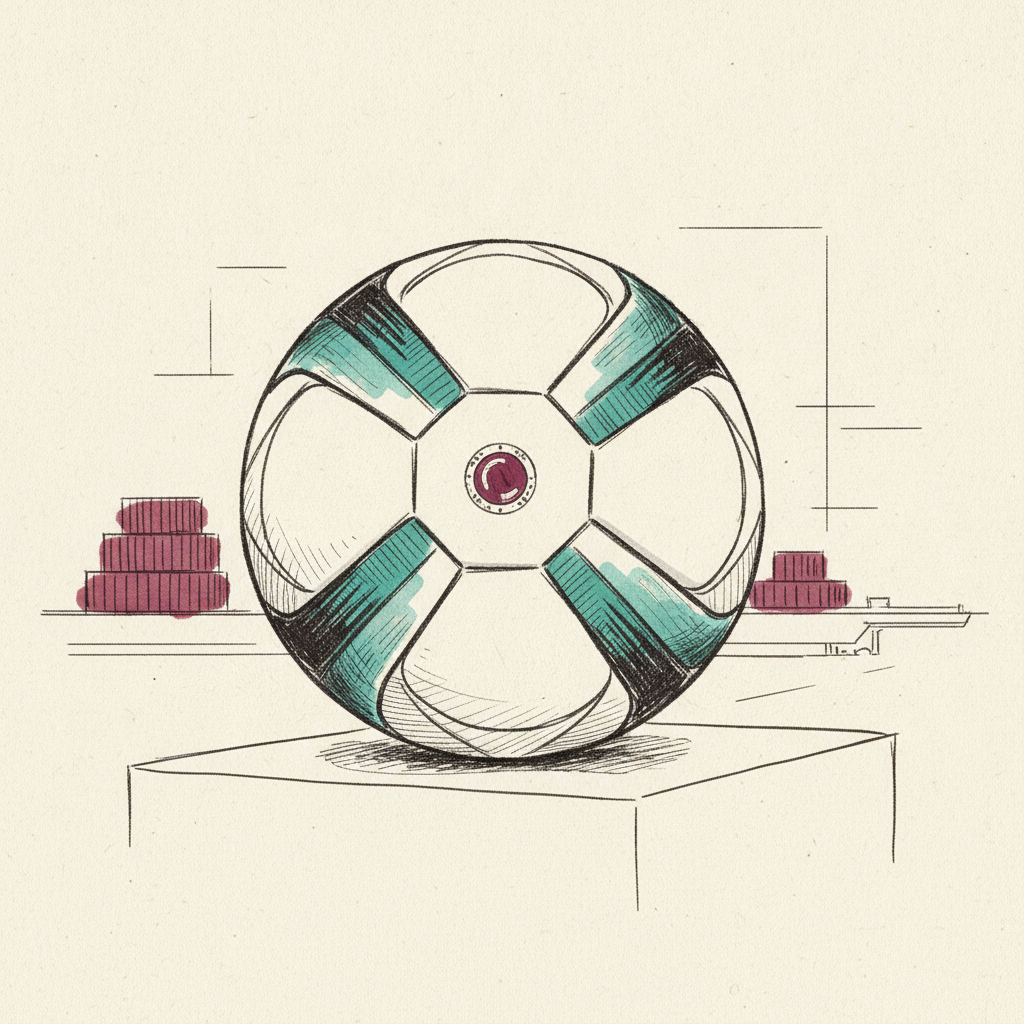
The Adidas Trionda is the official match ball of the 2026 FIFA World Cup in Canada, Mexico and the United States. Constructed from just four thermally bonded panels, the lowest panel count for a World Cup ball in tournament history, its surface carries debossed macro and micro texture patterns designed to improve flight stability, grip in wet conditions, and aerodynamic consistency. It also carries an embedded inertial measurement unit (IMU) chip that provides VAR officials with real-time ball movement data within seconds of a decision being queried.
Despite the engineering ambition, the Trionda attracted significant criticism from goalkeepers and analysts during the group stage. Former England goalkeeper Joe Hart stated publicly that he was seeing a particular type of goal 'way too many times' and suggested that something was up with that football. The specific concern is the ball's behaviour when struck without spin: at shoulder height and travelling without rotation, it moves unpredictably, causing misjudgements from even top-tier goalkeepers. Research published by MIT Technology Review noted that the Trionda experiences the aerodynamic drag crisis at the slowest speed since the Jabulani at the 2010 World Cup, a ball widely blamed for erratic goalkeeper errors in South Africa. The Trionda's higher drag coefficient also means it slows faster than predecessor balls, shortening the trajectories of powerful strikes by several metres.
The controversy drew early comparisons to the Jabulani, and analysts cited the ball's properties as a contributing factor in the record goal tally through the group stages of the 2026 tournament. Whether the Trionda genuinely distorts the game or whether improved forward quality explains the goal surge remains debated, but the ball has become a talking point at the tournament in its own right.