2028 Global Intelligence Crisis
Citrini Research's February 2026 scenario of AI-driven white-collar job losses and a market crash.
Written as a memo from June 2028 and published on 22 February 2026, the scenario has AI agents replace office work until US unemployment hits 10.2% and the S&P 500 falls 38%; its authors call it "a scenario, not a prediction".
Last refreshed: 6 November 2026
Will AI really displace 20% of knowledge workers by 2028?
Timeline for 2028 Global Intelligence Crisis
Mentioned in: Bank of Japan flags AI demand as a risk
AI: Jobs, Power & MoneyMentioned in: Citrini's AI doom scenario goes viral
AI: Jobs, Power & MoneyMentioned in: Citi: AI growth won't prevent job loss
AI: Jobs, Power & MoneyBackground
The 2028 Global Intelligence Crisis is a scenario written by James van Geelen and Alap Shah of Citrini Research and published on 22 February 2026. It takes the form of a fictional macro memo dated June 2028, looking back on how an AI boom turned into a slump.
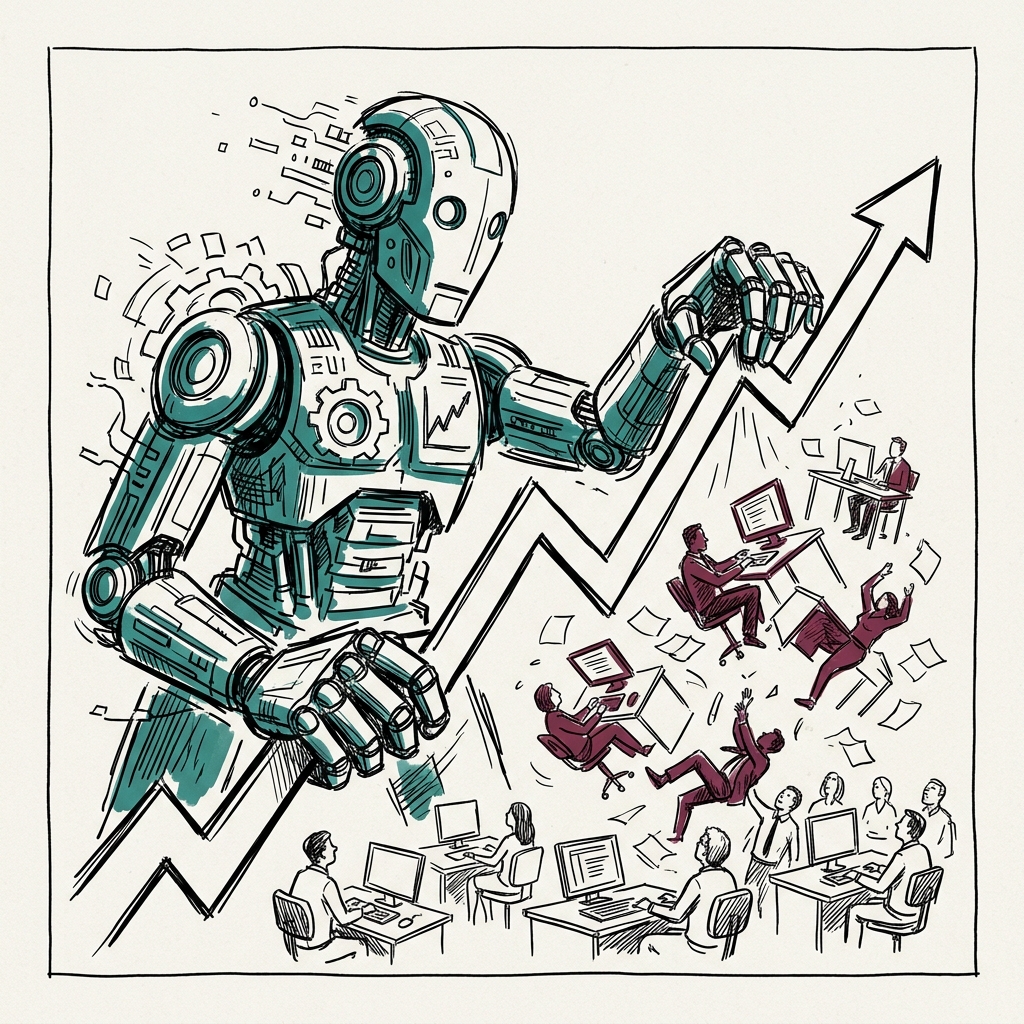
The mechanism is a feedback loop in which AI agents take over white-collar tasks, output keeps growing while household spending falls, weaker demand squeezes margins and firms automate further to protect them. Stress spreads from software lenders to mortgages. By the memo's end, US unemployment stands at 10.2% and the S&P 500 is 38% below its October 2026 high. It sets no single figure for the share of knowledge workers displaced.
The piece went viral. Wall Street fell as it spread, with the Nasdaq down 1.43% in a session that also carried new US tariff news. Citadel Securities answered with a formal rebuttal, and Citi Research held that strong growth and job losses can coexist but called the timing very unclear. It remains a standard reference for the pessimistic case in arguments over AI and office jobs.
What is the 2028 intelligence crisis?
Did Citadel respond to the AI doom report?
Will AI replace knowledge workers?
Is the Citrini 2028 report a prediction?
Written with AI from Lowdown's published reporting. Not individually reviewed by an editor. Updated 6 November 2026. Editorial standards.