Skip to content
Briefings are running a touch slower this week while we rebuild the foundations.See roadmap
UK Startups and Innovation
13MAY

UK grant count falls to 10-year low

2 min read
20:05UTC

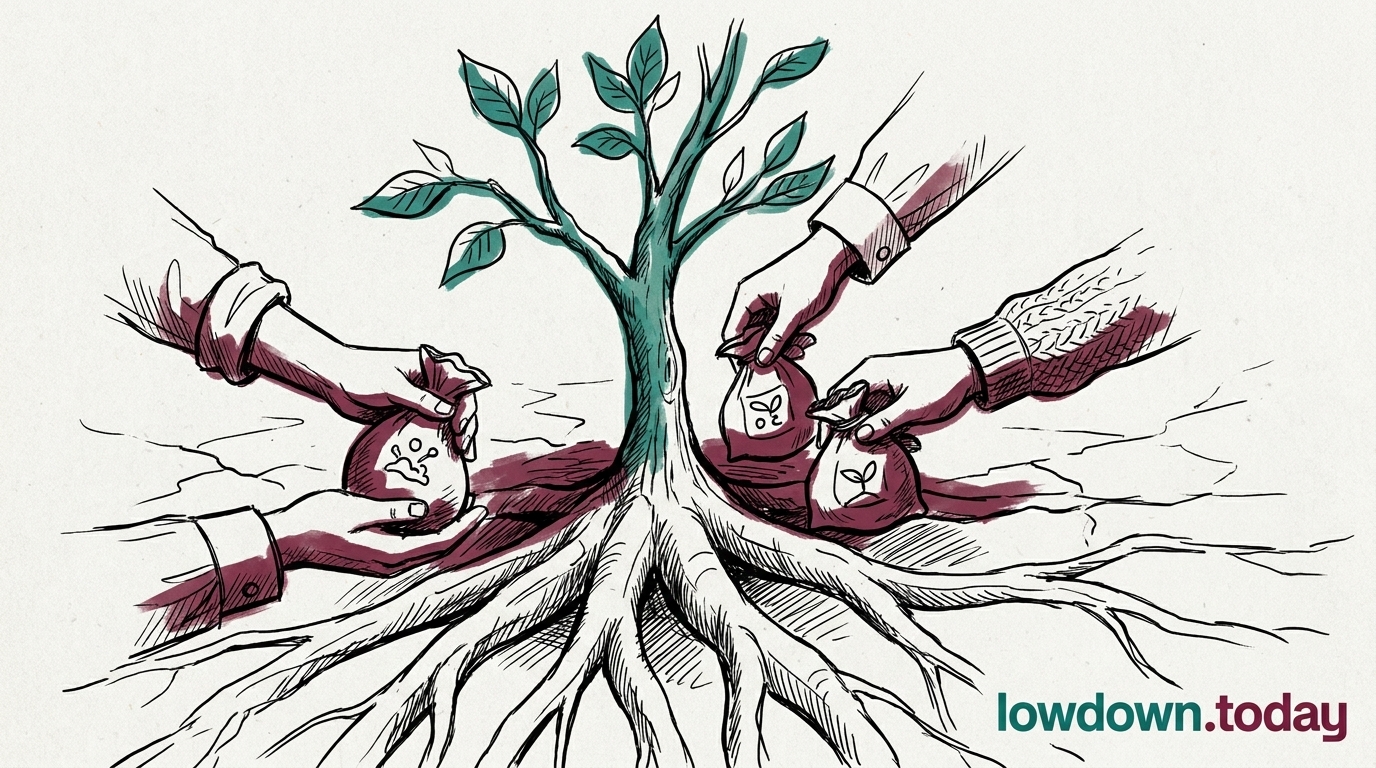
Fewer companies are receiving grants even as average grant size rises. The money is concentrating upward, leaving proof-of-concept founders with fewer options.

TechnologyDeveloping
Key takeaway

Grant count is at a decade low; proof-of-concept funding is harder to find than at any point since 2016.

Beauhurst's 2026 spinout report shows UK grant awards fell to their lowest count since 2016, even as the average grant size rose 10.96% to £423,000 1. Fewer companies are receiving larger awards. The total grant pool is not collapsing, but its distribution is shifting toward mid-stage companies that can absorb bigger tickets.

For a university team seeking a small grant to test an early hypothesis, the narrowing is material. Proof-of-concept funding sits below the threshold of most state programmes. The new Innovate UK Velocity model favours companies with demonstrated team capability and technical breakthrough; by definition, the earliest-stage ventures cannot yet demonstrate either. The expanded £40m proof-of-concept fund (up from £20m over three years) partially addresses the gap but does not restore the volume of small grants available a decade ago.

All of this is happening while the government deploys growth-stage capital at record scale through the British Business Bank, the Sovereign AI Unit, and sector-specific funds. Almost all of it targets companies that have already survived the earliest stages. The pipeline that feeds those programmes is quietly thinning at its base.

Deep Analysis

In plain English

The UK gave out fewer research and development grants to startups and spinouts in 2025 than at any point since 2016. But each individual grant was larger on average (£423,000). The total money spent on grants may not have fallen much, but fewer companies are receiving any grant at all. This matters most for very early-stage companies that need a small amount of money (£50,000 to £200,000) to test whether their idea works before raising investment. These companies are the least served by larger grants to fewer recipients.

What could happen next?
  • Consequence

    UK university spinouts requiring £50k-£200k proof-of-concept funding face a widening gap as grant counts fall and Innovate UK shifts to portfolio selection of more advanced companies.

First Reported In

Update #1 · State capital floods in, seed money drains

Beauhurst / Penningtons Manches Cooper· 13 Apr 2026
Read original
Causes and effects
This Event
UK grant count falls to 10-year low
Declining grant volume squeezes the earliest stage of the UK startup pipeline at the same moment growth-stage capital is most abundant.
Different Perspectives
Australian Department of Defence (AUKUS AI for Acoustics partner)
Rowden Technologies holds active AUKUS AI for Acoustics contracts with the UK, US, and Australian defence establishments. The NWF's £25m investment in Rowden on 13 May brings UK sovereign capital directly into a trilateral programme, which from Canberra's perspective places additional UK government skin-in-the-game on a programme Australia co-funds and co-develops.
Sofinnova Partners (European VC co-investor in Cytospire Series A)
Sofinnova participated alongside the BBB in Cytospire's oversubscribed £61m Series A on 5 May, demonstrating that the BBB's expanded direct mandate is attracting established European specialist biotech funds rather than replacing them. European VCs see the BBB's cornerstone position as a signal reducing UK biotech execution risk rather than crowding out private capital.
Temasek (Singapore sovereign co-investor in Isomorphic Series B)
Singapore's Temasek co-invested alongside the UK's SAIU in Isomorphic's $2.1bn round, treating the same Alphabet-majority company as an acceptable sovereign co-investment target. Temasek's participation normalises the structure: multiple sovereign wealth funds backed the same round, strengthening the precedent that UK-headquartered Alphabet subsidiaries qualify for state investment.
Alphabet / Google (majority Isomorphic shareholder, Mountain View)
Alphabet co-invested via GV and CapitalG in the same Isomorphic Series B round that received UK sovereign backing, placing US corporate capital and UK public capital in the same syndicate without any governance asymmetry. SAIU's minority stake validates Isomorphic's strategic value without constraining Alphabet's control over IP, geography, or exit decisions.
DSIT / Liz Kendall, Secretary of State for Science
DSIT framed the Isomorphic investment as backing a British-founded and headquartered company advancing UK AI capability, and described the nine-day sovereign deployment sprint as evidence the government's industrial strategy is operational. The department has not addressed the ownership question, the absence of eligibility criteria, or the pace-versus-doctrine tension in the BBB mandate.
Beauhurst / UK startup data analysts
Five sub-£50m rounds closed in nine days with zero VCT-backed angel networks on any cap table, confirming the post-cut investor map is forming fast in the £4m–£40m band. The gap is structural: 36.7% of university spinouts raised below £500,000 in 2025, a tier neither the SAIU nor the BBB direct mandate touches.
