Skip to content
Briefings are running a touch slower this week while we rebuild the foundations.See roadmap
Iran Conflict 2026
10MAY

Brent closes $107.05 into Beijing summit

3 min read
14:22UTC

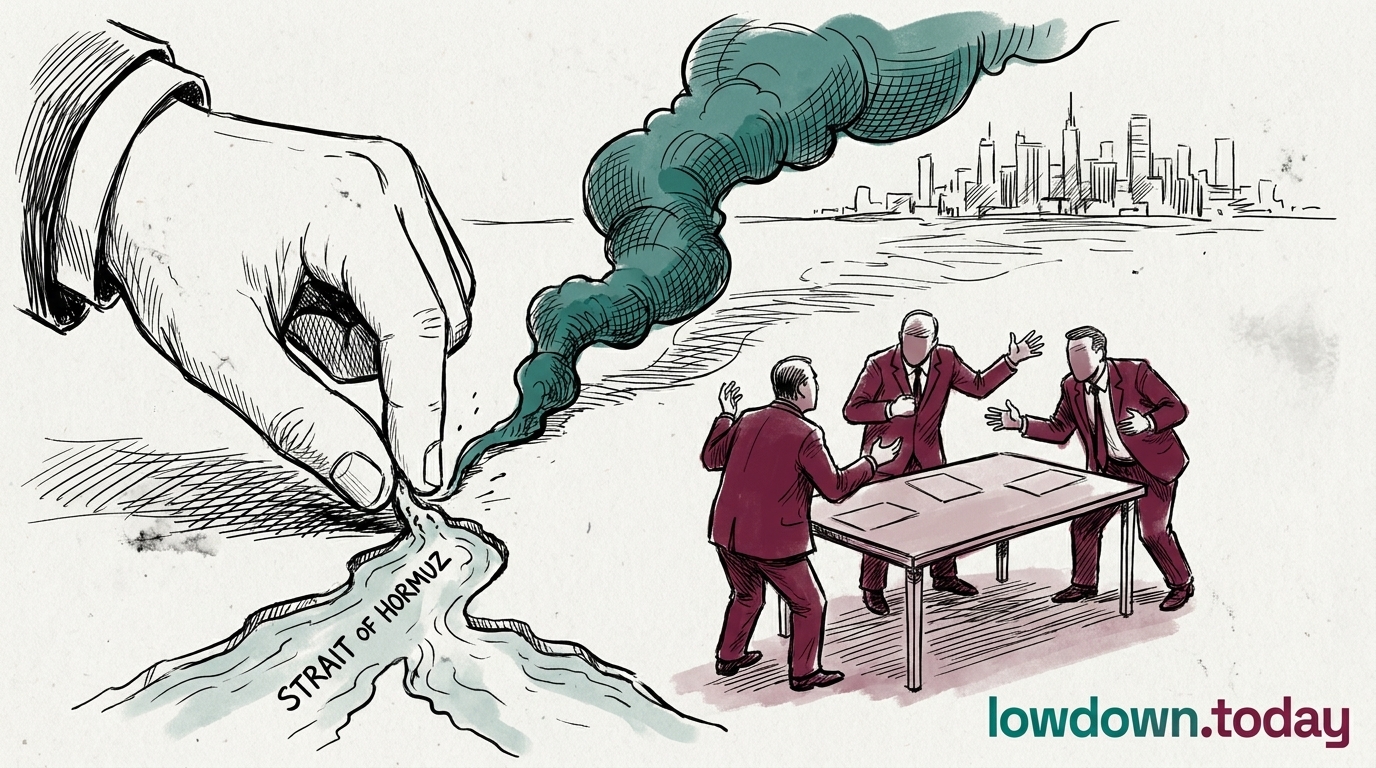
Brent crude closed $107.77 on 12 May on Trump's verbal rejection of Iran's 10-point MOU reply via Pakistan, then settled at $107.05 on 13 May. Goldman Sachs and Morgan Stanley flagged a structural Hormuz premium that will outlast any ceasefire.

ConflictDeveloping
Key takeaway

Brent closed $107.05 on 13 May, $2.84 above the 11 May ceasefire-alive baseline.

Brent Crude closed at $107.77 on 12 May 2026, a 3.4 per cent jump on Trump's verbal rejection of Iran's 10-point MOU reply via Pakistan , then settled at $107.05 on 13 May 1. That is $2.84 above the $104.21 close that priced the ceasefire as still alive . The verbal rejection had no signed instrument behind it; the price still moved as if one had been signed against the ceasefire.

Brent is the global oil benchmark; roughly two-thirds of internationally traded crude prices off it, as do European retail diesel and the wholesale gas contracts that feed UK household bills. For UK drivers that translates to a pump price around £1.55 per litre through summer; for UK consumers on index-linked tariffs it adds roughly £180 a year to a typical household gas bill via the wholesale contracts that price off Brent. Traders are pricing both Trump's 11 May "life support" remarks on the ceasefire and the OFAC Hong Kong designations two days later .

Goldman Sachs and Morgan Stanley both noted on 13 May that the structural Hormuz premium will persist beyond any ceasefire because P&I (Protection and Indemnity) insurers cannot reopen war-risk cover for the strait until written rules of engagement exist for the European mission and the US blockade. The insurance freeze, not summit hope, sets the floor for Brent through the rest of May. The market is pricing the absence of signed paper for the rest of May.


Deep Analysis

In plain English

The price of oil on world markets is tracked via a benchmark called Brent crude. When Brent goes up, everything that uses oil, including petrol, diesel, home heating, and many food products, tends to get more expensive too. Brent closed at $107.05 on 13 May. Before the Iran conflict began about 75 days ago, it was around $67. That $40 difference is being called the "Hormuz premium", the extra cost the market adds because nobody can get war-risk insurance to ship oil through the strait right now. Two big investment banks, Goldman Sachs and Morgan Stanley, said on 13 May that this premium will not go away just because a ceasefire is signed. The shipping insurance industry needs to see written rules about how the strait will be managed before they will insure tankers again. Until that paperwork exists, oil stays expensive.

What could happen next?
  • Consequence

    The two-layer Brent premium, kinetic and structural insurance, means a signed ceasefire alone will not restore pre-war pump prices; the insurance layer requires a separate written rules-of-engagement document from the European coalition.

  • Risk

    UK Q3 2026 Ofgem price-cap calculations will incorporate the current Brent forward curve, locking elevated household energy costs through September 2026 regardless of any ceasefire signed in May or June.

First Reported In

Update #96 · Hegseth: no AUMF needed. Trump flies east

CNBC· 13 May 2026
Read original
Different Perspectives
Gulf shipping and insurance markets
With Hormuz and Bab el-Mandeb both hostile at once, war-risk underwriters face their first dual-chokepoint pricing problem; the rerouting hedge that absorbed one closure is gone for Israeli-linked hulls. Any deal that reopens Hormuz without a Houthi stand-down clause delivers only partial shipping relief.
Russia and China
Russia and China
Russia and China met IAEA chief Grossi jointly in Geneva on 5 June to coordinate an advance blocking position against Washington's censure resolution, the first documented instance of proactive pre-session obstruction rather than reactive post-vote dissent. Beijing's move came four days after OFAC designated Shanghai Qianye Energy under Iran energy sanctions.
Saudi Arabia
Saudi Arabia
Saudi Arabia was left out of the emergency $4.01 billion Patriot waiver Qatar received on 2 May as its own PAC-3 stocks ran near-empty from intercepting Iranian salvoes over Aramco facilities. Riyadh is on a standard 18-month FMS queue behind a production line booked through 2030, with no equivalent priority to Qatar's Al Udeid basing role.
Houthis (Ansar Allah)
The Houthis declared a complete ban on Israeli Red Sea navigation on 8 June and struck Jaffa, their first attack on Israeli territory since April, seven days after the Tasnim authorisation to activate other fronts including Bab el-Mandeb. The declaration put both chokepoints under hostile authority simultaneously.
Iran
Iran
Iran agreed the 9 June mutual halt after the Mahshahr exchange and coordinated with Russia and China to block Washington's IAEA censure resolution, using the Board as a second front while the bilateral pause held on the military one. Tehran's acceptance of the Lebanon carve-out contradicts the linkage position it stated on 1 June.
Benjamin Netanyahu and the IDF
Israel struck the Karun Petrochemical plant at Mahshahr on 8 June over Trump's explicit objection, then agreed a halt with Iran the following day scoped on Israeli terms with Lebanon carved out. Netanyahu's posture is that the IDF will not accept Iranian missile factories as off-limits regardless of US diplomatic timelines.



