Skip to content
You can now search across every topic, entity and event.What's new
Iran Conflict 2026
23AUG

Arrow-3 81% gone; full depletion looming

2 min read
19:02UTC

RUSI projected Arrow-3 stocks fully exhausted by end of March, with $26 billion spent on 11,294 munitions in the first 16 days alone.

ConflictDeveloping
Key takeaway

Israel may have entered April without its primary ballistic missile defence shield.

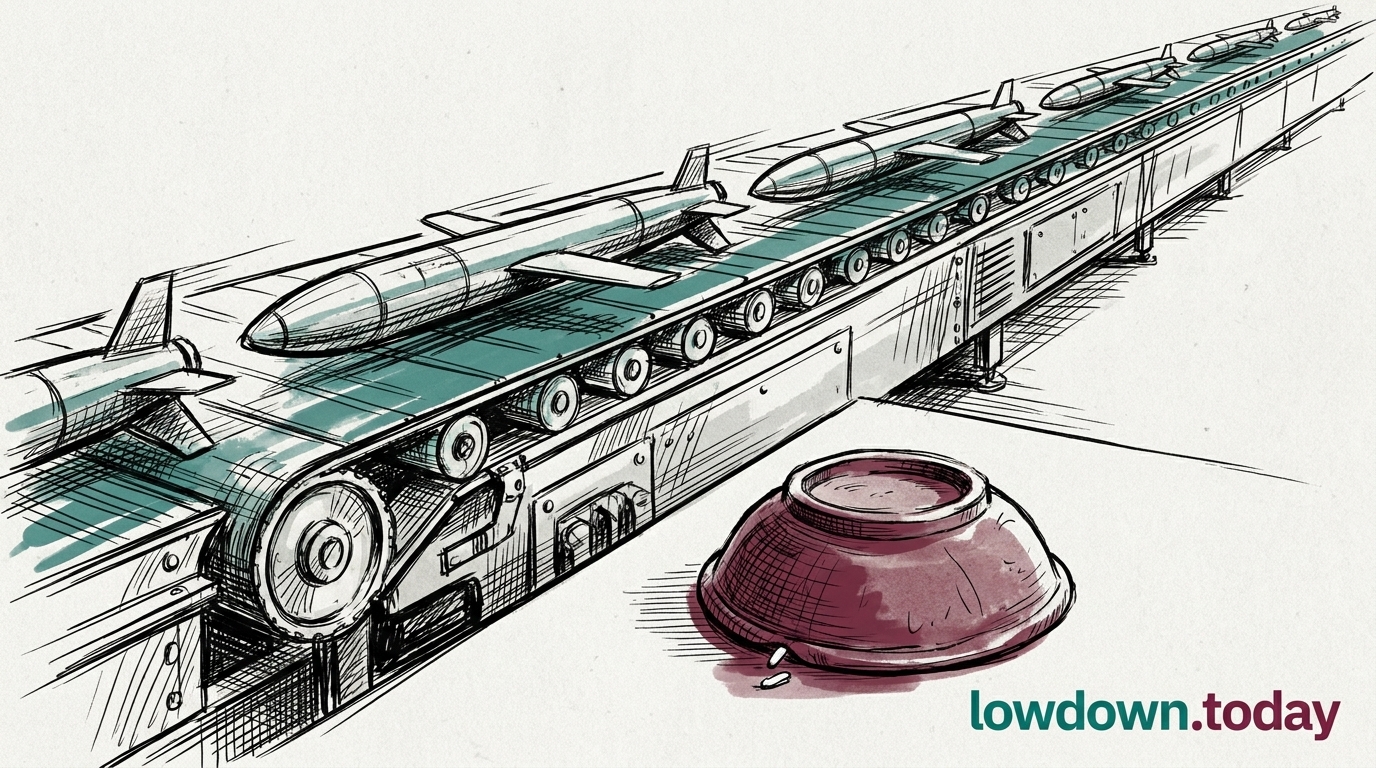
The Royal United Services Institute projected that Israel's Arrow-3 interceptor stocks were 81.33% depleted by 26 March and would be fully exhausted by the end of the month. 1 In practical terms, fewer than one in five of Israel's pre-war upper-tier interceptors remained five days ago. The US THAAD system faces similar pressure, with stocks potentially exhausted within one month at current expenditure rates.

The cost figures behind the depletion expose a structural asymmetry. The US-Israel coalition fired 11,294 munitions in the first 16 days at an estimated cost of $26 billion. At that rate, the unfunded $200 billion supplemental request covers roughly four months of operations. The interception rate held at 92%, but Iran's missiles cost a fraction of the interceptors that destroy them. By RUSI's estimate, Iran spends roughly $1 for every $10 the coalition spends to counter it.

Replenishment takes years, not months. Arrow-3 production depends on complex supply chains and specialist components. Iran's deployment of a cluster warhead on the same day may reflect awareness that the defence gap is imminent. If RUSI's projection held, Israel entered April with no upper-tier missile defence. The next cluster warhead arrives into open sky.

Deep Analysis

In plain English

Israel's main defence against long-range Iranian missiles is called Arrow-3. Think of it as a very expensive interception system that shoots down incoming missiles before they land. Each interceptor missile costs several million pounds. RUSI, a respected British defence think tank, estimated that by 26 March, roughly four in five of Israel's pre-war supply had been used up. The projection was that the last ones would be fired by end of March. Replacing them takes years, not weeks. Iran's missiles cost far less to build than the interceptors that destroy them. Iran fired 1 for every £10 spent defending against it. If the shield is empty, Iranian missiles arrive undefended.

What could happen next?
  • Risk

    If Arrow-3 stocks are genuinely exhausted, Iran's ballistic missiles arrive uncontested at Israeli cities, and THAAD becomes the sole remaining upper-tier defence with its own stocks draining.

    Immediate · 0.75
  • Consequence

    The cost-exchange ratio forces a strategic choice: continue operations at $800 million per day with no replenishment path, or negotiate before the THAAD gap similarly opens.

    Short term · 0.8
  • Consequence

    Arrow-3 depletion removes the deterrent value of the interception system; Iran's operational calculus on strike tempo changes immediately.

    Immediate · 0.8
First Reported In

Update #53 · Trump drops Hormuz goal; toll becomes law

Defence Security Asia (citing RUSI)· 31 Mar 2026
Read original
Causes and effects
This Event
Arrow-3 81% gone; full depletion looming
If the projection held, Israel entered April without upper-tier ballistic missile defence for the first time since the system became operational.
Different Perspectives
Hizballah
Hizballah
Has not commented on the US Treasury's 20 August designation of ten people, including named couriers, over a cash network Treasury says moved money to it from the IRGC-Qods Force. ACLED recorded a sharp rise in attacks around it the same day.
Kuwait
Kuwait
Kuwait's Chief of the General Staff, Lieutenant General Khaled al-Shriaan, co-chaired the 16th US-Kuwait Joint Military Commission at the Pentagon on 21 August. Kuwait has not published what was agreed; only a summary of the meeting's existence and attendees is sourced.
Qatar
Qatar
Has not commented publicly on the $4.5bn KC-46A tanker Foreign Military Sale notification the State Department approved on 20 August. The notification opens a sale process; Doha has not confirmed whether it will proceed to a signed transfer.
Mohammad Bagher Ghalibaf
Told a Baghdad business meeting on 20 August that Iran will not endure a hungry population regardless of its military strength, against 87.9% point-to-point inflation and 128.1% food inflation for Tir. His fellow Majlis Economic Committee member Samsami separately warned a petrol price rise would ignite unrest.
US Navy
US Navy
Signed a $22.9bn, seven-year contract with Raytheon on 17 August to raise Tomahawk output from about 60 a year to more than 1,000. The Acting Navy Secretary, quoted via an X post, framed it as the "Arsenal of Freedom" initiative; it replaces the 850 missiles fired by 1 April in about ten months at the new rate.
UK Maritime Trade Operations
UKMTO logged six armed men boarding a tanker 136 nautical miles east of Al Mukalla on 20 August and redirecting it toward Somalia. A vessel steered toward the Somali coast reads as an attempted seizure, a distinct hazard from the stand-off strikes the same lane has seen before.