Skip to content
You can now search across every topic, entity and event.What's new
European Tech Sovereignty
19APR

Golden Global shuts three of its funds

2 min read
17:00UTC

Golden Global told Turkey's disclosure platform on 7 September that its funds were legally separate from its sanctioned manager and bank. The next day it closed three of them to new money.

TechnologyAssessed
Key takeaway

Subscriptions shut and redemptions open is a manager hedging against its own legal argument.

Golden Global Portfoy Yonetimi closed three of its funds, the codes GOK, GLL and GOP, to new subscriptions on Tuesday 8 September, through both the TEFAS electronic distribution platform and direct distribution, until further notice 1. A day earlier it had told the Public Disclosure Platform (KAP), the system through which Turkey's listed and licensed institutions must publish material information, that the assets and liabilities of six funds were legally separate from the sanctioned manager and bank, and that OFAC had not designated the funds themselves 2.

Redemptions stayed open. Money may leave the three funds while no new money may enter. Both halves of that contradiction belong to the same company, and both sit in its own regulated filings, timestamped and attributable to its own officers. A manager certain the ring-fence holds keeps taking subscriptions, because taking them is how the argument is proved in public.

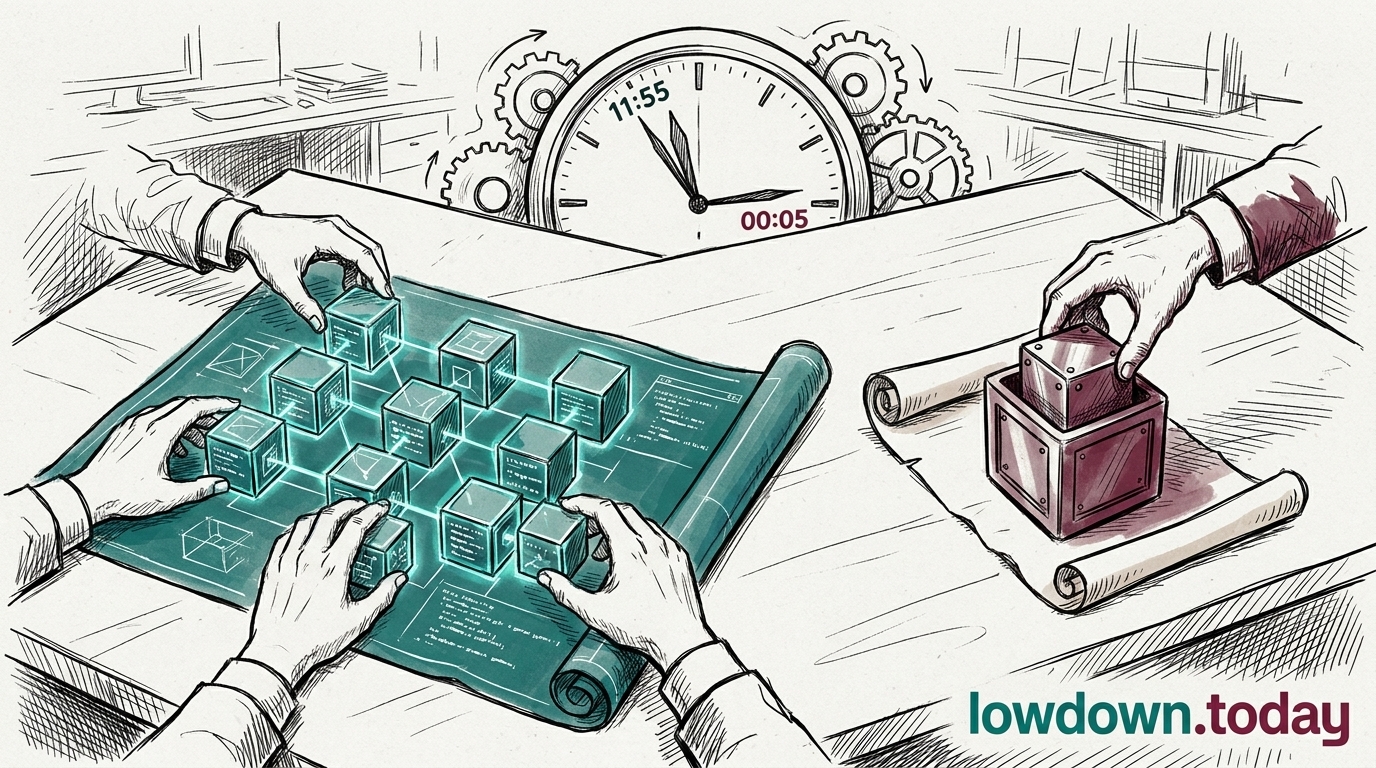
The designation behind it landed on 4 September, when OFAC blacklisted the three Golden Global institutions under Executive Order 13902 . The bank denied the allegations in a KAP filing the same evening . The operative deadline now is General Licence CC, the wind-down authorisation that expires at 00:01 United States Eastern time on Saturday 19 September. A counterparty still holding exposure after that has no authorised route out.

That is the mechanism worth watching, because it runs on a calendar rather than on anyone's intentions. Wind-down licences exist so that unwinding a position is itself lawful for a fixed period. Once the window shuts, a foreign bank, a custodian or a distributor holding Golden Global paper faces a choice between freezing it and explaining a transfer to OFAC. As of 11 September the public record carries no counterparty disclosure of an unwind or a freeze, and no supervisory decision from Türkiye's banking regulator or its finance ministry.


Deep Analysis

In plain English

Golden Global is a Turkish financial group whose bank was sanctioned by the US on 4 September for alleged links to Iran's Revolutionary Guard. KAP is Turkey's official system for company disclosures, similar to a stock exchange announcement service. On 7 September, Golden Global's fund-management arm told KAP that its funds were legally separate from the sanctioned bank and had not themselves been designated. The very next day, it stopped accepting new money into three of those funds, while still letting existing investors withdraw theirs. No Turkish regulator or foreign bank had, by 11 September, publicly said it was cutting ties with Golden Global, even as the firm's own actions suggest it is bracing for further fallout from the US sanctions on its parent bank.

Deep Analysis
Root Causes

Turkey's KAP disclosure regime requires listed and regulated entities to file market-moving notices publicly, which is why Golden Global's own contradictory signals, a legal-separation claim on 7 September followed by a subscription halt on 8 September, are both visible on the public record rather than resolved privately before disclosure.

The one-day gap between asserting independence from the sanctioned bank and restricting three of the same funds is not itself an admission, but it is a sequence the firm chose to file rather than avoid.

OFAC's designation targeted Golden Global Yatirim Bankasi and two related entities under Executive Order 13902 for allegedly facilitating IRGC-Qods Force transactions. Whether that designation legally extends to fund vehicles the firm insists are separate is precisely the question its own subscription halt does not resolve, since closing funds to new money is consistent with either caution or exposure.

What could happen next?
  • Risk

    General Licence CC's wind-down authorisation expires on 19 September, after which the legal basis for continuing even the redemptions Golden Global has kept open becomes uncertain.

First Reported In

Update #177 · 23 to 3: Iran goes to the Security Council

Public Disclosure Platform (KAP)· 11 Sept 2026
Read original
Different Perspectives
Poland
Poland
Poland leads a self-announced AI Gigafactory consortium with a EUR 100 million phase-one commitment, matched by Czechia and joined by Hungary at EUR 25 million. EuroHPC has confirmed no consortium for the call closing 12 November, so the bloc exists only in national announcements so far.
UK Government (DCMS)
Secretary of State Lisa Nandy told the Commons on 3 September she has inherited the sovereign AI brief from Liz Kendall, but gave no assessment, figure or date on frontier-model access. It is the first public claim of ownership since DSIT's abolition, without the substance the committee asked for.
ASML
ASML
ASML CEO Christophe Fouquet credited Intel Foundry, not a European fab, with shipping the first high-volume logic product made on High-NA EUV, the tool only ASML builds. Europe holds the chokepoint tool; the company that spent it into volume production first is American.
Luxembourg
Luxembourg
Luxembourg joined Mistral's Series D as a new investor on 8 September, the same government that co-funds EuroHPC's MeluXina-AI supercomputer. One small member state now funds the sovereign compute Mistral may need and holds equity in the company using it.
Samsung Electronics
Samsung Electronics
Samsung led Mistral's Series D on 8 September and the same day expanded its ASML collaboration on next-generation lithography. One Korean company now sits atop Europe's largest AI funding round and inside its most sensitive chip-tooling relationship.
Mistral AI
Mistral AI
Mistral closed a EUR 3 billion Series D above a EUR 21 billion valuation on 8 September, with Samsung leading and Luxembourg joining as a new state investor. The company markets itself as Europe's non-American AI option even as the round's lead capital comes from South Korea and two US private-equity firms.



