Skip to content
You can now search across every topic, entity and event.What's new
European Energy Markets
31JUL

Bruegel: Spain bears 45% of EUR 11bn cost

4 min read
09:44UTC

Bruegel's 5 May tracker update put total EU+UK fiscal commitments above EUR 11 billion, with Spain at EUR 5 billion (~45%) and 72% of the spend untargeted general VAT and excise cuts.

EconomicDeveloping
Key takeaway

Spain at 45% of EUR 11bn shielding cost reveals the price of skipping a storage injection mechanism.

Bruegel's 2026 European energy crisis fiscal response tracker, updated on 5 May, reports total EU+UK fiscal commitments above EUR 11 billion. Spain accounts for EUR 5 billion (~45% of the total), Germany EUR 1.62 billion, the Netherlands EUR 967 million, Greece EUR 800 million, Ireland EUR 755 million. 72% of the spend (EUR 8.3 billion) is untargeted: general VAT and excise cuts with no conditionality.

Bruegel is the Brussels-based independent European economics think tank that maintains the bloc's most-cited fiscal-response dataset for the energy crisis. The tracker covers measures notified across EU member states plus the UK, with conditionality flagged on each line. Untargeted spending in this taxonomy means the support reaches all consumers regardless of income, rather than only energy-poor households or exposed industrial users.

The asymmetry tracks against day-ahead power in the wrong direction. Spain held the cheapest day-ahead print of any major EU market on 7 May, yet still carries the bloc's largest consumer-shielding bill. The structure makes sense once household power and gas tariffs are treated as separable from wholesale clearing: Spain's exposure runs through retail and indirect taxation, not the merit-order print.

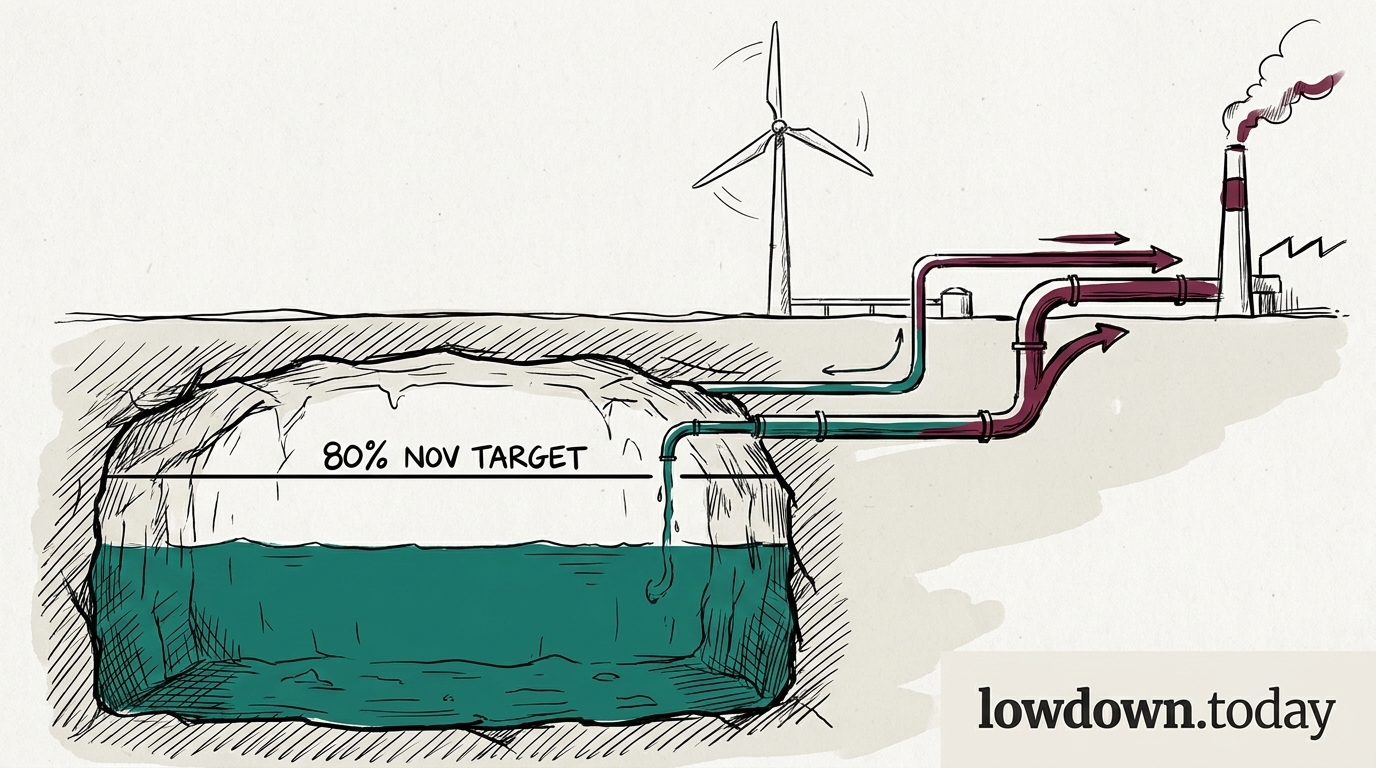
The companion paper, "The fiscal fault lines of Europe's energy shock," reinforces the AccelerateEU critique that Brussels chose untargeted shielding over a storage-injection mechanism. The earlier refill cost work priced the November target on the assumption the floor is delivered. The fiscal tracker is what the cost looks like when the storage tool is skipped and the price work falls on national treasuries instead.


Deep Analysis

In plain English

EU governments have been spending public money to protect households and businesses from high energy bills. Bruegel, a respected European economics research organisation, tracks how much each country is spending and how they are targeting that spending. The latest update shows Spain is spending about EUR 5 billion, nearly half of the total EUR 11 billion-plus that the EU and UK have committed. Oddly, Spain actually has some of the cheapest electricity in Europe right now. The reason is historical: Spain ran a special programme earlier that capped gas prices, and the government is still paying compensation to energy companies for the losses that cap created. Meanwhile, 72% of all EU+UK spending goes out as broad tax cuts, money that reaches everyone, rich or poor, rather than focusing on the households that most need help.

Deep Analysis
Root Causes

The 72% untargeted share reflects three structural causes operating simultaneously. First, the gas storage levy that previously incentivised injection and reduced the need for consumer shielding was abolished on 1 January 2026, removing a supply-side mechanism that would have reduced the demand for fiscal shielding by holding prices lower through higher storage fill.

Second, EU state aid rules permit untargeted VAT and excise reductions under the Temporary Crisis and Transition Framework with minimal administrative pre-approval, while targeted cash-transfer instruments require notified state aid with longer approval timelines. The regulatory pathway directly incentivises untargeted spending.

Third, AccelerateEU's consumer-relief template explicitly validated the untargeted approach at Commission level, signalling to national treasuries that Brussels was not going to penalise the choice.

What could happen next?
  • Consequence

    Spain's CNMC settlement process for Iberian Exception generator compensation continues to land on Spanish public accounts through 2026 independently of current clearing prices, meaning Spain's fiscal exposure does not self-correct even if wholesale prices normalise.

    Medium term · 0.82
  • Risk

    The 72% untargeted spending share locks in fiscal commitments that deliver no storage-injection benefit, unlike a storage levy that would reduce supply-side costs, concentrating the fiscal burden in consumer shielding while the injection-pace gap accumulates without a policy response.

    Short term · 0.85
  • Precedent

    AccelerateEU's consumer-relief template (ID:2683) validated the untargeted approach at Commission level, creating a precedent that incentivises national treasuries toward broad VAT cuts over targeted cash transfers in future energy emergencies, even when the administrative capacity for targeting exists.

    Long term · 0.78
First Reported In

Update #8 · Storage 34.3 as 12 May test nears; Hammerfest silent

Bruegel· 8 May 2026
Read original
Different Perspectives
Spain's LNG terminal operators
Spain's 9,145 GWh terminal inventory is the largest single stock in the EU LNG network, an option value that can reroute cargoes wherever the winter strip pays best rather than a cavern gas obligation tied to a fixed date. That flexibility matters more as Germany's cavern shortfall pushes more of the winter security question onto import infrastructure.
European Commission
European Commission
Brussels holds the bloc to 90% on a flexible window while Germany, holding roughly a quarter of EU storage capacity, tracks toward missing its own lower 80% figure by 21 points. A national shortfall this size in the anchor market matters more to bloc security than the flexible timetable alone can absorb.
French power exporters and CRE
French day-ahead rose in step with Germany but by less, reopening a EUR 7-17 premium that makes northward export flows commercially attractive again after the EUR 43.09 discount evaporated in days. CRE separately authorised RTE and Enedis to buy flexibility locally, betting the coming winter's binding constraint is grid congestion rather than a shortage of firm capacity.
TTF trading desk
TTF trading desk
A visible national shortfall like Germany's 21-point gap is a directional signal, not noise, for a desk holding the summer-winter spread. TTF's flat EUR 58-60 range through this week's German price swings says the market has not yet chosen to reprice refill risk into the front of the curve.
German cavern and CCGT operators
German caverns kept buying prompt gas at TTF near EUR 58-60 through the inversion; the wind collapse to 2.4 GW then flipped the spark spread to plus EUR 29 and put turbines back in the same queue. Every day turbines win that bid, injection at a third of the 877 GWh/day pace needed falls further behind.
Slovakia
Slovakia
Slovakia says it dropped its hold-out on the 21st sanctions package only after Ursula von der Leyen personally signed written gas-price and supply guarantees. The Council of the European Union's own 17,238-character release on the package names neither Slovakia nor any guarantee, leaving Bratislava's account unconfirmed by the institutional record.



