Skip to content
You can now search across every topic, entity and event.What's new
European Energy Markets
16JUL

Storage still fills, but the margin thins

2 min read
09:48UTC

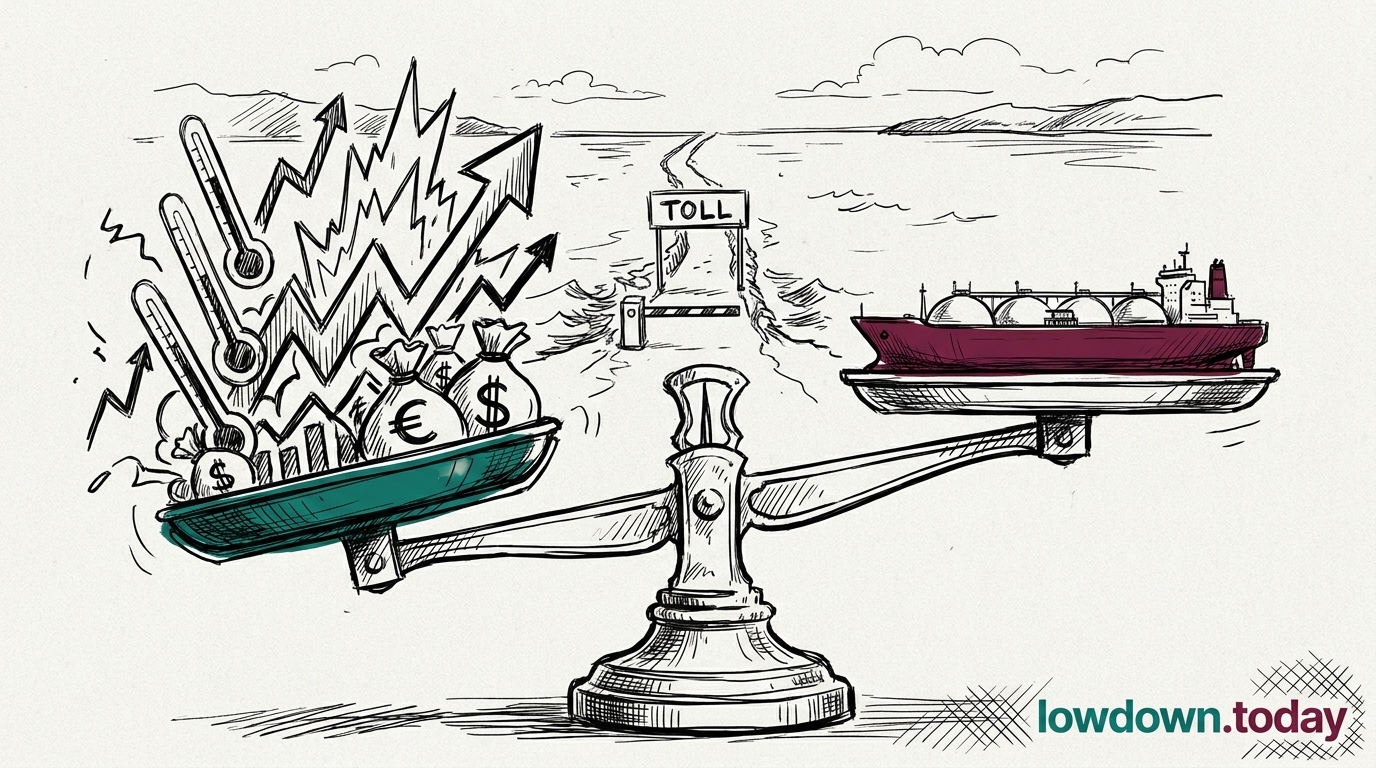
German net gas injection fell to 424.5 GWh on 14 July from 549.5 GWh a day earlier, while French withdrawal climbed even as France kept filling, the physical counterweight to a rally built on a toll headline.

EconomicAssessed
Key takeaway

Both estates still fill, undercutting the shortage story, though the net-fill margin thins under heat burn.

German storage reached 44.65% at the end of gas-day 14 July, yet the net injection behind that number fell to 424.5 GWh from 549.5 GWh the day before, a 23% deceleration with withdrawals near zero 1. French storage hit 51.91% the same day, still filling, but its withdrawal climbed to 215.5 GWh from 148.8 GWh, cutting net fill by roughly a fifth even as injection itself rose 2. These are the daily figures GIE AGSI+, the Brussels transparency platform for EU gas operators, publishes for anyone to read, and no wire is carrying them.

A benchmark repricing a Hormuz toll would, if the toll were actually removing molecules from Europe, show up as caverns drawing down. Instead both estates keep injecting; the headline fill still rises. What is thinning is the margin, as summer heat pulls gas into power generation and competes with the mandate-driven refill.

The acceleration from the 11 July Asgard restart has already faded three days on. That restart briefly pushed German and French storage to fresh highs; the deceleration here is the counter-reading. Storage is comfortable enough to undercut the shortage story, but the pace is slowing at the exact moment the autumn refill target needs it to hold.


Deep Analysis

In plain English

Germany and France both store gas underground during summer to use in winter, and both are still adding to those stores. But the pace has slowed. Germany added less gas to storage on 14 July than the day before, and France is pulling more gas back out even while it keeps adding overall. The reason is the same heat wave driving other stories this week: gas is being burned to make electricity for air conditioning instead of being put into storage, so the safety margin the two countries are building for winter is growing more slowly than it was a few days ago.

Deep Analysis
Root Causes

The deceleration traces to the same heat dome driving events elsewhere in this window: German gas-fired power plants are running harder to cover the cooling load that Germany's own day-ahead price climb reflects, pulling prompt molecules toward power generation instead of storage injection.

French storage tells the sharper version of the same story, withdrawal is rising even while the estate still nets positive, because gas-fired capacity is standing in for the 3.65 GW of nuclear that stayed offline through 14-16 July.

Neither estate is drawing down net, which is the distinction that matters: heat burn is competing with injection for the same gas, not forcing an outright reversal of the summer refill programme.

What could happen next?
  • Risk

    If the slower net-fill pace persists into late July, both estates enter the autumn restocking window with a thinner margin than the 11 July Asgard-driven acceleration suggested.

First Reported In

Update #27 · TTF hits EUR 55; the arb won't confirm it

GIE· 16 Jul 2026
Read original
Causes and effects
This Event
Storage still fills, but the margin thins
Both estates are still injecting, so a real shortage is not building, but heat burn is eating into the surplus the market would need to arbitrage.
Different Perspectives
LNG spreads desk
LNG spreads desk
The JKM-TTF arb flipped to a TTF premium of roughly USD 0.6/MMBtu on 15 July, the first time this cycle Europe has outbid Asia, yet no Atlantic cargo has rerouted west. Until a cargo actually moves, the desk reads the Hormuz premium as unconfirmed and the EUR 55 print as vulnerable to a fast reversal.
United States
United States
Washington reimposed a blockade on Iranian ports and a 20% Strait of Hormuz cargo toll on 13 July, driving TTF's 9% two-session rally to EUR 54.995/MWh. The posture is again setting Europe's gas benchmark by sentiment rather than by any confirmed change in cargo flows.
EDF
EDF
EDF slipped the Bugey 3, Golfech 2 and Chooz 2 restarts to 19, 22 and 25 July, pushing all three past the 20 July Bugey heat exemption, after river-cooling limits on the Rhone, Garonne and Meuse forced the cuts. The same thermal ceiling has capped the fleet in every major heatwave since 2003, and this cycle is no exception.
German power desk
German power desk
German day-ahead power climbed from EUR 126 to EUR 156/MWh over 14-16 July as the heat dome held, flipping the clean spark spread positive for the first time since 14 July. Gas-for-power demand is now back in competition with mandate storage injection right as the injection margin itself is thinning.
EU carbon and storage regulators
EUA carbon broke EUR 81/tonne on 13 July as the ETS Market Stability Reserve's scheduled withdrawals met fresh fuel-switching demand from France's nuclear curtailment. Brussels' mandatory storage-fill rule kept German and French injection running regardless of the TTF swings, the mechanism working as designed four years after the 2022 shock.
Equinor
Equinor
Equinor returned its Asgard field from maintenance on 11 July, lifting Gassco's exit nominations to 319.8 mcm/day just as TTF round-tripped on Hormuz risk. The restart gave Norway spare pipeline capacity to help Europe absorb the gas rally without drawing down storage, reinforcing its role as the post-2022 swing supplier.
