Skip to content
You can now search across every topic, entity and event.What's new
European Energy Markets
22JUN

Britain buys into a chip startup

2 min read
13:56UTC

Sovereign AI has taken a nine-figure equity stake in OLIX, a two-year-old inference-chip company in London and Bristol, its fifth investment since April.

EconomicDeveloping
Key takeaway

The state now owns part of a two-year-old chip firm, with no compute delivered yet.

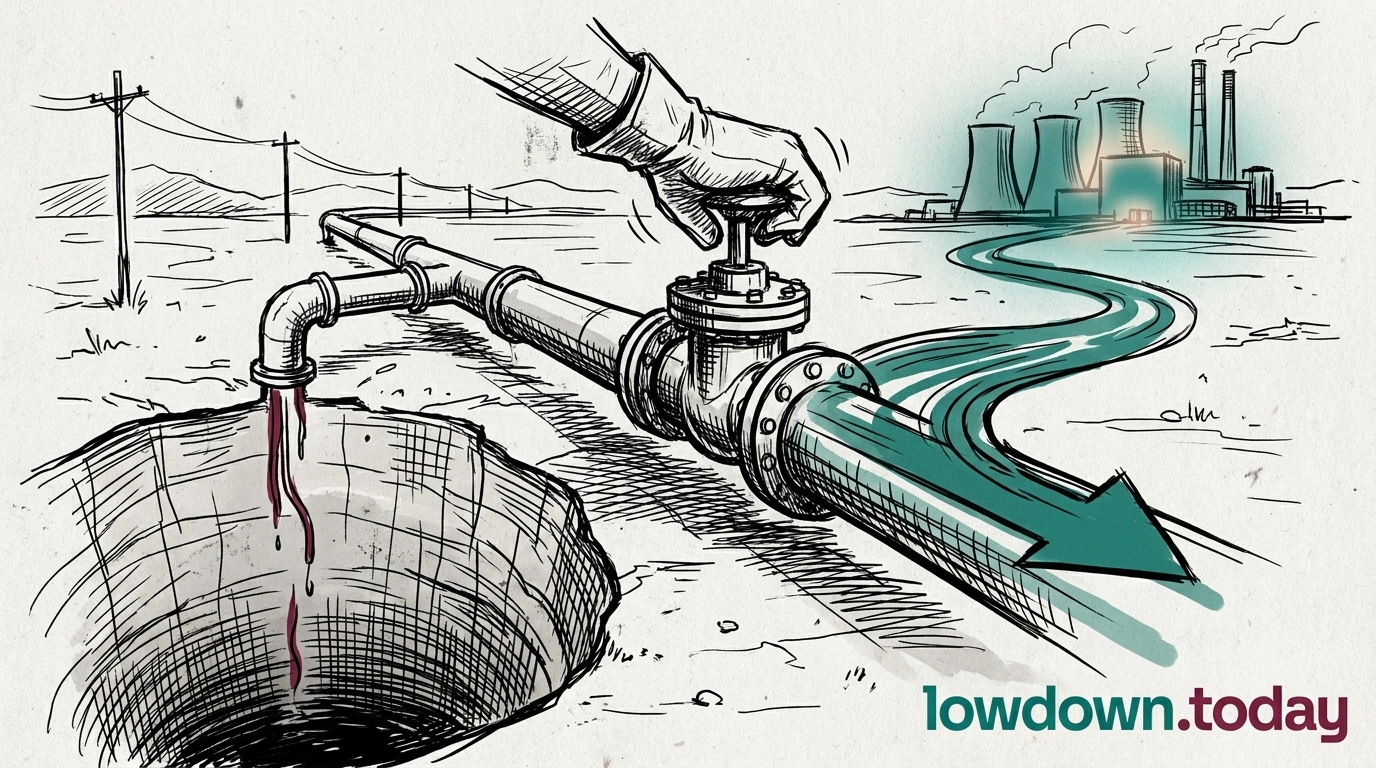
The UK's Sovereign AI vehicle has taken a nine-figure equity stake in Olix, an inference-chip company founded in 2024 with operations in London and Bristol that has just closed a $220m Series A. The investment was made on 30 July and announced on gov.uk on 3 August, co-published by the Cabinet Office and the business department 1. It is the fund's fifth equity investment since it launched in April with GBP 500m .

Sovereign AI takes shareholdings in British technology companies rather than buying their products, and inference chips are the part of the market where that choice bites hardest. Inference is the running of a trained model rather than its training, and it is where volume demand sits once a model ships. A stake in a company at that layer protects against the outcome ministers keep citing, a promising British firm acquired abroad or cut off from supply, without delivering a single hour of compute to a British researcher on any stated date.

A nine-figure position in a company two years old also concentrates the portfolio rather than spreading it. Five investments in four months, one of them this size, leaves the vehicle's risk sitting in a small number of very young holdings. The government has published no framework setting out when equity is preferred to procurement, which is the gap the Commons science committee identified in July .


Deep Analysis

In plain English

The UK government set up a fund called the Sovereign AI Unit in April with GBP 500 million to invest in British AI and chip companies, so the country isn't entirely dependent on American or Chinese technology. On 30 July, and confirmed on gov.uk on 3 August, that fund took a large ownership stake in OLIX, a chip company based in London and Bristol that makes hardware for running AI programmes efficiently. OLIX had just raised $220 million from private investors, so the government money is topping up a deal others already believed in, not taking the first risk alone.

Deep Analysis
Root Causes

Bruegel's Analysis 13/2026 found Europe has no leading-edge AI accelerator to switch to; funding a domestic inference-chip startup is a direct answer to that structural gap, distinct from the application-layer bets, coding assistants, biotech, world models, that made up most of the Unit's first cohort.

DSIT's abolition on 20 July fragmented Whitehall's AI policy ownership across the Cabinet Office and two successor departments, yet the OLIX deal proceeded on schedule regardless, suggesting the investment machinery itself, unlike ministerial oversight, survived the reorganisation intact.

First Reported In

Update #14 · AI Act fines arrive, three states list no regulator

GOV.UK, Cabinet Office· 4 Aug 2026
Read original
Causes and effects
This Event
Britain buys into a chip startup
Britain keeps choosing ownership where Brussels is choosing purchase orders, and five stakes in four months make that a pattern rather than an experiment.
Different Perspectives
Cross-border power traders
The France-Germany day-ahead spread flipped from a EUR 17.20 German premium on 1 August to a EUR 4.15 French premium on 3 August, the same day French curtailment peaked. They cannot yet attribute the flip to curtailment alone, since a like-for-like overnight comparison shows French nuclear output rising while wind fell and demand returned on the weekday step.
EDF
EDF
River-cooling limits took 7.6 GW, 12 per cent of its fleet, offline on 3 August, the highest curtailment since the heatwave began, with an easing forecast to 4.3 GW on 4 August and 3 GW after. It manages the cut as a recurring seasonal constraint, expecting it to lift with river temperature, not repair.
Gasunie
Gasunie
TTF, the Dutch hub it operates, drifted to roughly EUR 55 to 58 per MWh across the window, staying inside its recent range through both the German spark reversal and the French curtailment. It reads a flat hub price as evidence that neither event this window carried enough weight to move the fuel leg on its own.
German gas-fired generators
Record German solar of 18,761 MW on 2 August pushed the clean spark spread to minus 18.48 EUR/MWh, a loss-making day, before it returned to plus 16.20 on 3 August. They now price dispatch against post-solar residual load rather than wind alone, since the sign flipped inside 48 hours on unchanged fuel and carbon costs.
European Commission (DG Energy)
Its implementing-measures register logged transposition notices from only Portugal and Slovakia against Wednesday's Article 94 deadline for Directive (EU) 2024/1788, with 25 states silent. It expects the register to fill only gradually, since filing routinely lags legislating and any infringement track against non-notifying states runs on a slower clock than the deadline itself.
Spain's LNG terminal operators
Spain's 9,145 GWh terminal inventory is the largest single stock in the EU LNG network, an option value that can reroute cargoes wherever the winter strip pays best rather than a cavern gas obligation tied to a fixed date. That flexibility matters more as Germany's cavern shortfall pushes more of the winter security question onto import infrastructure.



