Skip to content
You can now search across every topic, entity and event.What's new
European Energy Markets
15JUN

CENTCOM redirections rise to 61, disabled count holds at four

4 min read
12:23UTC

Three vessels added to the cumulative count since 7 May; smokestack-disabling pattern unchanged

EconomicDeveloping
Key takeaway

CENTCOM redirections rose to 61 by 10 May; the disabled-tanker count held at four with two still unnamed.

CENTCOM added three commercial vessels to its cumulative Iranian-port redirection count between 7 May and 10 May, taking the running figure to 61 . The pace has slowed from the early-blockade rhythm of one to two vessels per day to a roughly one-per-day tempo, suggesting that the dark-fleet community has largely re-routed around the visible enforcement architecture or stopped sending tonnage into the corridor entirely.

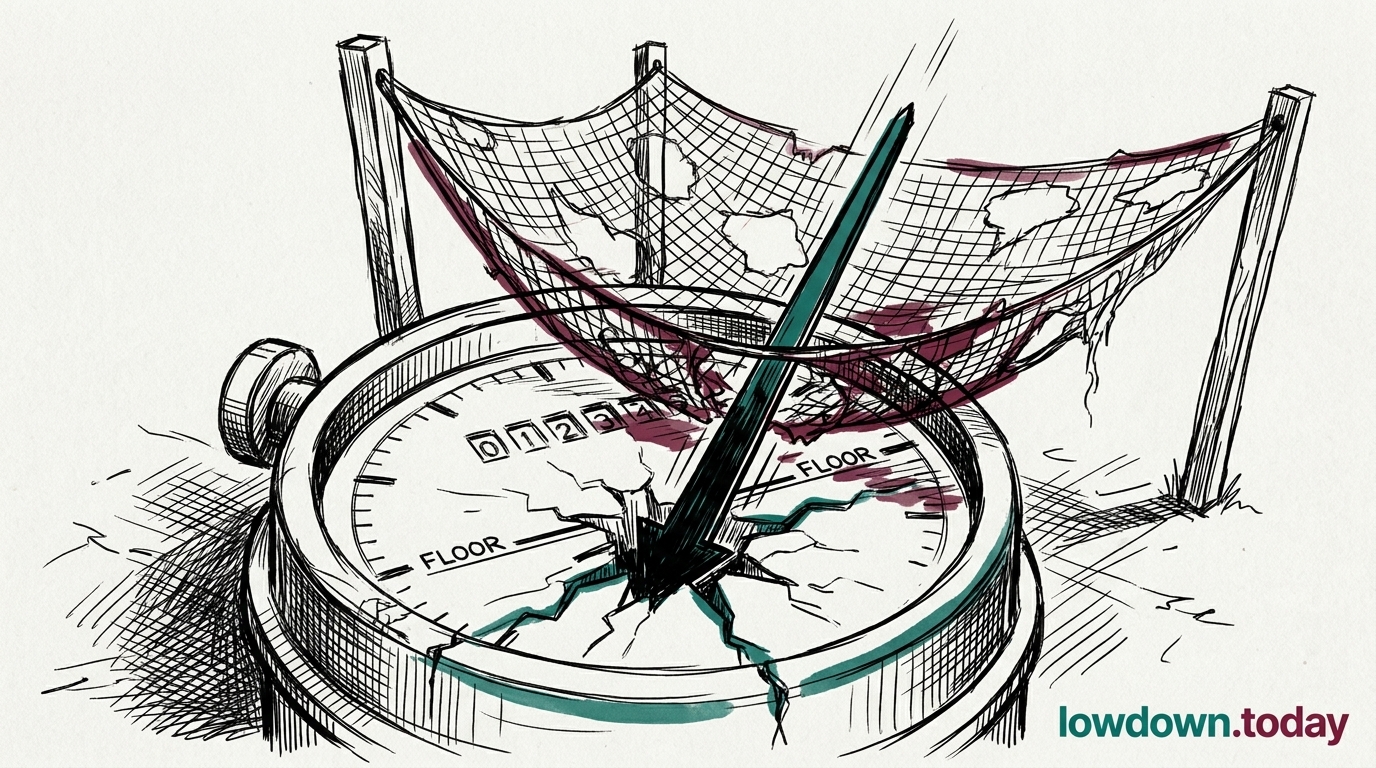
The disabled-ship count held at four for the third straight day. The 8 May F/A-18 smokestack-disabling strikes against the tankers M/T Sea Star III and Sevda remain the most recent recorded immobilisations; the other two disabled vessels have not been publicly named by CENTCOM, an attribution gap that has now persisted for a fortnight despite repeated press-grid statements naming the operational pattern.

For Asian refiners the redirection figure translates to roughly two-to-four weeks of delivery delays on cargoes diverted from Bandar Abbas to alternative anchorages. For European buyers it shows up in the bid premium on Atlantic-basin barrels backfilling the lost volume. Brent's Monday Asian open at $104.71 set the prior $101.29 baseline is consistent with the market pricing that lost volume as a structural rather than transient gap.

The slowing tempo cuts against the U#90 framing that CENTCOM was scaling a sustained kinetic operation; the operational rhythm now looks more like enforcement maintenance than a widening engagement. The two-unnamed-tankers attribution gap is the open question: whether CENTCOM is holding the names for operational security, the targets are non-state-flagged dark-fleet vessels Washington does not wish to identify, or the War Powers Resolution documentation review is delaying public naming.

The operational floor under all of this is 20 US warships that Tribune India's ANI wire reported enforcing the strait, the largest sustained US naval presence in the Persian Gulf since 2003.

Deep Analysis

In plain English

Think of the Strait of Hormuz as a single-lane motorway carrying about a fifth of the world's oil. The US Navy has been telling about two tankers a day to turn around if they were heading to Iranian ports, and the running total is now 61 since mid-April. Four tankers have actually been damaged. Two of those four have never been publicly named, which is unusual: usually the Navy says which ships it hit.

Deep Analysis
Root Causes

The cumulative redirection count is constrained by CENTCOM's standing order, which covers Iranian-port-destined traffic only and excludes the toll-interdiction track Trump posted to Truth Social on 12 April but never converted into a signed executive order.

The structural driver is the **War Powers Resolution** Section 1544(b) clock, which according to the Trump administration's 1 May formal position never started running because the United States is 'not at war' with Iran / U#85 framing. Without a signed AUMF, CENTCOM cannot broaden the operational rules to cover non-Iranian-port traffic in commercial vessels carrying Iranian-origin cargo; the standing order's narrow scope produces the slowing tempo.

The unnamed-tanker attribution gap is downstream of the same constraint: publishing the names risks creating a verification record that intersects with the pending Murkowski AUMF's reporting requirements (event 6).

What could happen next?
  • Meaning

    Pace of CENTCOM redirections has slowed; analysts will watch for whether the running total reaches 75 by 17 May (one-per-day tempo) or stalls at 65 (target-depletion signal).

    Short term · Assessed
  • Meaning

    Two unnamed disabled tankers remain an attribution gap that may become a press-freedom or congressional-reporting story.

    Short term · Assessed
  • Meaning

    Without an AUMF, the standing order's narrow scope limits CENTCOM's ability to act against non-Iranian-port-destined traffic carrying Iranian cargo.

    Short term · Assessed
  • Meaning

    Atlantic-basin barrel-backfill demand may continue to keep WTI above $95 even if Brent eases back toward the $101 floor.

    Short term · Assessed
First Reported In

Update #94 · Tehran writes, Trump tweets, Brent breaks

ABC News· 11 May 2026
Read original
Different Perspectives
Spain's LNG terminal operators
Spain's 9,145 GWh terminal inventory is the largest single stock in the EU LNG network, an option value that can reroute cargoes wherever the winter strip pays best rather than a cavern gas obligation tied to a fixed date. That flexibility matters more as Germany's cavern shortfall pushes more of the winter security question onto import infrastructure.
European Commission
European Commission
Brussels holds the bloc to 90% on a flexible window while Germany, holding roughly a quarter of EU storage capacity, tracks toward missing its own lower 80% figure by 21 points. A national shortfall this size in the anchor market matters more to bloc security than the flexible timetable alone can absorb.
French power exporters and CRE
French day-ahead rose in step with Germany but by less, reopening a EUR 7-17 premium that makes northward export flows commercially attractive again after the EUR 43.09 discount evaporated in days. CRE separately authorised RTE and Enedis to buy flexibility locally, betting the coming winter's binding constraint is grid congestion rather than a shortage of firm capacity.
TTF trading desk
TTF trading desk
A visible national shortfall like Germany's 21-point gap is a directional signal, not noise, for a desk holding the summer-winter spread. TTF's flat EUR 58-60 range through this week's German price swings says the market has not yet chosen to reprice refill risk into the front of the curve.
German cavern and CCGT operators
German caverns kept buying prompt gas at TTF near EUR 58-60 through the inversion; the wind collapse to 2.4 GW then flipped the spark spread to plus EUR 29 and put turbines back in the same queue. Every day turbines win that bid, injection at a third of the 877 GWh/day pace needed falls further behind.
Slovakia
Slovakia
Slovakia says it dropped its hold-out on the 21st sanctions package only after Ursula von der Leyen personally signed written gas-price and supply guarantees. The Council of the European Union's own 17,238-character release on the package names neither Slovakia nor any guarantee, leaving Bratislava's account unconfirmed by the institutional record.





