Skip to content
You can now search across every topic, entity and event.What's new
European Energy Markets
15JUN

Brent settles $105.33, war's biggest week

3 min read
12:23UTC

Brent crude closed Saturday 25 April at $105.33 per barrel, up roughly 16% on the week despite an indefinite ceasefire announced five days earlier.

EconomicDeveloping
Key takeaway

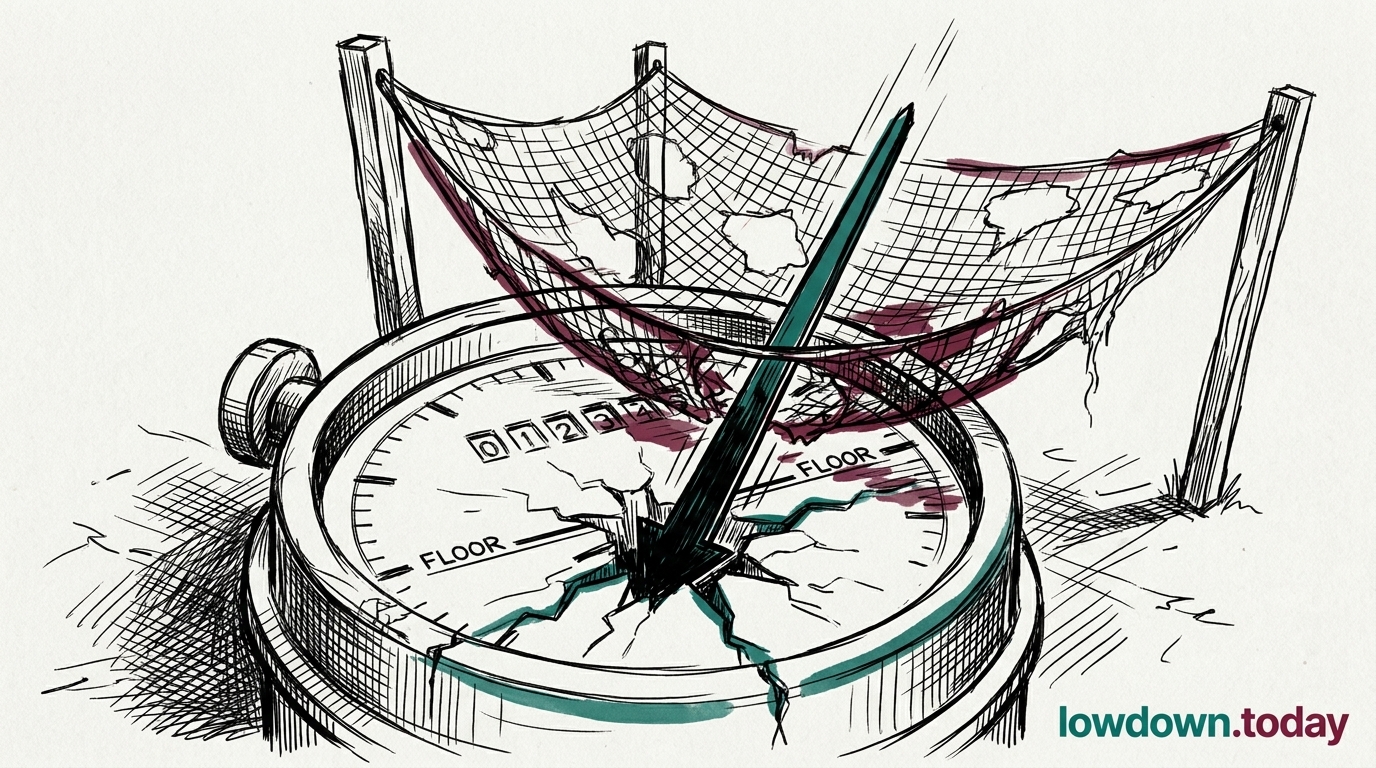
Brent's biggest week of the war registers a market that has stopped pricing the ceasefire and begun pricing the carriers.

Brent Crude settled at $105.33 per barrel on Saturday 25 April, the largest weekly gain (roughly 16%) since the war began and approximately 57% above the pre-war baseline of about $67 1. The settlement came five days after the indefinite ceasefire announcement that briefly knocked the contract back. Brent is the global crude benchmark used to price two-thirds of the world's traded oil; a move of this scale on a ceasefire week is a market correction against the underlying assumption.

Brent has now ignored two pieces of de-escalation paper inside a fortnight: the indefinite-ceasefire announcement and the Lebanon ceasefire extension on 23 April . Traders are pricing the inverse of the diplomatic track; the carrier concentration in CENTCOM AOR, the IRGC's verbal escalation and the AIS-blank Hormuz transits are now the dominant inputs.

Insurance, not navies, sets the structural floor under the price. With the major Protection and Indemnity clubs out of Iranian waters and war-risk premiums into double-digit millions per trip, the cost of moving a barrel through the strait has stepped up regardless of whether kinetic events occur on a given day. For European and UK forecourt prices, $105 Brent through the bank-holiday window keeps pump prices elevated; for Indian, Korean and Japanese refiners pricing forward cargoes, the unpriceable insurance leg is now the binding cost driver.


Deep Analysis

In plain English

Oil prices track closely with what is happening in the Strait of Hormuz because roughly one-fifth of all the oil the world uses each day normally passes through that narrow waterway. When it is effectively closed, oil companies have to find other routes or buy from different suppliers, which costs more. On top of that, the shipping companies that carry oil have to pay enormous insurance premiums just to attempt a transit, adding further costs. The price at the petrol station reflects these extra costs within a few weeks. At $105 a barrel, you are paying roughly 20-25% more to fill your car than before the conflict started in late February.

What could happen next?
  • Meaning

    At $105/bbl sustained for three months, **UK** and **EU** inflation forecasts for mid-2026 will need upward revision of roughly 0.4-0.7 percentage points, complicating central bank rate-setting ahead of summer monetary policy meetings.

    Short term · Assessed
  • Meaning

    The 16% weekly gain sets a new psychological floor for oil-market participants: each subsequent failed diplomatic round is now priced as a new price plateau rather than a temporary spike.

    Short term · Assessed
  • Meaning

    Sovereign wealth funds in Gulf states whose budget breakeven sits at $87-95/bbl (Saudi Arabia and UAE) are now running significant surpluses that give them more patience than Western consumers to wait for a negotiated resolution.

    Short term · Assessed
First Reported In

Update #80 · Three carriers, zero instruments

Angle360· 26 Apr 2026
Read original
Different Perspectives
Spain's LNG terminal operators
Spain's 9,145 GWh terminal inventory is the largest single stock in the EU LNG network, an option value that can reroute cargoes wherever the winter strip pays best rather than a cavern gas obligation tied to a fixed date. That flexibility matters more as Germany's cavern shortfall pushes more of the winter security question onto import infrastructure.
European Commission
European Commission
Brussels holds the bloc to 90% on a flexible window while Germany, holding roughly a quarter of EU storage capacity, tracks toward missing its own lower 80% figure by 21 points. A national shortfall this size in the anchor market matters more to bloc security than the flexible timetable alone can absorb.
French power exporters and CRE
French day-ahead rose in step with Germany but by less, reopening a EUR 7-17 premium that makes northward export flows commercially attractive again after the EUR 43.09 discount evaporated in days. CRE separately authorised RTE and Enedis to buy flexibility locally, betting the coming winter's binding constraint is grid congestion rather than a shortage of firm capacity.
TTF trading desk
TTF trading desk
A visible national shortfall like Germany's 21-point gap is a directional signal, not noise, for a desk holding the summer-winter spread. TTF's flat EUR 58-60 range through this week's German price swings says the market has not yet chosen to reprice refill risk into the front of the curve.
German cavern and CCGT operators
German caverns kept buying prompt gas at TTF near EUR 58-60 through the inversion; the wind collapse to 2.4 GW then flipped the spark spread to plus EUR 29 and put turbines back in the same queue. Every day turbines win that bid, injection at a third of the 877 GWh/day pace needed falls further behind.
Slovakia
Slovakia
Slovakia says it dropped its hold-out on the 21st sanctions package only after Ursula von der Leyen personally signed written gas-price and supply guarantees. The Council of the European Union's own 17,238-character release on the package names neither Slovakia nor any guarantee, leaving Bratislava's account unconfirmed by the institutional record.



