Skip to content
Briefings are running a touch slower this week while we rebuild the foundations.See roadmap
AI: Jobs, Power & Money
4APR

Two thirds of CEOs freeze hiring

1 min read
20:44UTC

The executives who control $19 trillion in assets are not planning to hire.

EconomicAssessed
Key takeaway

Two thirds of major CEOs plan to freeze or cut hiring for the rest of 2026.

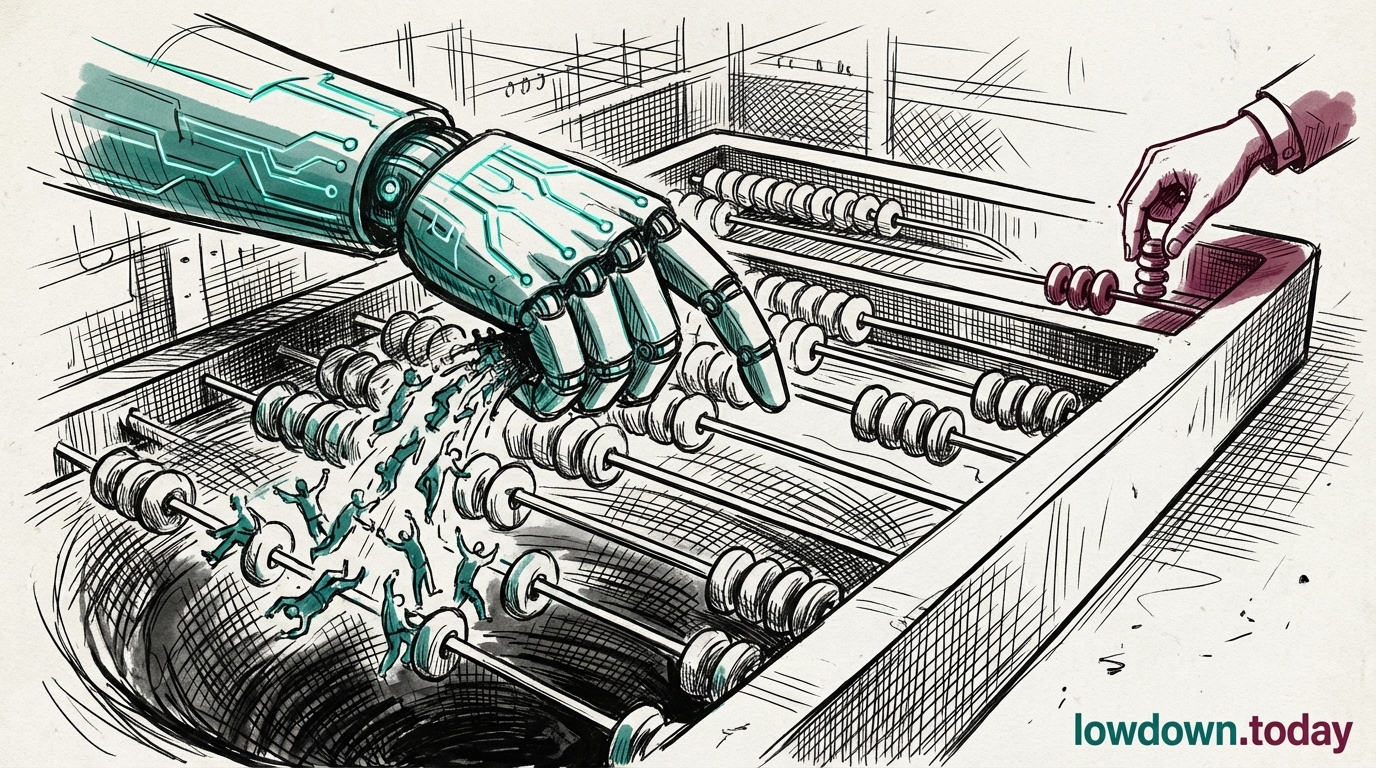
A Fortune survey of more than 350 public-company CEOs managing $19 trillion in combined assets found that 66% plan to freeze or cut hiring through the rest of 2026 1. The figure aligns with the Atlanta Fed projection of 502,000 AI-attributed cuts , translating executive intention into corporate consensus.

Some 53% of investors expect AI returns within six months. Yet 84% of CEOs acknowledge meaningful returns require multiple years. Firms are cutting the HR and middle-management roles needed to define future jobs and redesign workflows, stripping out the supervisory capacity that managed previous technology transitions.

Deep Analysis

In plain English

Fortune magazine surveyed more than 350 of the largest listed company bosses in the US, representing $19 trillion in total company value. Two thirds of them said they planned to freeze or cut hiring for the rest of 2026. The survey also found a contradiction: investors expect AI to pay back its costs within six months, but the chief executives themselves know that meaningful returns take several years. Companies are cutting jobs now based on AI promises that most of them acknowledge will not materialise for years. They are also cutting the HR and management roles that would normally plan what jobs look like after the transition. That capacity is gone, making it harder to redesign work when the AI tools eventually deliver.

What could happen next?
  • The 66% hiring freeze, if sustained through Q4 2026, will reduce the absolute number of job openings in the US by a material amount, extending reemployment timelines and compressing wage growth across white-collar sectors.

First Reported In

Update #4 · AI leads US layoffs as cuts go uncounted

Fox News / Axios / Al Jazeera· 4 Apr 2026
Read original
Different Perspectives
Directors Guild of America
The DGA opened AMPTP talks on 12 May seeking AI training-use royalties that SAG-AFTRA and the WGA both settled without winning. France's SACD and European creative unions watch the DGA outcome as the US template for their own pending AI-training royalty negotiations with streaming platforms.
German IG Metall and European trade unions
German unions led by IG Metall have pushed for binding co-determination rights on AI deployment since 2024; the Digital Omnibus literacy-duty weakening directly undercuts their model, which depends on a statutory information floor before works councils can challenge AI systems affecting members.
Chinese Ministry of Human Resources (MOHRSS)
China's MOHRSS recognised 42 new AI occupations in April 2026 while Hangzhou courts upheld bans on AI-driven dismissal without retraining under the Labour Contract Law. Beijing's regulatory posture contrasts directly with Colorado's retreat: Chinese courts are adding employment liability for AI-driven redundancy while US courts remove state-level AI worker protection.
UK workers and Bank of England
The ONS May 2026 bulletin showed payrolled employment down 210,000 year on year with no AI-specific breakdown, while the Bank of England's stress scenario used 500,000 additional unemployed as its AI-displacement worst case. UK workers are approaching that threshold through a dataset that cannot name its own cause.
India's IT sector workforce and NASSCOM
NASSCOM's FY2026 data shows India's sector at 5.9 million while entry-level hiring fell 20 to 25%. GCC expansion by JPMorgan, Goldman Sachs and Apple benefits mid-career workers while closing the graduate entry pathway, replicating the under-25 displacement the NY Fed documented in US AI-exposed occupations.
European Parliament and Council (Digital Omnibus)
The Digital Omnibus trilogue concession on AI-literacy duties reflects the Draghi report's argument that compliance overhead suppresses EU AI adoption. The Council traded the binding literacy mechanism for employer flexibility, leaving the December 2027 high-risk employment deadline without the worker-facing transparency layer Parliament had built around it.
