Skip to content
You can now search across every topic, entity and event.What's new
AI: Jobs, Power & Money
17JUL

Salesforce halves support staff using AI

1 min read
14:01UTC

Four thousand support jobs replaced by AI agents. Zero new engineers hired. Sales team grew 20%.

EconomicAssessed
Key takeaway

Salesforce cut 4,000 support roles to AI agents while growing its sales team 20%.

Salesforce cut customer support staff from 9,000 to 5,000 using AI agents and hired no new engineers in its 2026 fiscal year (ending January 2026) 1. Sales headcount grew 20%. CEO Marc Benioff stated plainly: "I need less heads."

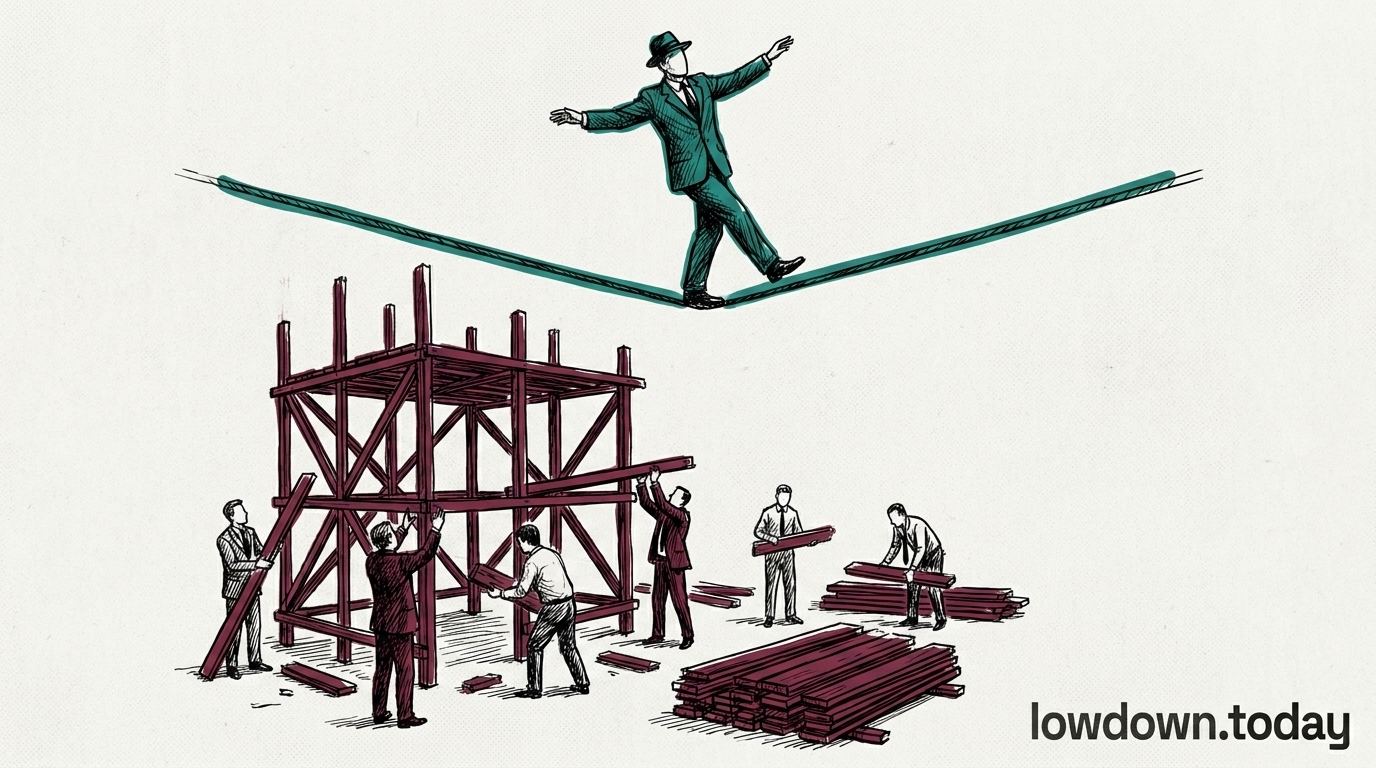
AI now handles roughly half of customer interactions on help.salesforce.com, addressing 1.5 million inquiries in nine months and lowering support costs by 17%. Support is automated. Engineering is frozen. Revenue-generating sales staff expand. Salesforce has joined the 55% regret rate cohort acting on projected AI capability rather than proven return . The humans who remain are the ones who close deals.


Deep Analysis

In plain English

Salesforce sells software to businesses. Until recently it employed about 9,000 people to answer customer support questions. It replaced 4,000 of those roles with AI agents that now handle about half of all customer enquiries. Support costs fell 17%. At the same time, Salesforce hired no new engineers at all during its 2026 financial year. The software is being maintained and improved without adding human programmers. Instead, the company grew its sales team by 20%. The pattern emerging here is: AI replaces the work of supporting and building the product, humans are kept only to sell it.

What could happen next?
  • The Salesforce model of AI support replacement combined with engineering headcount freeze will be replicated by SaaS and enterprise software companies that face similar cost structures, accelerating the collapse of customer service and software development hiring in those sectors.

First Reported In

Update #4 · AI leads US layoffs as cuts go uncounted

Bloomberg· 4 Apr 2026
Read original
Different Perspectives
Stanford's 'We Must Act Now' signatories
More than 200 academics, including 16 Nobel laureates, published a 13 July letter warning of AI-driven labour disruption, citing Daron Acemoglu's NBER estimate that AI's total factor productivity gain stays under 0.66% over ten years. The letter's own cited economics sit well below Goldman Sachs Research's 1.5-percentage-point estimate published the same week.
Germany / the Bundesrat
Germany's Bundesrat acted on the EU AI Act's employment provisions on 10 July, more than a year ahead of the Act's 2 December 2027 enforcement deadline. Germany is moving on statutory AI-employment disclosure while the US Congress and Federal Reserve have no equivalent instrument.
Indian IT services sector (TCS, HCLTech, Wipro)
TCS cut 19,271 roles and HCLTech cut 3,292 in the same reporting week that Wipro's headcount rose by 888 under its own zero-fresher-hiring pledge for FY27. The divergence shows attrition, not layoffs, is how India's outsourcers absorb AI-driven project compression while their net headcount numbers stay ambiguous.
Federal Reserve
Federal Reserve
Barr said on 14 July there is little evidence of AI displacement, citing a 43-versus-10 adoption gap by education; Cook said the next day the dire predictions have not come to fruition, her text carrying none of the bond-spread language she used in May. The Fed reads AI's labour effect through national aggregates, where four banks' cuts remain statistically invisible.
Barclays
Barclays
Barclays economist Pooja Sriram flagged a 28,000-a-month bleed in finance and information roles the same week Microsoft disputed that AI drove its own 4,800 cuts. The bank treats Challenger's AI-attribution share as a lagging indicator against faster erosion visible in raw labour-market data.
European Commission
European Commission
Brussels deferred the Digital Omnibus's Annex III employment-compliance deadline from 2 August 2026 to December 2027, even as California advanced three binding AI-hiring bills the same week. The 17-month delay leaves EU workers without the algorithmic-hiring safeguards the regulation already promises.



