Skip to content
Welcome, thoughtbot's Giant Robots listeners!Start here
AI: Jobs, Power & Money
1JUL

Tracker logs 267 layoff rounds in 2026

1 min read
11:00UTC

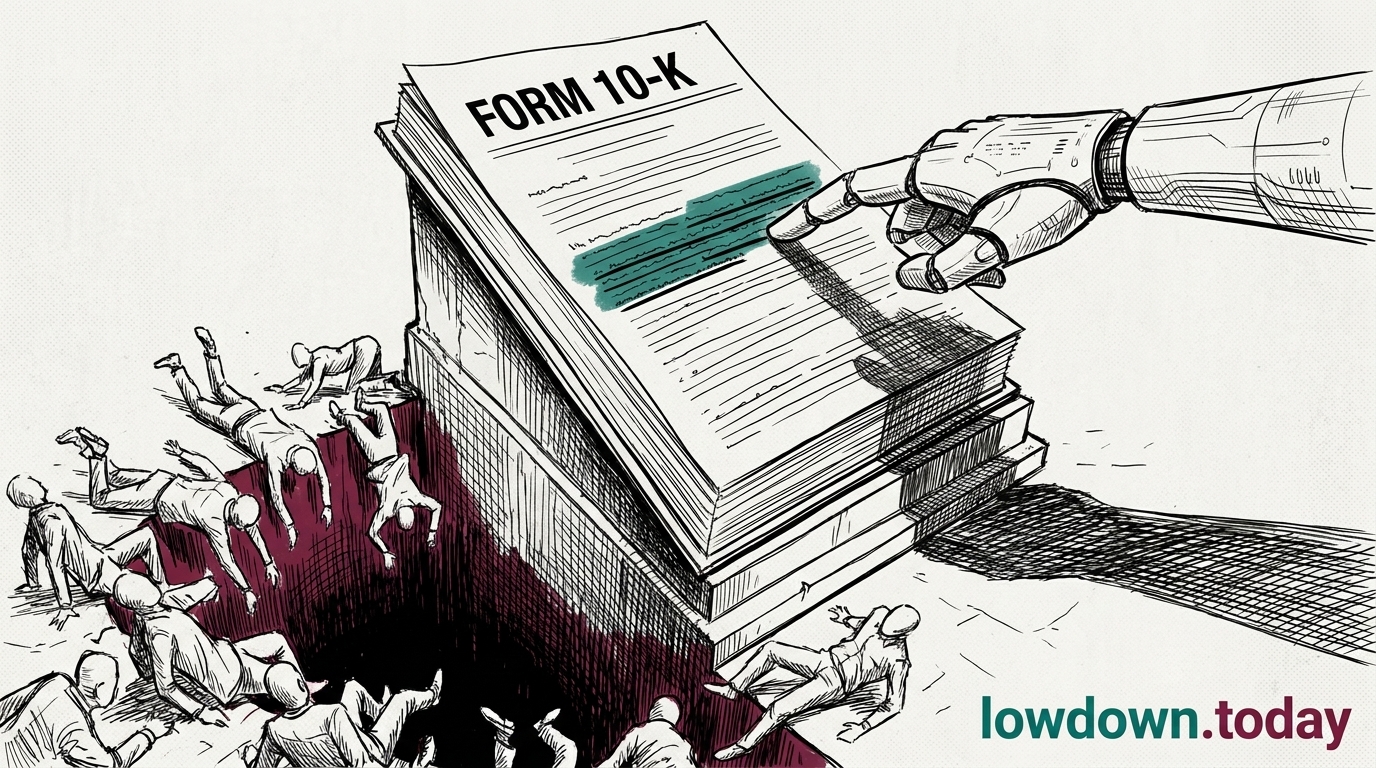
A 2026 layoff tracker counted 267 separate rounds hitting roughly 185,894 workers this year, with 56% of the companies citing AI.

EconomicDeveloping
Key takeaway

A private tracker logged 267 layoff rounds and 185,894 workers in 2026, with 56% of firms blaming AI.

A 2026 layoff tracker has logged 267 layoff events hitting roughly 185,894 workers, with 56% of the companies citing AI, drawing on TrueUp and SkillSyncer data⁠1. Both are private job-market platforms that scrape and catalogue announced cuts, and their share-citing-AI figure tracks the stated reason rather than the verified cause.

That stated-versus-verified gap drives the week's measurement debate. A private tracker is now the most detailed running count of AI-attributed layoffs available, more granular than the federal data, because the agencies that should produce the equivalent have not. Challenger, the outplacement firm whose monthly tally is the most-watched series, has kept AI the leading stated layoff reason for three straight months. The next report, due around 2 July, tests whether that holds for a fourth.


Deep Analysis

In plain English

A 2026 tracker that monitors US tech industry layoffs shows that in the year so far, 267 separate companies announced cuts affecting roughly 185,894 workers; about 1,115 workers per day. More than half of those companies explicitly cited AI as the reason. The key caveat: companies decide what reason to give when they announce cuts. As shown by the ResumeBuilder survey (which found 59% of hiring managers admit exaggerating AI's role), the 56% AI-citation rate reflects what companies chose to say, not necessarily what caused the cuts.

Deep Analysis
Root Causes

The 56% AI-citation rate in the TrueUp/SkillSyncer tracker is shaped by the same incentive distortion documented in the ResumeBuilder survey: companies announcing layoffs choose AI attribution because it frames workforce reduction as strategic modernisation rather than business decline. The tracker records employer-stated reasons without verification, meaning the 56% figure captures attribution choices, not causal analysis.

The tracker's 267-event total (roughly one mass-layoff event per day) reflects the continuation of post-pandemic headcount normalisation. Tech employment grew approximately 25% between 2020 and 2022 as firms hired to meet pandemic-era digital demand; the 2025-2026 correction is partially a reversion toward pre-pandemic staffing ratios.

First Reported In

Update #14 · The AI layoffs nobody is counting

TrueUp / SkillSyncer· 20 Jun 2026
Read original →
Different Perspectives
Competition and Consumer Commission of Singapore
The regulator found on 27 November that businesses can still choose and switch between cloud providers and AI models. It named dominant firms blocking rival AI agents as a risk, but answered with eight voluntary principles rather than rules.
La Poste
La Poste
France's state-owned postal group signed its first AI accord with four union confederations on 19 November, setting up a joint committee to oversee AI use. The announcement gives the unions a say, but no job security and no training hours for its 227,000 staff.
Nascent Information Technology Employees Senate (NITES)
The IT workers' union asked India's central government on 26 November for a mandatory national policy on AI layoffs, with every automated job cut logged in public. It expects to meet Labour Ministry officials; no government response has been reported.
China State Council
China State Council
Beijing's cabinet told local governments to pace AI in labour-intensive industries and to screen large AI projects for job losses. It keeps backing AI but wants the replacement of workers slowed, and it set no numeric targets.
SAP
SAP
SAP answered Bloomberg's report of at least 10,000 planned job cuts by telling CNBC that nothing is settled. In Germany a cut on that scale goes through works councils, and its 2024 round of about 10,000 ended mostly in voluntary departures.
Nvidia's board of directors
The board reinstated Jensen Huang on 22 November after input from senior levels of the US government, while its committee of independent directors keeps investigating. Its confidence rests, by its own account, on Washington's input, and the company says it will keep cooperating with government inquiries.

Written with AI from Lowdown's published reporting. Not individually reviewed by an editor. Editorial standards.
