Skip to content
Welcome, thoughtbot's Giant Robots listeners!Start here
AI: Jobs, Power & Money
1JUN

Tencent burns cash, Baidu swaps revenue

2 min read
09:18UTC

Tencent's quarterly capital spending rose 176% and its free cash flow turned negative by RMB13.8 billion. Baidu's AI cloud grew 50% while its legacy business fell 23%.

EconomicDeveloping
Key takeaway

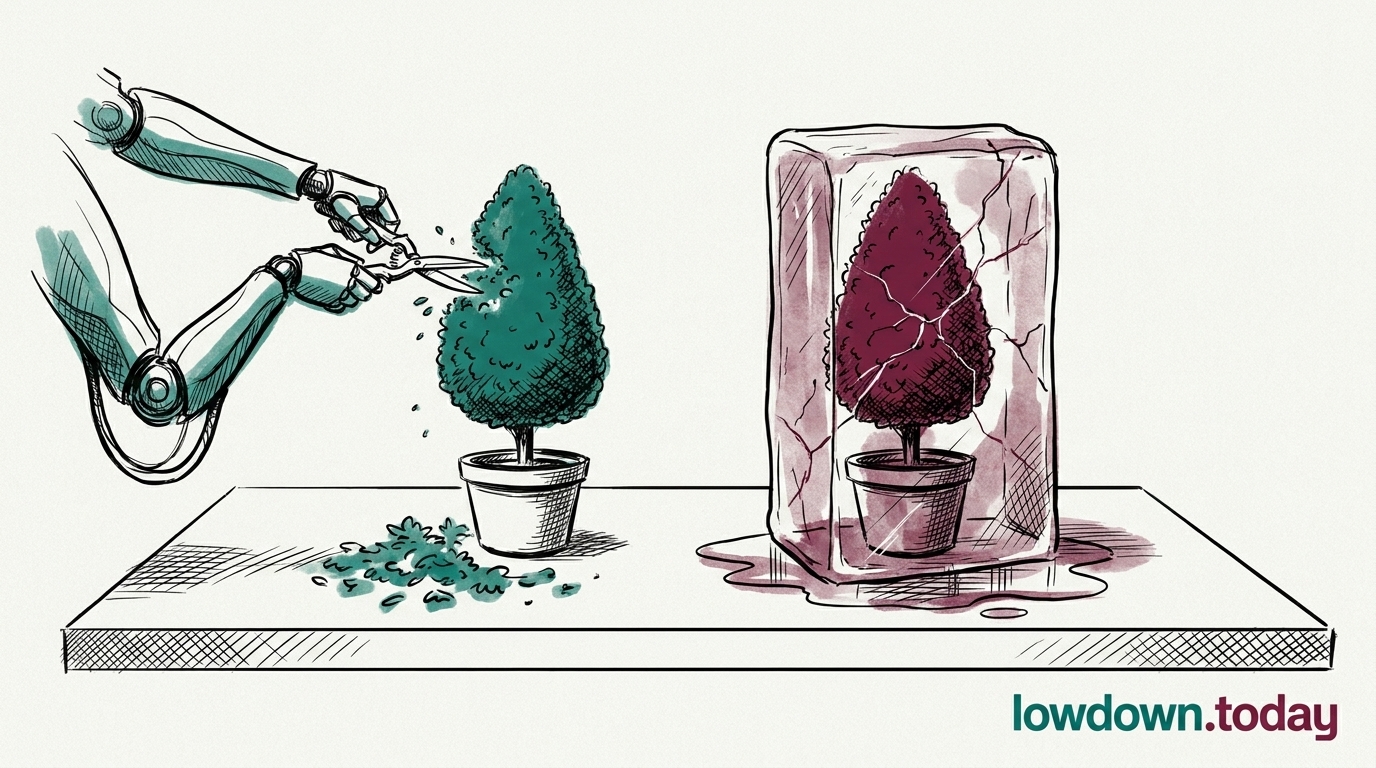
Tencent's AI spending has turned its free cash flow negative; Baidu is trading old revenue for new.

Tencent Holdings reported second-quarter capital expenditure of RMB52.8 billion on 12 August, up 176% year on year, with free cash flow at minus RMB13.8 billion against positive RMB43.0 billion in the same quarter last year.⁠1 Baidu followed on 18 August, posting AI Cloud Infrastructure revenue of RMB7.3 billion, up 50%, revenue from graphics processing unit (GPU) cloud capacity up 283%, and legacy business revenue down 23% to RMB10.4 billion.⁠2

The two results describe opposite predicaments. Tencent is funding a build-out from cash flow it has stopped generating, having swung by roughly RMB57 billion year on year on that single line. Baidu is watching its old revenue base fall at close to the rate its new one climbs, which produces growth in the segment investors want and very little growth in the company.

Neither company attached an employment figure to any of it, and that absence is the point for this beat. Capital expenditure of this size buys land, power contracts, cooling, switchgear and chips. The jobs it creates sit in construction and electrical trades, and they sit with suppliers rather than on the spender's own payroll. A quarter of Chinese AI capex therefore generates almost nothing that either a labour survey or a redundancy tracker can read as employment.

Who ultimately pays for the build-out has already started showing up in credit markets rather than in results: Oracle's credit default swap spread reached its 2008 crisis level in July on the same anxiety. A swap spread prices the risk that the borrower cannot service the debt behind the data centre. Negative free cash flow at a company of Tencent's size is the same question asked in the language of a cash flow statement.


Deep Analysis

In plain English

Tencent and Baidu are China's two largest internet companies, both investing heavily in AI. Their second-quarter results this year moved in opposite directions on how much they are spending on AI and how much cash that spending is generating. It mirrors a similar split seen among the big US tech firms investing in AI at the same time.

What could happen next?
  • Meaning

    AI capital-spending divergence is now visible in both the US and Chinese markets, suggesting a firm-level rather than a national pattern.

First Reported In

Update #19 · Four methods, one answer on AI and jobs

Tencent Holdings· 24 Aug 2026
Read original →
Causes and effects
This Event
Tencent burns cash, Baidu swaps revenue
China's two largest AI spenders show the two ways this build-out is being financed, and neither is coming out of profit growth.
Different Perspectives
Competition and Consumer Commission of Singapore
The regulator found on 27 November that businesses can still choose and switch between cloud providers and AI models. It named dominant firms blocking rival AI agents as a risk, but answered with eight voluntary principles rather than rules.
La Poste
La Poste
France's state-owned postal group signed its first AI accord with four union confederations on 19 November, setting up a joint committee to oversee AI use. The announcement gives the unions a say, but no job security and no training hours for its 227,000 staff.
Nascent Information Technology Employees Senate (NITES)
The IT workers' union asked India's central government on 26 November for a mandatory national policy on AI layoffs, with every automated job cut logged in public. It expects to meet Labour Ministry officials; no government response has been reported.
China State Council
China State Council
Beijing's cabinet told local governments to pace AI in labour-intensive industries and to screen large AI projects for job losses. It keeps backing AI but wants the replacement of workers slowed, and it set no numeric targets.
SAP
SAP
SAP answered Bloomberg's report of at least 10,000 planned job cuts by telling CNBC that nothing is settled. In Germany a cut on that scale goes through works councils, and its 2024 round of about 10,000 ended mostly in voluntary departures.
Nvidia's board of directors
The board reinstated Jensen Huang on 22 November after input from senior levels of the US government, while its committee of independent directors keeps investigating. Its confidence rests, by its own account, on Washington's input, and the company says it will keep cooperating with government inquiries.

Written with AI from Lowdown's published reporting. Not individually reviewed by an editor. Editorial standards.
