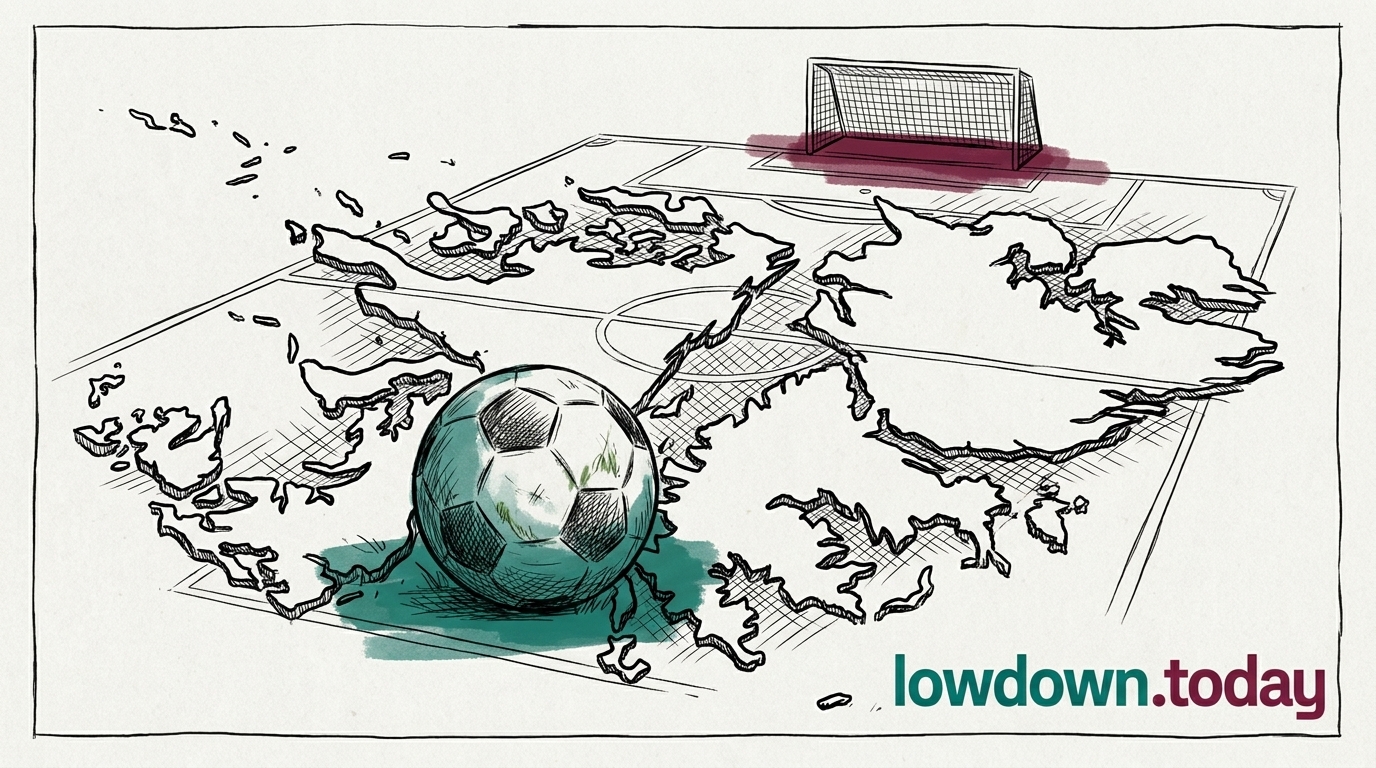
Argentina players were pictured after the final whistle on Wednesday 15 July with a banner reading "Las Malvinas Son Argentinas" (the Malvinas are Argentine), and midfielder Leandro Paredes told reporters the islands "will always be Argentine."1 Some accounts say the banner was thrown from the stands and picked up, rather than carried on by the squad, and its provenance has not been established.
The display touches a live sovereignty dispute over the Falkland Islands, the Malvinas to Argentina, and it runs into the rulebook of FIFA (Federation Internationale de Football Association), football's global governing body, whose stadium code bans political banners. Here the provenance matters less than it first appears. FIFA's disciplinary code holds a member federation liable for the conduct of its players and its supporters alike, so whether the banner came from the terraces or the bench, the named respondent would be the same body: the AFA (Argentine Football Association). Outlets pointing to individual players are describing evidence, not the party FIFA would charge.
Any case would test a code FIFA has enforced unevenly. It imposed no sanction after Argentine fans sang about the islands following the group win over Egypt. As of 16 July the governing body had not opened proceedings and had not commented, and the FA (English Football Association) had not lodged a complaint, so every account remains conditional. The nearest precedent sits in 2014, when the Argentine federation was fined 30,000 Swiss francs and reprimanded for the identical slogan. A repeat on that scale would mean a fine, not a sporting sanction, and no threat to Argentina's place in Sunday's final.




