VLEO
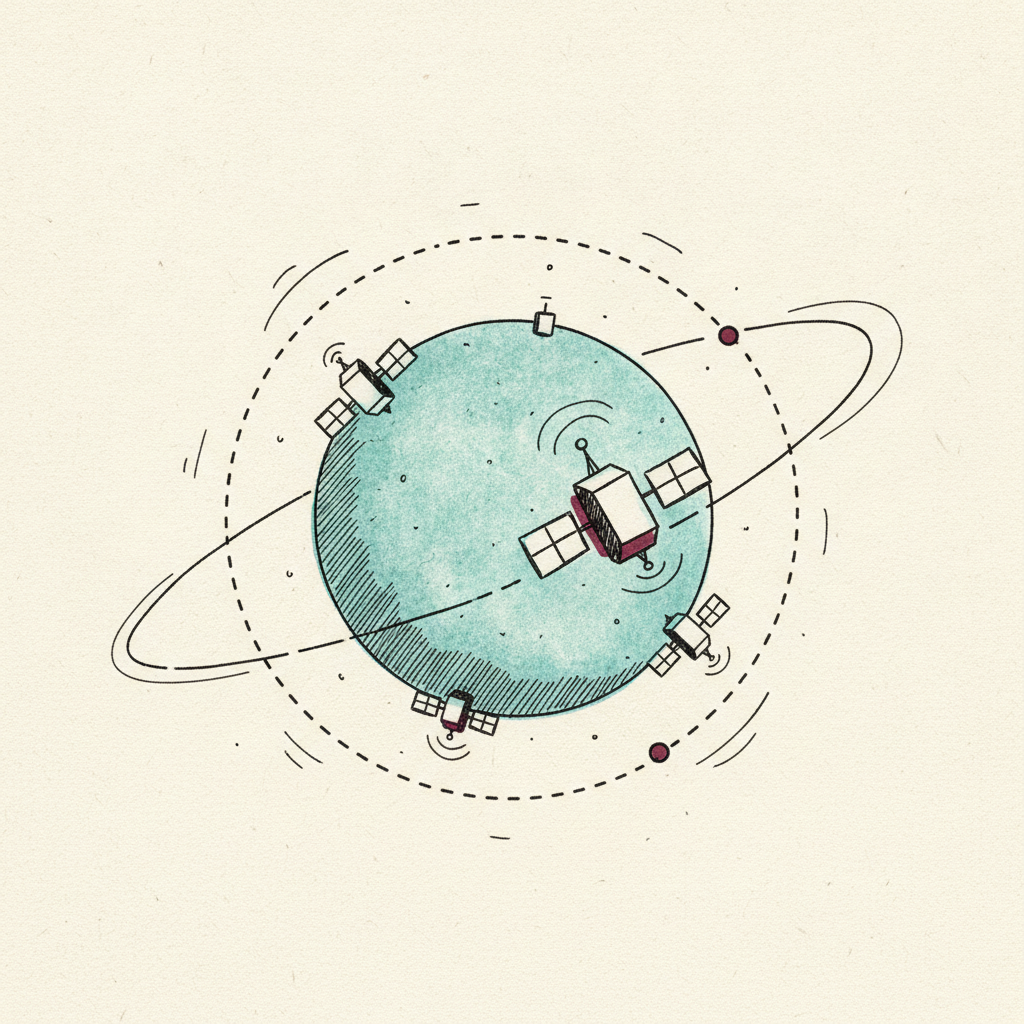
Very low Earth orbit (150-250km), the satellite altitude band NewOrbit is commercialising.
Last refreshed: 15 June 2026 · Appears in 1 active topic
Why has the lowest orbital band been commercially unused for sixty years, and is that about to change?
Timeline for VLEO
NewOrbit raises $18.5m for very low orbit
UK Startups and InnovationBackground
Very low Earth orbit (VLEO) covers roughly 150 to 300km above Earth's surface, the altitude band just above most atmospheric drag effects but well below the standard low Earth orbit (LEO) constellation bands at 400-600km used by Starlink and similar systems. Satellites at VLEO produce sharper Earth-observation imagery because the sensor is closer to the target, reduce radio signal latency further than LEO, and offer faster atmospheric self-disposal, which cuts orbital debris risk. These are the trade-offs NewOrbit Space is commercialising with its $18.5m Series A closed in June 2026 .
The 60-year gap in VLEO commercialisation is explained by propulsion. Atmospheric drag at these altitudes degrades orbits quickly; without continuous thrust, satellites deorbit within weeks or months. Early satellites lacked efficient propulsion systems small enough to fit on low-cost spacecraft. Recent advances in electric propulsion, low-mass structural materials, and miniaturised attitude-control systems have changed the economics, making sustained VLEO operations technically achievable at commercial unit costs for the first time.
The growing strategic interest in VLEO is reflected in parallel programmes. The European Defence Agency signed a €15.65m research contract in March 2026 to design Europe's first military VLEO satellite concept. ESA has an active VLEO discovery programme focused on Earth observation and atmospheric Science. NewOrbit is one of several companies globally, alongside French startup Constellation Technologies, racing to establish commercial VLEO operations before the altitude band becomes congested.