UK refugee resettlement scheme
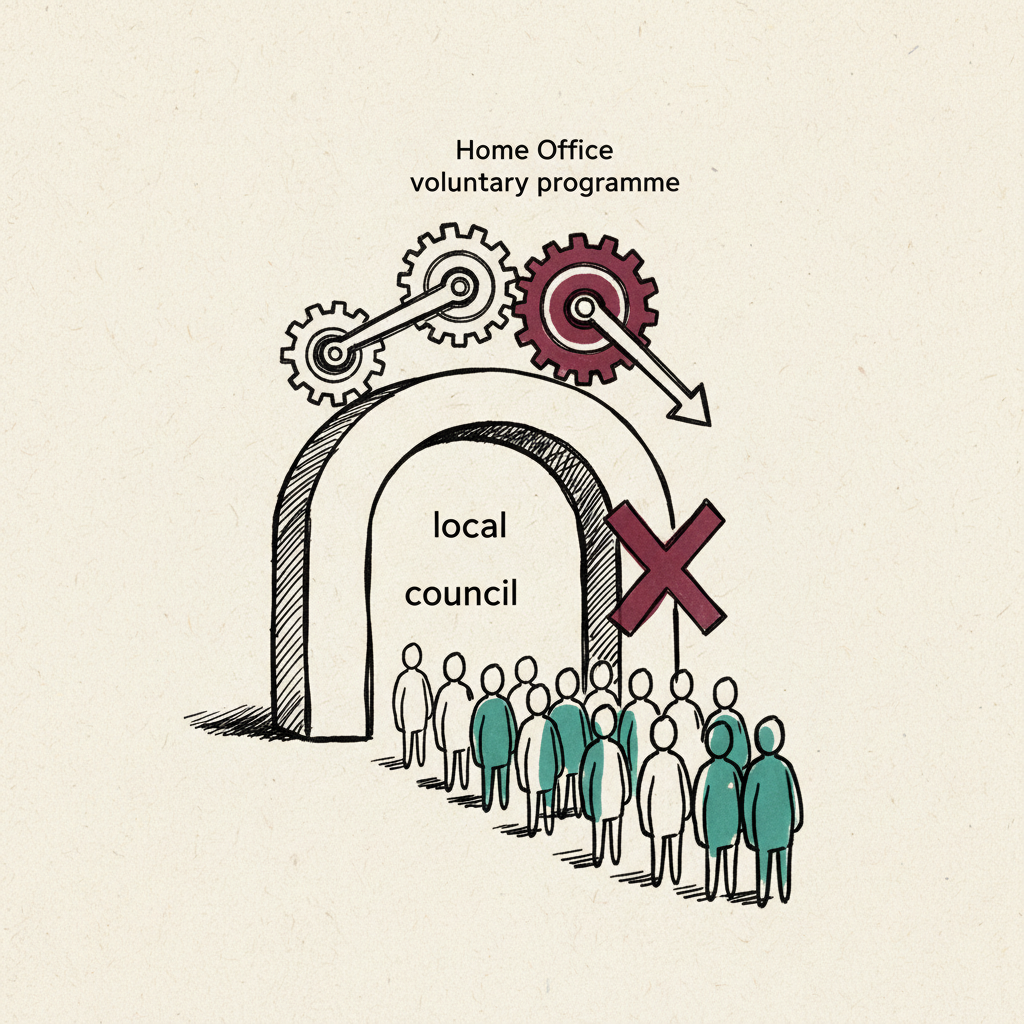
Home Office voluntary programme placing vulnerable refugees with local councils; first revoked by a Reform-controlled council on 9 May 2026.
Last refreshed: 9 May 2026 · Appears in 1 active topic
If Reform councils exit the refugee scheme en masse, does the Home Office have any power to stop them?
Timeline for UK refugee resettlement scheme
Mentioned in: King's Speech: 27 bills, no RPA Bill
UK Local Elections 2026Received first English council withdrawal announcement from Lancashire
UK Local Elections 2026: Lancashire plans to quit UKRSLancashire quits Home Office refugee scheme
UK Local Elections 2026Background
Lancashire County Council withdrew from the UK refugee resettlement scheme on 9 May 2026 — two days after switching to Reform UK control in the 7 May elections — becoming the first council to revoke its participation after the election results. The withdrawal was the first concrete policy decision from any of the newly Reform-controlled councils and set the immediate terms of the debate over what Reform-controlled local government would actually do with its new power.
The scheme is a Home Office voluntary programme under which local authorities opt in to host vulnerable refugees — including those fleeing conflict and persecution — with central government funding provided per person resettled. Councils take on housing, support, and integration responsibilities; the Home Office coordinates placement and funds a per-head grant. Participation is voluntary: local authorities can join and leave without primary legislation, meaning Reform councils can revoke participation through a Cabinet decision rather than parliamentary action.
The Lancashire withdrawal tests a central question of POST-election Reform governance: how FAR can council-level decisions diverge from national refugee obligations without triggering a central government response? The Home Office retains overall responsibility for asylum and refugee policy; participation in the resettlement scheme is discretionary for councils but the underlying legal framework remains a UK Government programme. How many of Reform's other newly-won councils follow Lancashire's lead will determine whether this is a symbolic gesture or the beginning of a systematic withdrawal of council cooperation with national refugee placement.