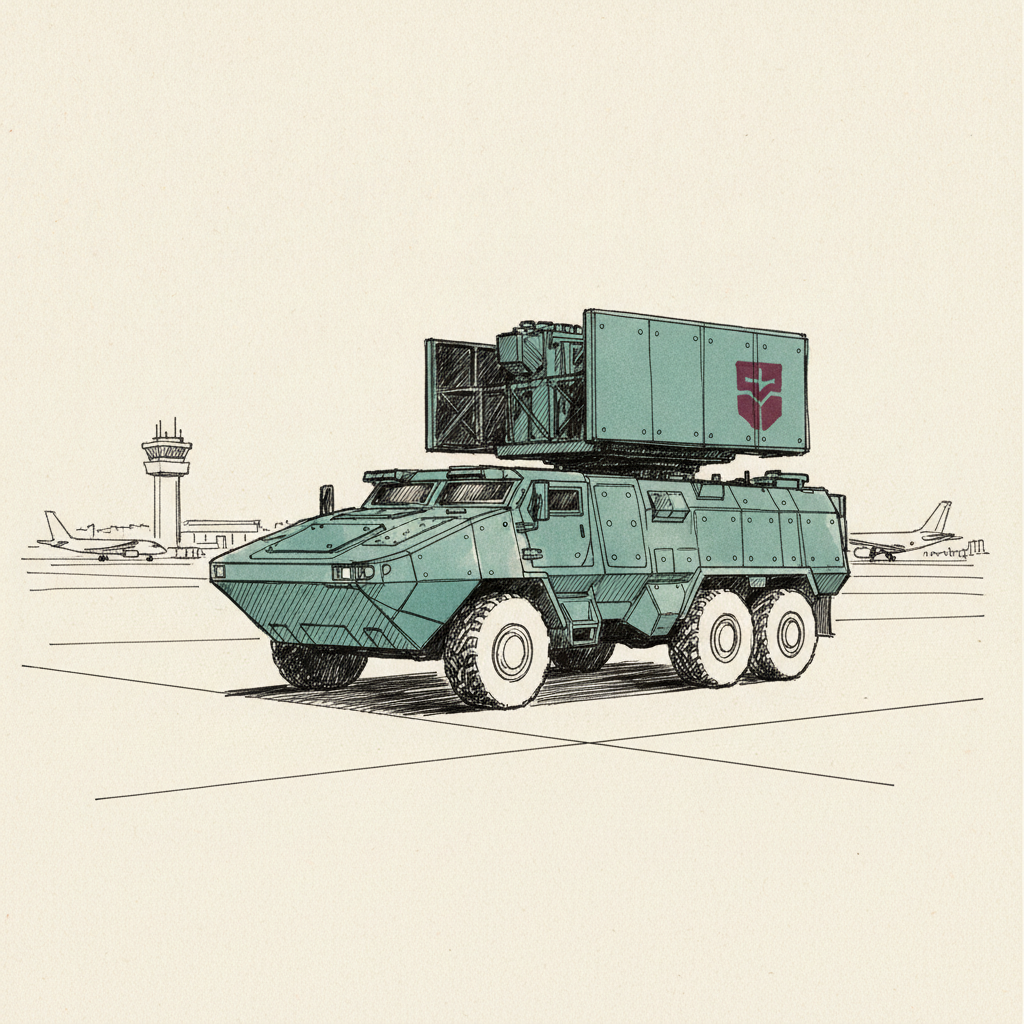
Twinvis
HENSOLDT passive radar that tracks air targets using broadcast radio and television signals.
Twinvis is HENSOLDT’s passive radar for tracking air targets from broadcast signals. On 19 August, it Fed an air picture into a Skynex battery during a German Air Force exercise.
Last refreshed: 1 October 2026 · Appears in 1 active topic
Timeline for Twinvis
Mentioned in: German federal police buy anti-drone kit
Drones: Industry & DefencePassive radar aims a Skynex battery
Drones: Industry & DefenceBackground
Twinvis is a HENSOLDT passive radar designed to track aircraft and other air targets without transmitting. It uses reflections from existing radio and television broadcasts to build an air picture, making it relevant where an active sensor’s emissions could reveal or expose its position.
HENSOLDT positions Twinvis across military air defence and civil air-traffic use. Its August 2026 integration with Rheinmetall’s Skymaster command system showed it supplying an air picture to a Skynex gun battery through Link 16.
The system matters because passive sensing can complement emitting radars in layered air defence. Its value rests on whether commanders can turn a passive track into a timely and reliable response, as the German exercise sought to demonstrate.
