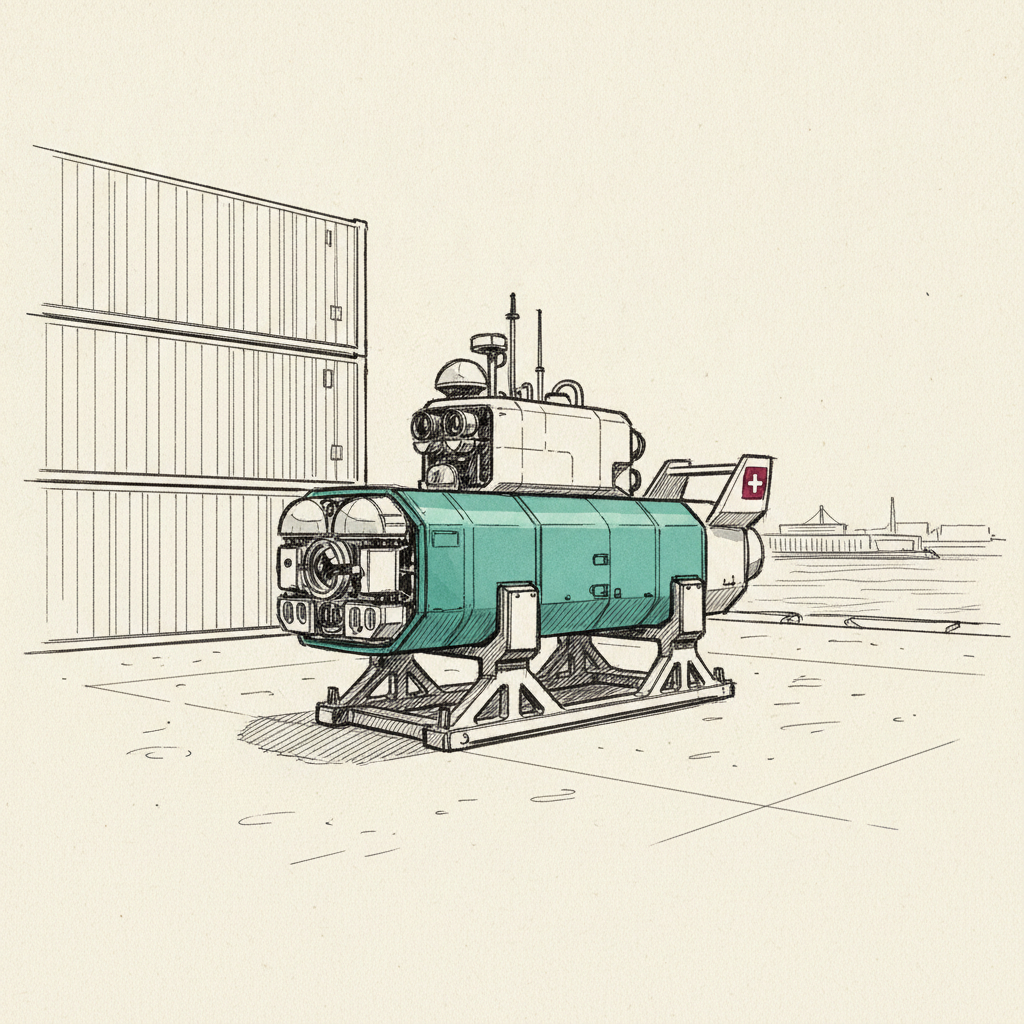
Tethys ONE
Swiss turbid-water inspection ROV/AUV from Tethys Robotics; dual-use sensor stack for mine-clearance and cable inspection.
Last refreshed: 13 June 2026 · Appears in 1 active topic
Can a Swiss fish-farm inspection robot help navies detect sea mines in murky water?
Background
Tethys Robotics, a Swiss company, launched the Tethys ONE underwater inspection vehicle at Aquaculture UK in Glasgow on 16-17 June 2026. The Tethys ONE is designed for turbid-water inspection, survey, and maintenance tasks in conditions of low visibility where conventional inspection ROVs lose optical performance. Its sensor stack is described as dual-use: applicable to fish-farm cage inspection and aquaculture infrastructure in its primary commercial market, but also relevant to mine-clearance area preparation and subsea cable inspection in defence and critical-infrastructure contexts.
The Aquaculture UK Glasgow launch positions Tethys ONE first in the civil market, reflecting the broader pattern of maritime-autonomy hardware developing a commercial revenue base before seeking defence qualification. Switzerland's defence market is constrained by export licensing rules, but civil aquaculture and infrastructure inspection export markets are open; the Glasgow event reached Scottish salmon-farming operators as the initial customer base.
The dual-use relevance to the wider autonomous-land-sea story is the sensor stack's applicability to mine-clearance preparation and subsea cable monitoring, both active NATO procurement priorities as of mid-2026. Whether Tethys Robotics pursues defence qualification is not publicly confirmed.