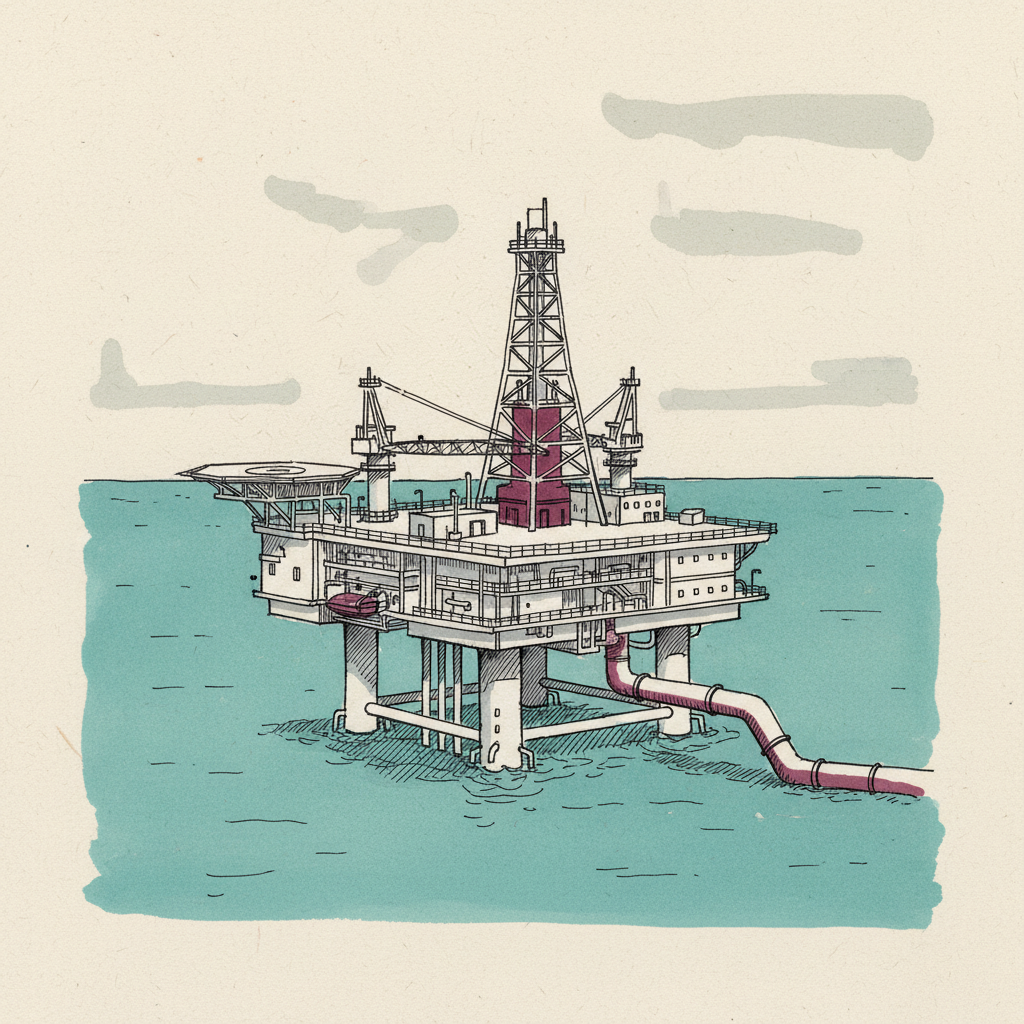
What role does Sleipner A play in moving North Sea gas to European consumers?
Timeline for Sleipner A
Received Eirin first gas for processing and Gassled export
European Energy Markets: Equinor 17bn Norwegian kroner drilling; Eirin first gasServed as transit point routing Eirin gas into Gassled pipeline
European Energy Markets: Eirin field starts; 27.6 mmboe to GassledBackground
Sleipner A is a Norwegian North Sea production and processing platform operated by Equinor, located in block 15/9 of the Norwegian sector. It serves as a key transit and processing node in the Norwegian gas export chain: gas processed or received at Sleipner A feeds into the Gassled pipeline network for delivery to Continental Europe and the UK. From 5 May 2026, gas from the newly producing Eirin field routes via Gina Krog through Sleipner A and into Gassled.
Sleipner A is part of the broader Sleipner complex, which includes Sleipner T (a storage and riser platform) and Sleipner B. The complex has operated since 1996 and is notable for hosting one of the world's longest-running CO2 storage projects: the Sleipner CO2 injection operation, which has stored over 22 million tonnes of CO2 in the Utsira formation since the mid-1990s, making it a reference site for carbon capture and storage (CCS) research globally.
For the European energy market, Sleipner A's significance in 2026 is primarily as a transit infrastructure node. At a time when NCS production has shown marginal year-on-year declines and EU storage refill is under-pacing against the 80% November target, the reliable throughput capacity of platforms like Sleipner A is part of what keeps the Norwegian export corridor functioning.