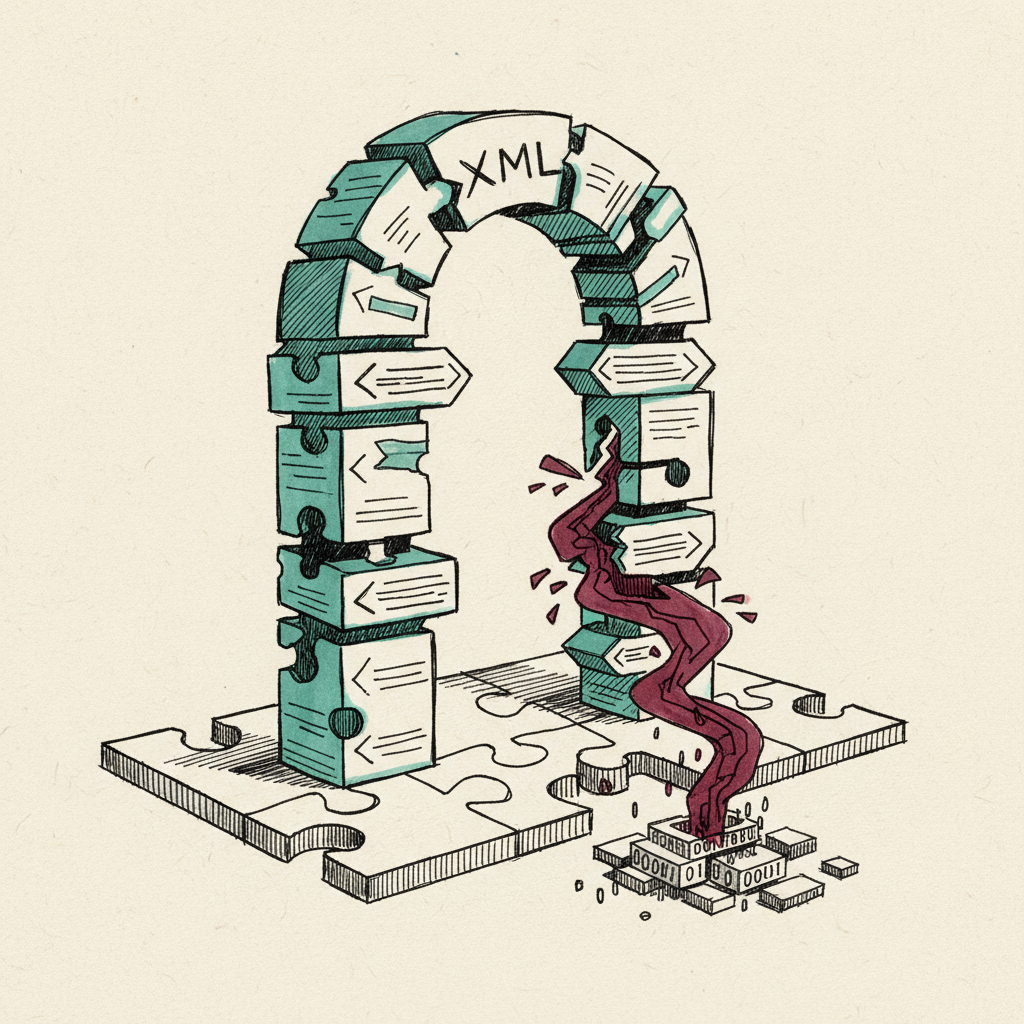
Security Assertion Markup Language
XML-based OASIS standard for exchanging authentication assertions, used for enterprise single sign-on.
Three serious NetScaler flaws of 2026 sit in the appliance's SAML handling, the latest being CVE-2026-88779, added to CISA's exploited list on 4 October. The weakness lies in Citrix's parser, not in the 2005 standard.
Last refreshed: 12 October 2026
Why does a bug in the Citrix SAML login page give hackers access to every company application?
Timeline for Security Assertion Markup Language
Mentioned in: Citrix replaces its own NetScaler fix
Cybersecurity: Threats and DefencesMentioned in: JPCERT alerts on NetScaler after watchTowr proof
Cybersecurity: Threats and DefencesMentioned in: CitrixBleed 3 lands on SAML broker
Cybersecurity: Threats and DefencesBackground
SAML 2.0 has been an OASIS standard since March 2005, the work of the consortium's Security Services technical committee. Organisations use SAML for single sign-on: an identity provider vouches for a user, and every service provider that trusts it accepts that assertion. A defect in an identity provider's SAML parser therefore reaches every application behind it.
In 2026 that exposure ran through Citrix NetScaler ADC. Of the six exploited NetScaler vulnerabilities CISA listed during the year, two came from its SAML code. CVE-2026-3055, nicknamed CitrixBleed 3 and disclosed on 23 March, is a memory overread affecting appliances set up as a SAML identity provider. CVE-2026-88779, listed on 4 October, is a memory overflow on appliances configured as either a SAML service provider or identity provider.
A third case, CVE-2026-8452, came from SAML signature canonicalisation. WatchTowr Labs showed that older NetScaler builds copy attacker-supplied data into a fixed-size buffer without a length check, and on 14 August published an exploit that runs code; Citrix had called it a denial-of-service bug on gateway and AAA servers. None of the three is a flaw in SAML itself.