Project Steadfast
Rivan's 15MW Wiltshire SNG facility; Europe's largest; first SNG injection into UK gas grid.
Last refreshed: 22 April 2026
Can a 15MW SNG plant prove the case for gas-grid decarbonisation at industrial scale?
Timeline for Project Steadfast
Mentioned in: Rivan raises £25m for Europe's biggest SNG plant
UK Startups and InnovationBackground
Project Steadfast is Rivan's named production-scale synthetic natural gas (SNG) facility in Wiltshire, raised £25m on 20 April 2026 in a round led by IQ Capital, with Plural and angels including Matt Clifford (Entrepreneur First), Thomas Wolf (Hugging Face) and Markus Villig (Bolt). At 15MW, it is Europe's largest SNG facility and will be the first to inject SNG into the UK gas grid. Rivan's total raised now stands at m.
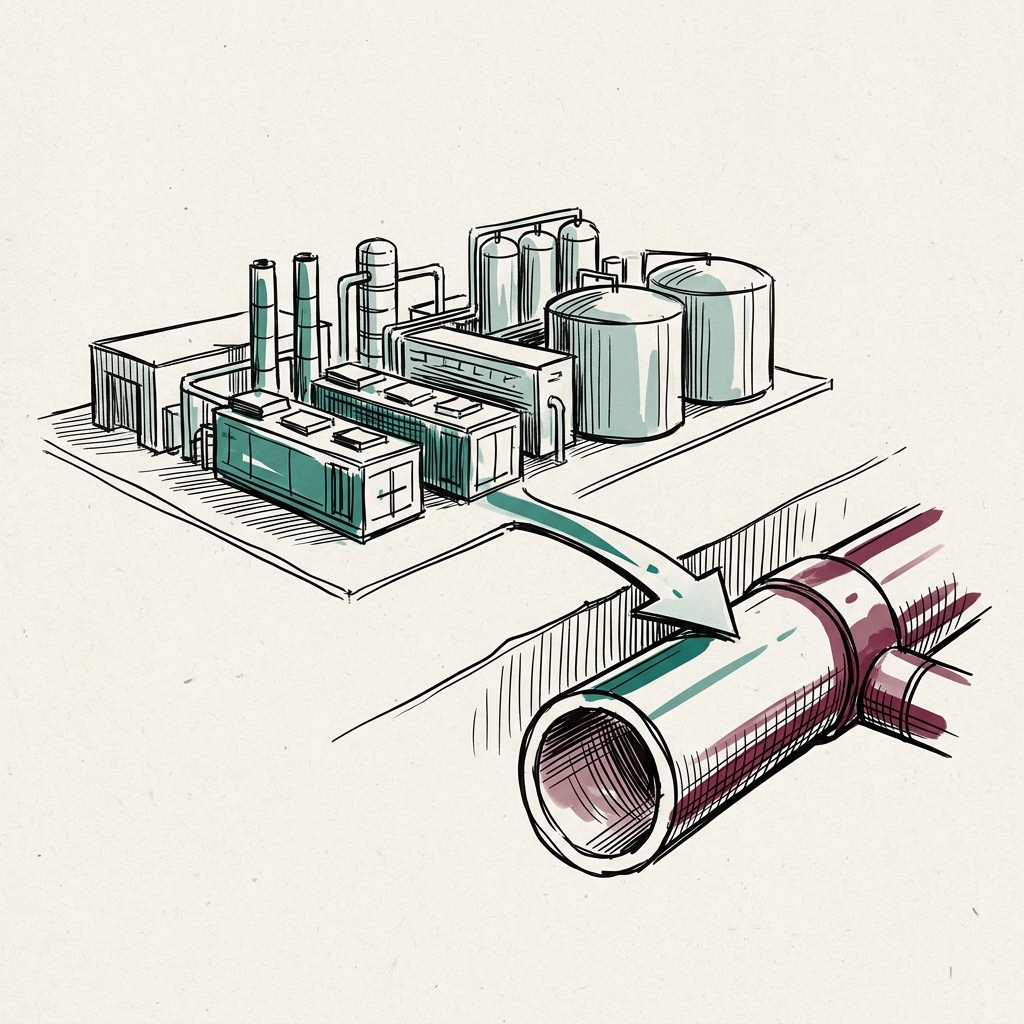
Project Steadfast combines renewable electricity with biogenic or captured CO₂ to produce pipeline-compatible methane, making SNG directly compatible with the existing UK gas network without requiring grid infrastructure changes. The Wiltshire site is grid-connected, operating at production scale rather than pilot scale, and targets industrial heat loads that cannot be economically electrified.
The facility's significance lies in demonstrating UK gas-network decarbonisation at industrial scale. Heavy industrial heat — the portion of the economy that cannot be readily electrified — has been the hardest segment to address within net-zero strategies. A 15MW SNG plant connected to The National grid provides an alternative to full electrification for that segment, and a concrete proof point for the broader SNG value chain at a moment when UK industrial-strategy investment is overwhelmingly directed at AI and semiconductor sectors.