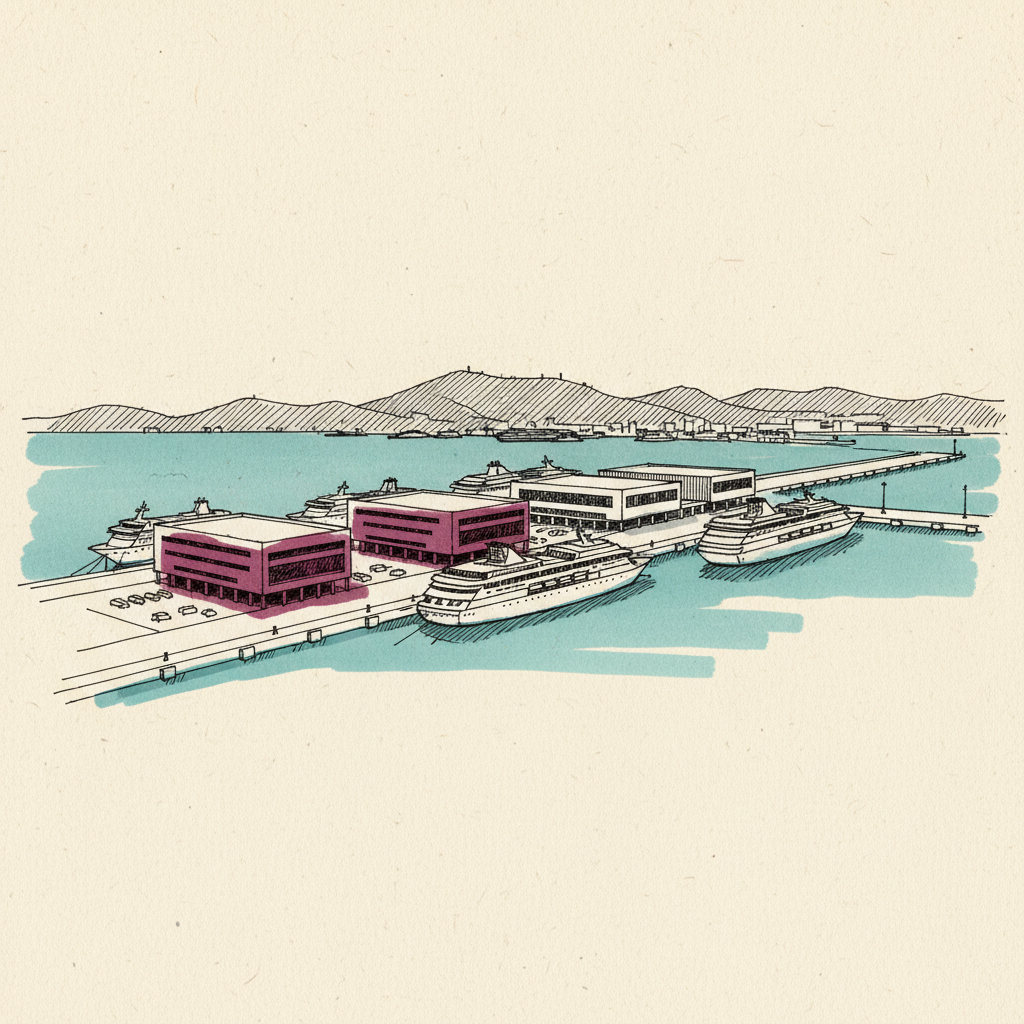
Moll Adossat
Barcelona's main cruise terminal zone; three of its oldest terminals are approved for demolition as part of the capacity reduction to five berths by 2030.
Last refreshed: 29 May 2026 · Appears in 1 active topic
Which cruise terminals at Moll Adossat is Barcelona planning to demolish?
Timeline for Moll Adossat
Slated for demolition of three oldest cruise terminals
Nomads & Communities: Barcelona doubles its cruise day-stop taxBackground
Moll Adossat (literally "attached quay" in Catalan) is the primary cruise terminal zone within the Port of Barcelona, located at the southern EDGE of the port adjacent to the Barceloneta neighbourhood. It is home to several cruise terminals, including the three oldest facilities that Barcelona city council approved for demolition as part of the port's berth-reduction plan announced in May 2026. The demolition of these three terminals is the mechanism by which the port reduces from seven to five berths, cutting peak daily cruise passenger capacity from approximately 37,000 to 31,000.
Moll Adossat has been a focal point of Barcelona's anti-overcrowding debate because its terminals are the closest to the city's tourist-saturated historic core and the Barceloneta beach, and day-trip cruise passengers disembarking there tend to converge on the same dense areas already under pressure from short-let tourism. The 2030 demolition plan targets the oldest and least efficient terminals, with the two remaining berths intended to serve homeport operations that bring longer-staying, higher-spending passengers.
What is Moll Adossat and where is it in Barcelona?
Which Barcelona cruise terminals are being demolished?
Where is Moll Adossat in Barcelona?
Why is Barcelona demolishing its oldest cruise terminals?
Will the Moll Adossat demolition affect cruise lines operating in Barcelona?
When will the Barcelona cruise terminal demolitions happen?


