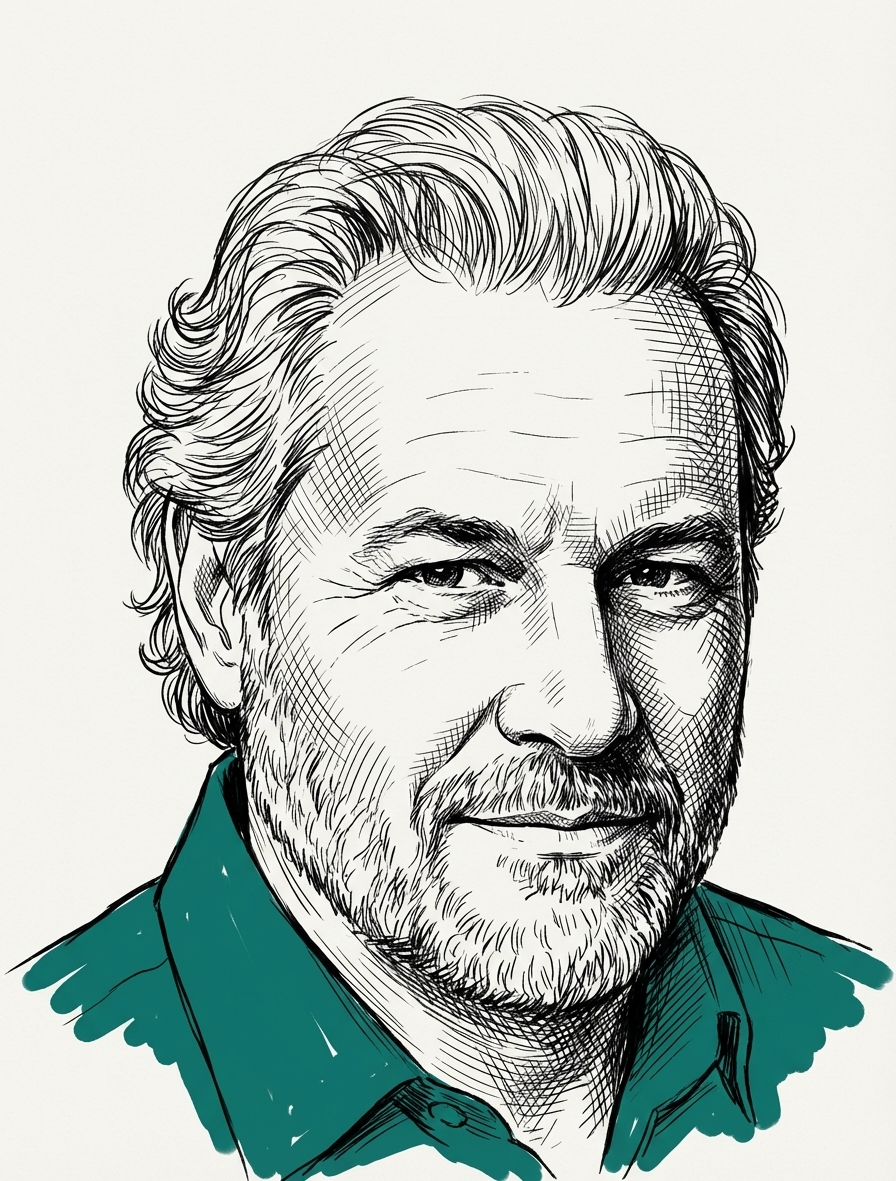
Marc Benioff
Salesforce CEO whose "I need less heads" quote defines the AI jobs moment.
Marc Benioff is the Salesforce CEO WHO announced 1,000 new graduate hires on 27 April 2026, all in sales, while AI agents keep doing the engineering and support work he has already cut.
Last refreshed: 17 July 2026 · Appears in 1 active topic
Does Marc Benioff believe AI creates more jobs than it destroys?
Timeline for Marc Benioff
Mentioned in: Bank of America shrinks by 830, quietly
AI: Jobs, Power & MoneyMentioned in: Salesforce trims 86 from two units
AI: Jobs, Power & MoneyDeclared 'we are not hiring more engineers' and confirmed two-year flat headcount
AI: Jobs, Power & Money: Salesforce down 32% for not firingMentioned in: GitLab rewrites engineering around AI agents
AI: Jobs, Power & MoneyMentioned in: Microsoft tells investors 2027 headcount will fall
AI: Jobs, Power & MoneyBackground
Marc Benioff, Born 1964 in San Francisco, co-founded Salesforce after working under Larry Ellison at Oracle, building it into the dominant customer relationship management software company and a pioneer of the SaaS business model. He has long positioned himself as an advocate of stakeholder capitalism, taking public stances on tax policy and inequality that set him apart from many Silicon Valley peers.
That public persona now sits in tension with his own company's workforce strategy. Benioff has overseen the elimination of roughly 4,000 support jobs since 2025, replaced by AI agents that now handle around half of customer interactions on HELP.salesforce.com, while engineering hiring has remained frozen. His public framing treats this as workforce evolution rather than displacement, pointing to sales headcount growth as evidence AI creates roles as well as removes them.
Benioff's "I need less heads" remark has become one of the two defining CEO quotes of the AI jobs story, cited alongside Klarna's Siemiatkowski as an executive WHO said plainly what others have preferred to euphemise.
Benioff hires sales not engineers
Marc Benioff announced 1,000 graduate hires on 27 April 2026, framed as a break from Salesforce's prior hiring freeze, but the new roles sit entirely in sales; AI agents continue to handle the developer and customer support work those functions used to employ humans for. On the same call, Salesforce disclosed Agentforce had reached $800 million ARR, up 169% year-on-year, with 2.4 billion agentic work units delivered, the commercial logic behind expanding a sales force that sells the product replacing the roles it eliminated.
Benioff had already cut Salesforce's support staff from 9,000 to 5,000 using AI agents and frozen engineering hiring, telling staff "I need less heads". The graduate intake does not offset those reductions; Benioff is adding headcount in the one function AI has not yet automated.
What did Marc Benioff say about needing fewer workers?
Is Marc Benioff replacing workers with AI?
Who is the CEO of Salesforce?
