Force Design 2030
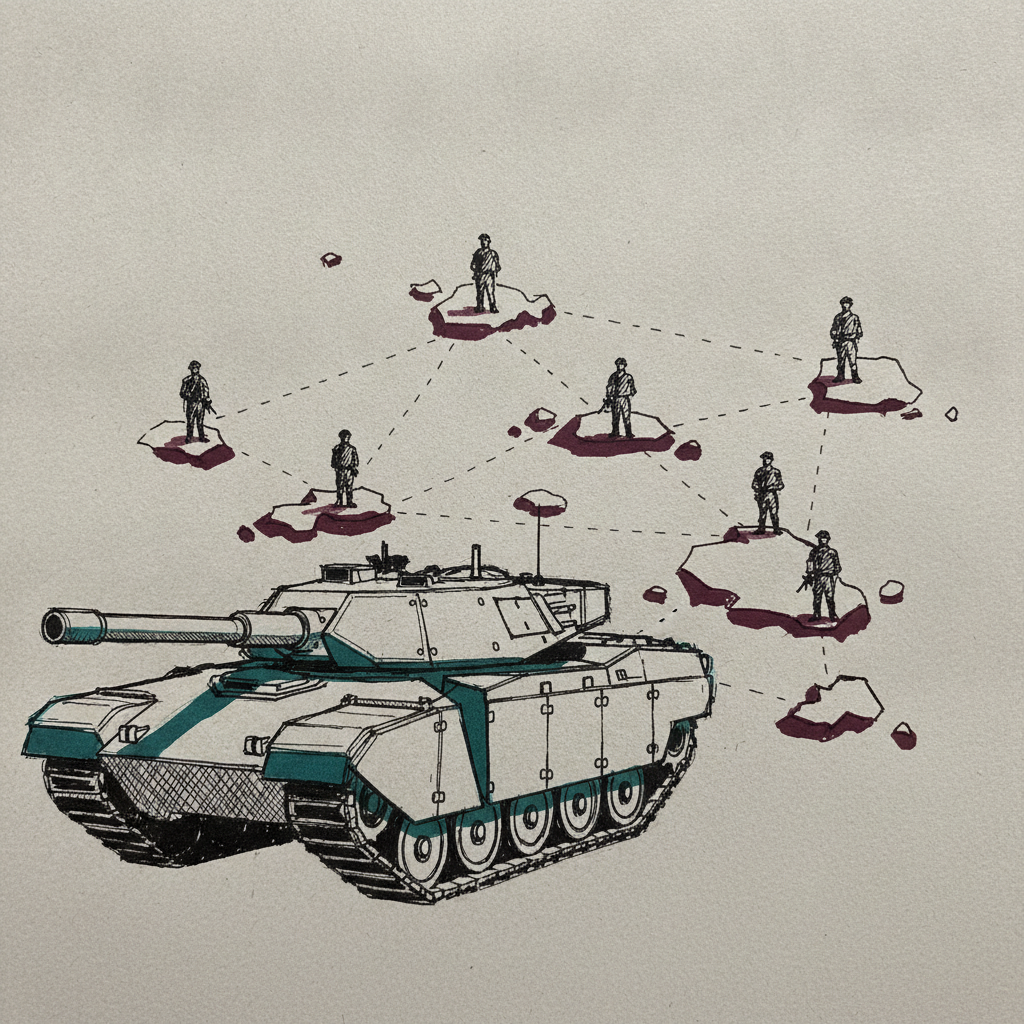
US Marine Corps redesign from March 2020: tanks cut, small units spread across islands.
Force Design 2030's resupply problem drew a robot answer on 16 November 2026, when Saronic Technologies announced a Defense Innovation Unit deal to develop an Autonomous Low Profile Vessel for scattered Marine units.
Last refreshed: 27 November 2026
How will robot boats supply Marines scattered across islands?
Timeline for Force Design 2030
Mentioned in: US Navy lifts HII Lionfish order to 175
Autonomous Systems: Land & SeaBackground
Force Design 2030 is why the US Marine Corps wants robot supply boats. On 16 November 2026 Saronic Technologies announced a Defense Innovation Unit prototype agreement to develop an Autonomous Low Profile Vessel that would resupply dispersed Marine units ship-to-ship and ship-to-shore, giving no value or schedule.
The Corps announced the redesign on 23 March 2020, the Congressional Research Service says, with its Commandant, General David H. Berger, driving it. It removed every tank battalion, cut cannon artillery batteries from 21 to 5 and created Marine Littoral Regiments for Expeditionary Advanced Base Operations: small, mobile units working from temporary sites ashore or close inshore. In early 2024 the Corps dropped "2030" from the name, treating force design as continuous.
Critics argue such scattered units cannot be kept supplied. The Congressional Research Service lists interim answers of landing craft, expeditionary fast transports and commercial stern landing vessels. Saronic's vessel is pitched at the same gap, with Baird Maritime reporting a payload of up to 18,000lb.
What is the Marine Corps Force Design 2030?
Why did the Marines get rid of their tanks?
Is Force Design 2030 still called that?
How will the Marines resupply units spread across islands?
Written with AI from Lowdown's published reporting. Not individually reviewed by an editor. Updated 27 November 2026. Editorial standards.