ETS
EU carbon market setting a price on industrial emissions; cited in European energy refill cost debate.
Last refreshed: 27 April 2026 · Appears in 1 active topic
How does the EU carbon price affect the cost of refilling gas storage in 2026?
Timeline for ETS
Mentioned in: Bruegel resolves refill bill at EUR 26bn
European Energy Markets- What is the EU Emissions Trading System?
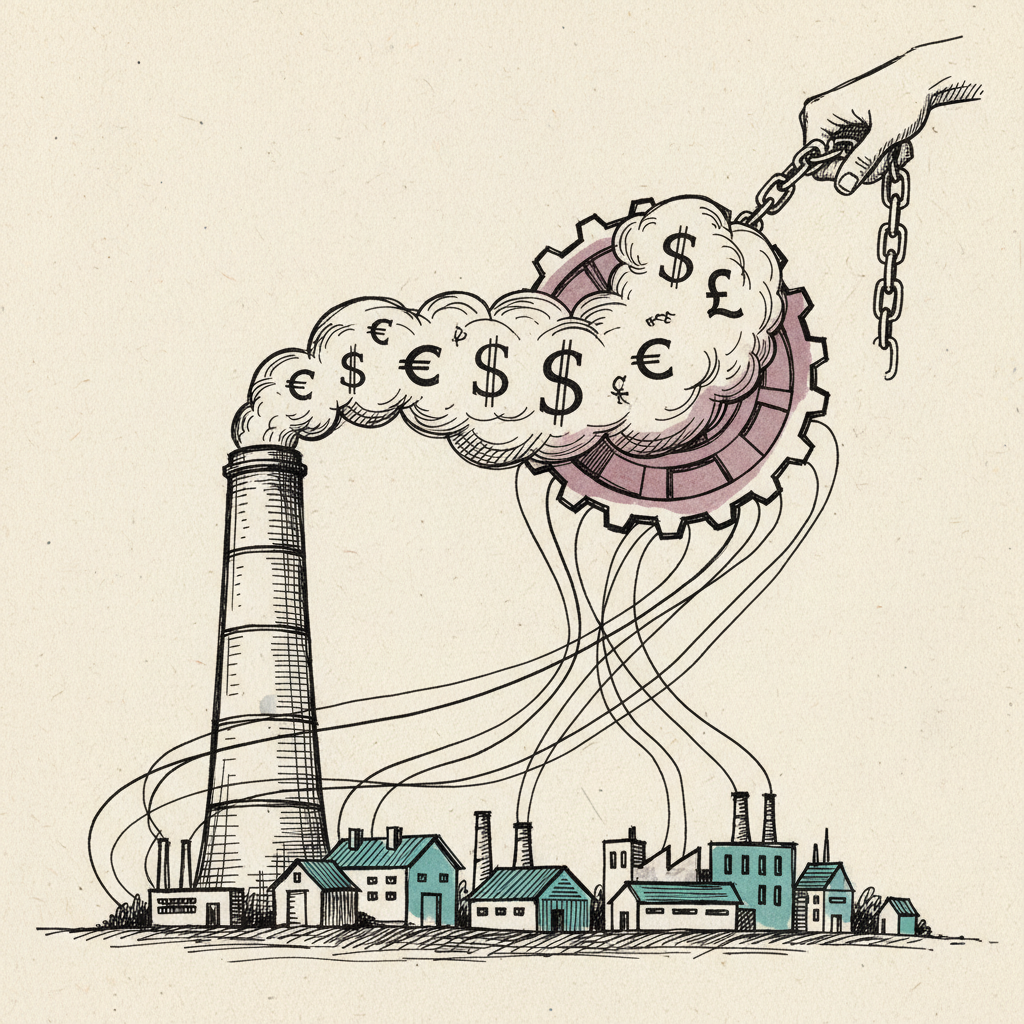
- The EU ETS is the world's largest carbon market, covering power and heavy industry. Companies must buy allowances (EUAs) for each tonne of CO2 they emit; the EUA price fluctuates with energy and policy conditions.
- How does the EU carbon price affect gas storage economics?
- Higher ETS carbon prices raise the cost of running gas-fired power plants, reducing demand for stored gas and affecting the incentive to inject. Bruegel's EUR 26 billion European gas refill estimate factors in carbon price assumptions.Source: Bruegel
- What is an EUA in the EU carbon market?
- An EUA (EU Allowance) is the unit of the EU Emissions Trading System; one EUA represents the right to emit one tonne of CO2-equivalent. Companies in covered sectors must surrender sufficient EUAs to cover their annual emissions.
Background
The EU Emissions Trading System (ETS) is the world's largest carbon market, established in 2005 under EU Directive 2003/87/EC. It operates on a cap-and-trade principle: a ceiling is set on total greenhouse gas emissions from covered sectors — power generation, heavy industry, and aviation within the EU — and companies must hold allowances (EUAs) for each tonne of CO2 they emit. The price of EUAs fluctuates with energy market conditions and policy signals.
The ETS is relevant to the 2026 European energy storage debate because carbon prices affect the economics of gas-fired power generation. Bruegel's modelling of European refill costs, which placed the base scenario at EUR 26 billion, factors in the ETS as a variable affecting the competitiveness of gas versus lower-carbon alternatives. Higher ETS prices raise the cost of running gas peakers, directly affecting the incentive to substitute stored gas with other generation.
The ETS entered a fourth trading phase in 2021 with accelerated cap reductions under the EU Fit for 55 package, targeting a 62% reduction in covered emissions by 2030 relative to 2005 levels.